An Invitation to Taste
Punta Cana may be best known for its ethereal natural beauty—long belts of powdered white sand and the shimmering interplay of Atlantic and Caribbean waters creating a shifting tapestry of emerald and turquoise—but its culinary landscape offers discoveries of a gentler, more intimate kind. Alongside its vibrant beverages and relaxed island rhythms, Dominican cuisine emerges as one of the region’s great cultural inheritances. It is a spirited blend of Taíno earthiness, African robustness, and Spanish warmth. Built on humble ingredients—rice, beans, plantains, fresh seafood, and sun-fed fruits—it thrives on slow cooking, fragrant herbs, and a Creole sensibility that turns familiar staples into thoughtful, satisfying meals.
First Encounters in Punta Cana
My own encounter with Dominican food unfolded during a week at Tortuga Bay Resort, where refinement coexists comfortably with nature. The in-house restaurant, Bamboo, set within Oscar de la Renta’s understated tropical aesthetic, offered my first experience of the cuisine not as an abstraction but as a living tradition. Later, the cafés and restaurants of Punta Cana Village—an unpretentious yet lively enclave—revealed how classic dishes can be interpreted with both fidelity and imagination. I am not an avid consumer of red meat, yet the island’s chicken, fish, and seafood preparations proved a welcoming way to understand its culinary heart. While not every dish dazzles, and some flavours can feel overly hearty to a restrained palate, the overall character of Dominican cooking is generous, warming, and deeply tied to its past.
The Foundation: Rice, Beans, and Plantains
At the centre of this cuisine lies la trilogía sagrada—rice, beans, and plantains—forming a foundation that appears in nearly every home and restaurant. Sofrito, the aromatic base of garlic, onions, oregano, peppers, and cilantro, is the island’s quiet signature, imparting depth to stews and lending a comforting continuity across diverse preparations. The culinary map of the Dominican Republic is, in many ways, a map of its history: cassava, yautía, and sweet potatoes from the Taíno; frying techniques and the imaginative use of plantains from Africa; meats, rice, and stews from Spain. Over centuries, these influences have simmered together to create flavours that are hearty, colourful, and distinctly Dominican.
Everyday Nobility: La Bandera Dominicana
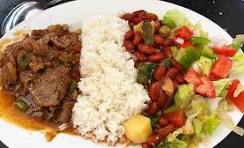
La Bandera Dominicana
No introduction to this cuisine is complete without La Bandera Dominicana, perhaps its most beloved everyday meal. Named after the national flag, it presents itself as a simple trio—white rice, stewed beans, and a lightly seasoned protein, usually chicken, beef, or fish. In Punta Cana, I tasted a version where the beans were gently enriched with thyme and a hint of coconut milk, adding coastal softness, while the chicken carried clean, citrus-forward notes. It is food without pretence, and that is its strength: La Bandera may not strive for gastronomic sophistication, but it anchors you in place, history, and the unbroken daily rhythms of the island.
Celebration in a Bowl: Sancocho
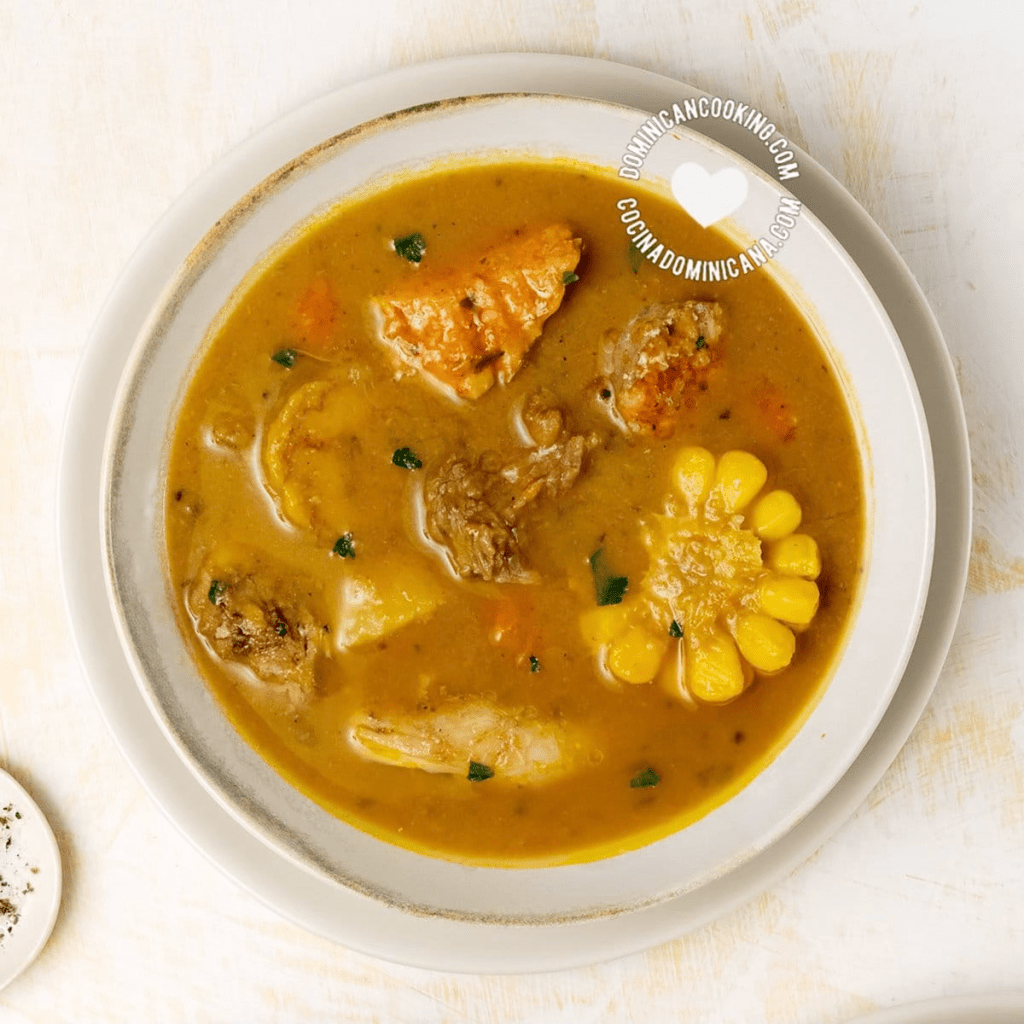
Sancocho
If La Bandera is the country’s daily heartbeat, Sancocho is its celebratory soul. This generous stew—often prepared with several meats and a medley of root vegetables—appears at gatherings, festivals, and moments of shared joy. Its origins can be traced to Spanish cocidos, indigenous broths, and African techniques of slow, patient simmering. In Punta Cana, I encountered a lighter coastal variation made with chicken and fresh vegetables. The broth was warm and reassuring, gently seasoned, with yuca and plantains softened to near velvet. It is the kind of dish that evokes community and memory—something you imagine bubbling for hours while stories drift through the air.
A Breakfast Revelation: Mangú
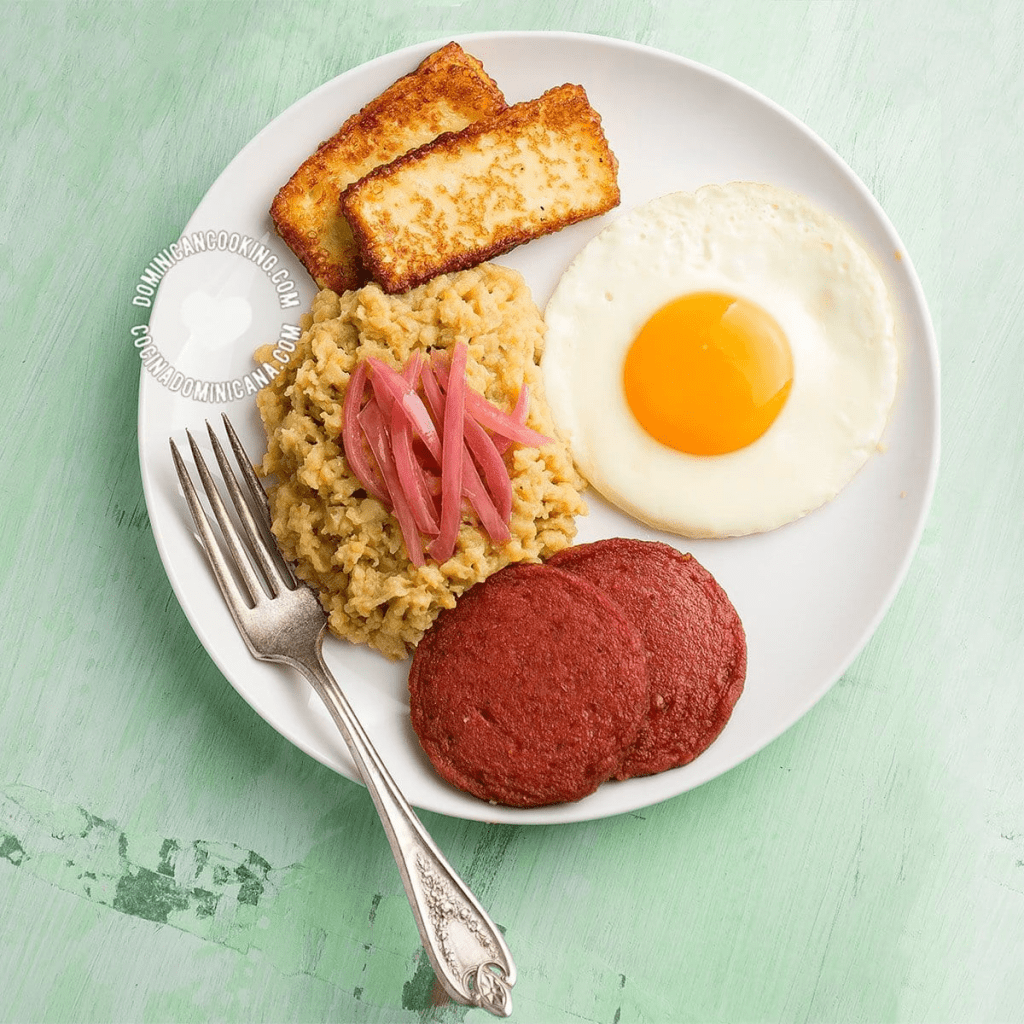
Mangú
The dish that left the most personal impression was Mangú, the beloved Dominican breakfast of mashed green plantains served with eggs, cheese, and salami—the nostalgic trio known as Los Tres Golpes. Rooted in West African culinary traditions, mangú here takes on a character that is both rustic and unexpectedly refined. Often served with caramelized onions that provide a mellow sweetness, it balances earthiness with quiet elegance. There is something deeply human about how this dish carries its history—from African shores to Caribbean kitchens—yet remains disarmingly simple, comforting, and familiar.
Coastal Delights: Seafood in Punta Cana
Seafood naturally occupies an important place in Punta Cana’s coastal cooking. Freshly caught snapper (pescado frito), garlic shrimp, and ceviche-style preparations offer a bright counterpoint to the heavier inland dishes. A lunch in Punta Cana Village, featuring a crisp pescado frito with golden tostones, underscored how straightforward techniques can yield deeply satisfying flavours. And at La Yola—where I later enjoyed a more elaborate, sea-facing dinner—this simplicity met finesse, without losing the island’s essential touch. If there is a shortcoming to note, it is that seafood quality can vary outside the more established restaurants, but when done well, it captures the true spirit of coastal Dominican cooking.
Sweet Notes: Desserts and Drinks

Habichuelas con dulce
Desserts and drinks add their own gentle indulgence. The creamy comfort of habichuelas con dulce—a sweet bean pudding savoured during Lent—and the refreshing brightness of Morir Soñando, that harmonious blend of milk and orange juice, reveal how Dominican cuisine balances its robust savoury palette with soft, soothing notes.
A Culinary Narrative
To dine in Punta Cana is to taste an island’s layered history—its migrations, adaptations, and sense of community. Dominican cuisine does not aspire to extravagance; its beauty lies in tradition and in its ability to make the simplest ingredients speak with clarity. What I discovered was not merely a repertoire of dishes but a narrative of land and people, expressed through food that nourishes both body and memory.
In the end, Dominican food is understood best not through recipes but through lived experience. And in Punta Cana—where the breeze mingles salt, sunlight, and the quiet aroma of simmering sofrito—that experience becomes something quietly enduring.
 scribo ad LX