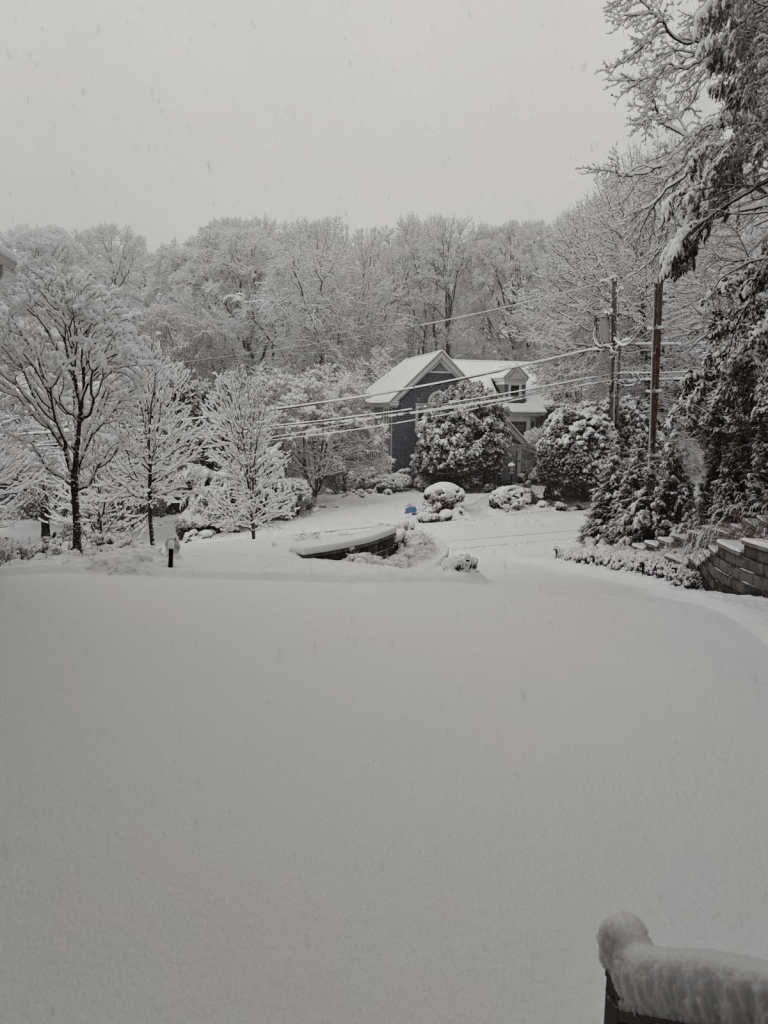
I stepped out for a late afternoon walk on the roads of Short Hills, just after the land had been laid under a six-inch white carpet of snow. Overnight, the world had been quietly rewritten. Familiar streets, hedges, mailboxes, roofs, and lawns had surrendered their individual identities and merged into a single, dazzling expanse of white—as if the landscape had been gently erased and redrawn with a purer hand.
Roofs lay bowed under the weight of snow, their sharp lines softened into curves of quiet elegance. Lawns had become immaculate sheets of white, unbroken and untouched, almost ceremonial in their perfection. Tree branches carried clumps of snow like fragile ornaments, each one delicately balanced, each one briefly complete. Even the ordinary—a fence post, a driveway, a lamppost—seemed elevated, transfigured by this sudden abundance of light.
Everything around me was bright, pristine, and hushed—as if the earth itself had decided to speak in a whisper. The snow was smooth and faintly luminous, reflecting the pale winter sun, touching the senses in many ways at once. There was something of a child’s innocence in it, something angelic in its radiance, something like the unguarded laughter of a young girl released suddenly into the air. One could summon endless similes, stack metaphors upon metaphors, and yet feel, even as one writes them down, that language falls short. Beauty, when it is complete, resists description.
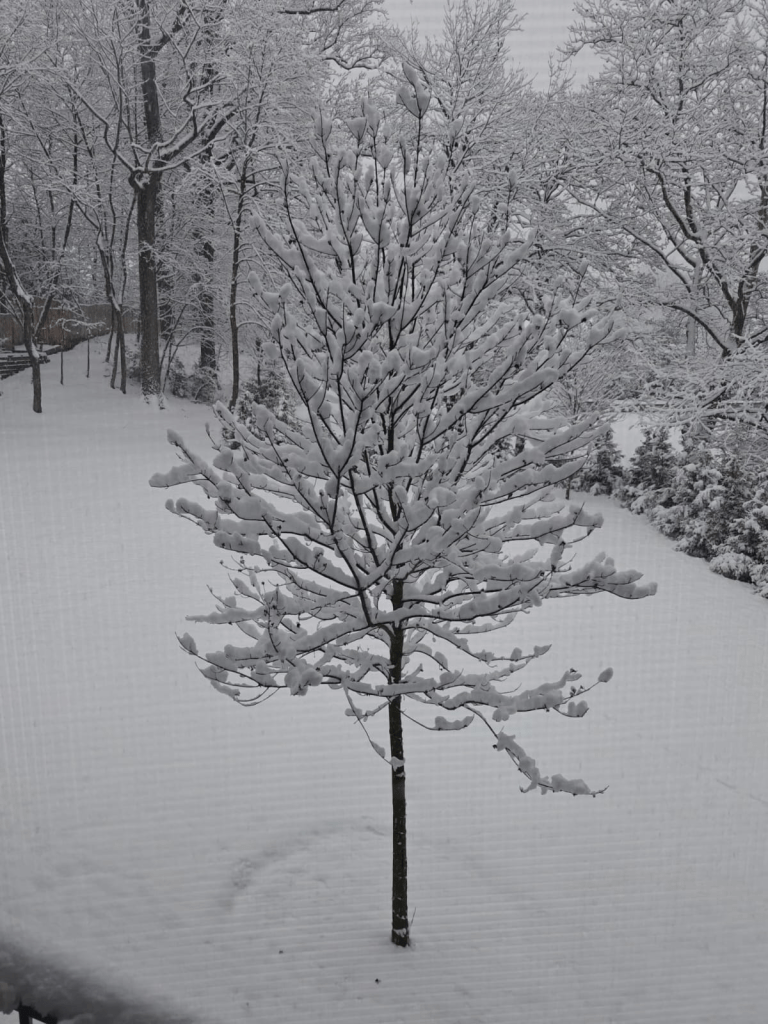
Life appeared to have stepped aside to let beauty take the stage. There were hardly any living beings around—no pedestrians, no dogs tugging at leashes—only the occasional car passing through, cautiously, almost apologetically, its tires leaving faint tracks that vanished almost as soon as they appeared. The silence was not empty; it was full, attentive, gently enclosing.
And yet, I was not alone. In the pale winter light, two birds appeared to share the spectacle with me: a dove, serene and self-possessed, and another small bird—perhaps a sparrow, perhaps a robin. I could hear it but could not quite locate it, as though it wished to remain half-imagined, a fleeting note in the music of the afternoon. Their presence felt celebratory, a quiet assurance that this beauty was alive and shared.

John Keats once wrote “a thing of beauty is a joy for ever,” and for that moment, it felt entirely true. Beauty, I realised, does not promise duration; it offers intensity. Time itself seemed to slow, allowing the eye to linger, the breath to deepen, the mind to rest. The snow asked nothing more of me than attention.
I knew, of course, that this perfection would not last. Soon enough, the white would soften into greys, the clumps would slide from branches, and the lawns would return to their familiar greens and browns. But instead of sadness, I felt an unexpected lightness. Beauty, after all, does not diminish because it is brief; it sharpens.
Snow arrives, transforms the world, and departs, leaving behind memory—and a subtle brightness within us. As the Japanese poet Bashō reminds us, we do not follow beauty; we follow the stillness that allows beauty to appear. As I turned back home, my footsteps marking the white only temporarily, I felt quietly cheerful, almost buoyant. The day had offered a gift, freely and without ceremony, reminding me that such moments still find us, still surprise us, still make the ordinary glow.
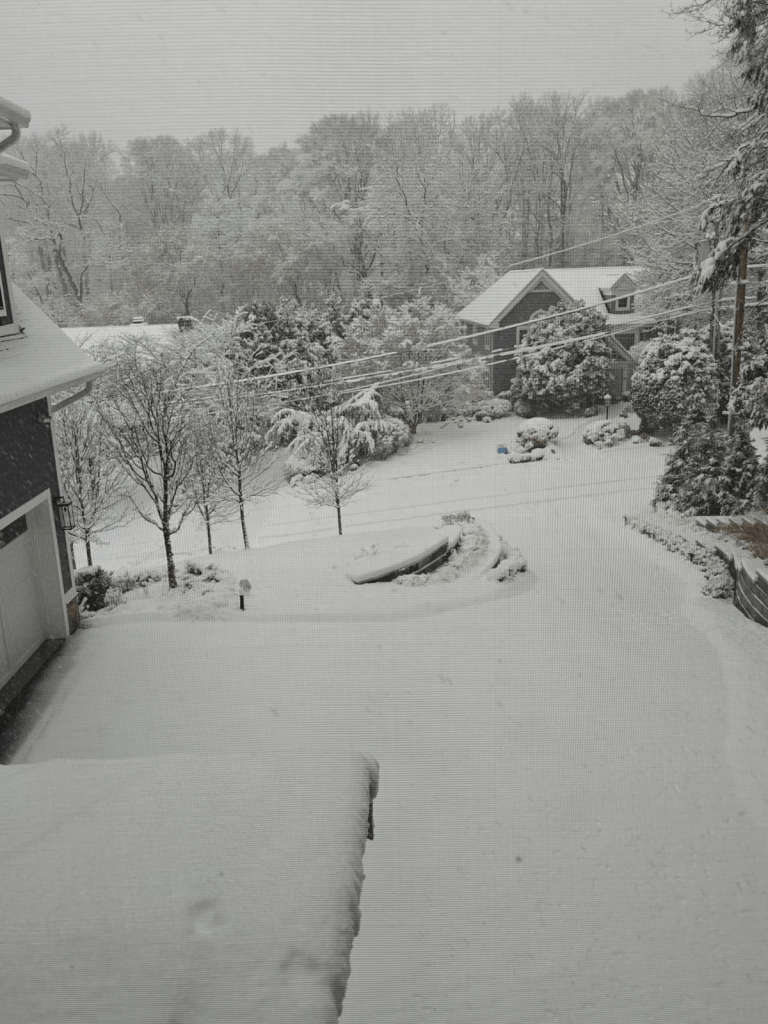
The snow had done its work. It had made the familiar radiant, the fleeting unforgettable, and the afternoon—however briefly—perfect.
 scribo ad LX