“An Invitation to Wonder: : Introducing an Immortal Tree”
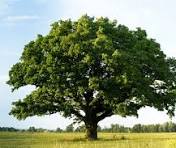
“The creation of a thousand forests is in one acorn.”
— Ralph Waldo Emerson
It stands without asking to be noticed.
There are trees that grow quietly, almost unnoticed—content to be part of the backdrop of our days. And then, there is the Oak. Majestic, resolute, steeped in story, the Oak stands apart—not merely in physical grandeur but in symbolic gravity. Like the Peepal or the Banyan in India, the Oak is not just a tree; it is a testament. It bears the marks of time, myth, and memory with a dignity that humbles the hurried present.
It is no accident that the idea for this series—a cultural and poetic meditation on the Oak—has taken root during my sojourn in New Jersey. Here, in this lush northeastern corner of the United States, the Oak is both guardian and witness, sentinel and storyteller. On morning walks beneath its vast canopy, I find myself slowing down, watching light filter through its deeply lobed leaves, listening to the crackle of acorns underfoot. Something ancient stirs—an invitation, perhaps, to listen. To linger. To look closer.
This series is the outcome of that invitation.
It began as a desire to write a few reflective pieces. But the vastness of the Oak’s presence quickly made it clear: no single essay could contain its story. The Oak traverses continents and centuries. It holds cultural, ecological, and literary universes within its rings. What it demands—and deserves—is a multi-part exploration: curated, layered, lyrical.
A Journey Through the Oak’s World
In the pages that follow, we shall walk through the many landscapes shaped—and shadowed—by the Oak.
We will begin with its antiquity, tracing its botanical lineage through fossil records and its astonishing role as a living timekeeper of the forest. We will pause to understand its ecological presence—the silent, ceaseless work it does in nurturing soil, sheltering life, and standing firm against wind and fire.
From there, we shall explore the vast cultural field the Oak inhabits: its place on flags and emblems, in rituals and folk wisdom, in the lore of Druids and the cosmologies of the Norse, where it stood as Yggdrasil, the World Tree. We will hear its echoes in literature and art—evoked by Homer and Virgil, Shakespeare and Thoreau, Wordsworth and Tolkien—where it becomes a metaphor for courage, wisdom, and endurance.
We will listen to its silence in moments of rupture and recovery, as the Oak marks the sites of battles and burnings—as a witness tree to the trauma and memory of communities. And through it all, I shall return, again and again, to the present moment—my morning walks in New Jersey, where these trees speak not only of a distant past but of a living presence. An invitation to reflection, to stillness, to awe.
Each part will dwell on one facet. Yet together, they will offer a holistic, resonant portrait—like branches reaching from the same strong trunk.
Why the Oak?
Why not another tree, one might ask?
Because few trees embody so richly the intersection of nature and culture, science and symbol. The Oak speaks many tongues—botany and belief, empire and ecology, poetry and permanence. Its longevity is not just botanical but civilizational.
To sit under an oak is to sit with history.
As we begin this journey, I invite you—reader and fellow wanderer—to pause beneath the boughs. Let this be more than a reading; let it be a lingering. An act of noticing. An encounter with the enduring.
What begins here is not merely a tribute, but a companionship—with a tree that has shaped our world and still shadows our lives with quiet majesty.
Let us then begin where all stories begin—not with a bang, but with a seed.
Closing Note to Part I
In the Oak, we encounter more than a tree. We meet a presence—rooted, patient, and untouched by the vanity of passing trends. Its grandeur is not ostentatious but earned—season by season, ring by ring.
This opening part of our journey sought to introduce the Oak as both a biological marvel and an ancient witness. In the next, we shall travel deeper into its antiquity, tracing its emergence through the fossil record and its role as one of nature’s oldest sentinels.
What lies ahead is not a chronology, but a deepening—into memory, meaning, and myth.
 scribo ad LX