O Gliricidia, quiet and free,
A lesson wrapped in mystery—
That grace resides in things that fade,
Yet in their loss, their light is made.
Some trees stand tall and imposing, their grandeur capturing attention from afar. Others, like Gliricidia, enchant quietly, weaving a spell not through stature but through the ethereal beauty of their bloom. This time of the year, as dawn unfurls, I walk past a street lined with these trees—a street that seems to belong to another realm. The Gliricidia trees, known as the Mother of Cocoa, have transformed the avenue into an ivory dreamscape, a world suffused with soft light and delicate blossoms that drift from the branches like whispers from the sky.
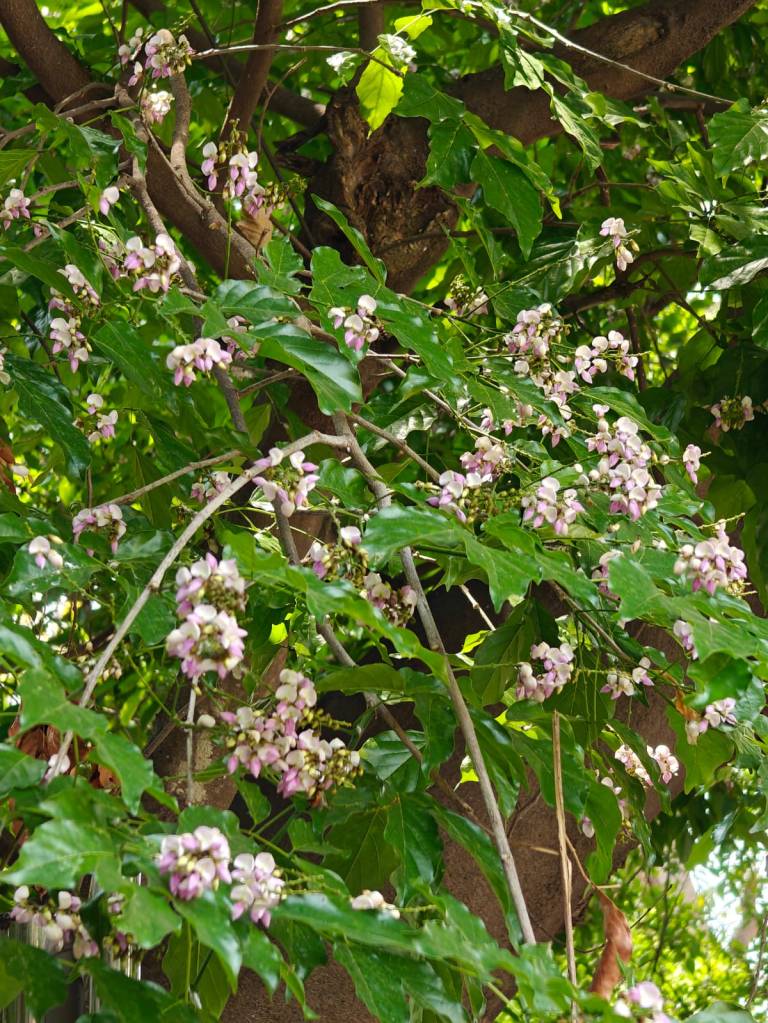
A Tree Rooted in Many Lands
Gliricidia sepium, native to Central America and parts of Mexico, has long travelled beyond its origins. It found its way to the Caribbean, Africa, and India, where it thrives in warm climates. Originally planted for shade in cocoa and coffee plantations, it soon revealed its versatility—enriching soil, serving as fodder, acting as a natural pesticide, and even preventing soil erosion due to its nitrogen-fixing ability. Its rapid growth and resilience make it an ideal agroforestry species, valued by farmers worldwide. Yet, beyond its utilitarian value, Gliricidia endears itself most profoundly through its aesthetic charm.
The Ivory Luminescence of A Tree in Bloom
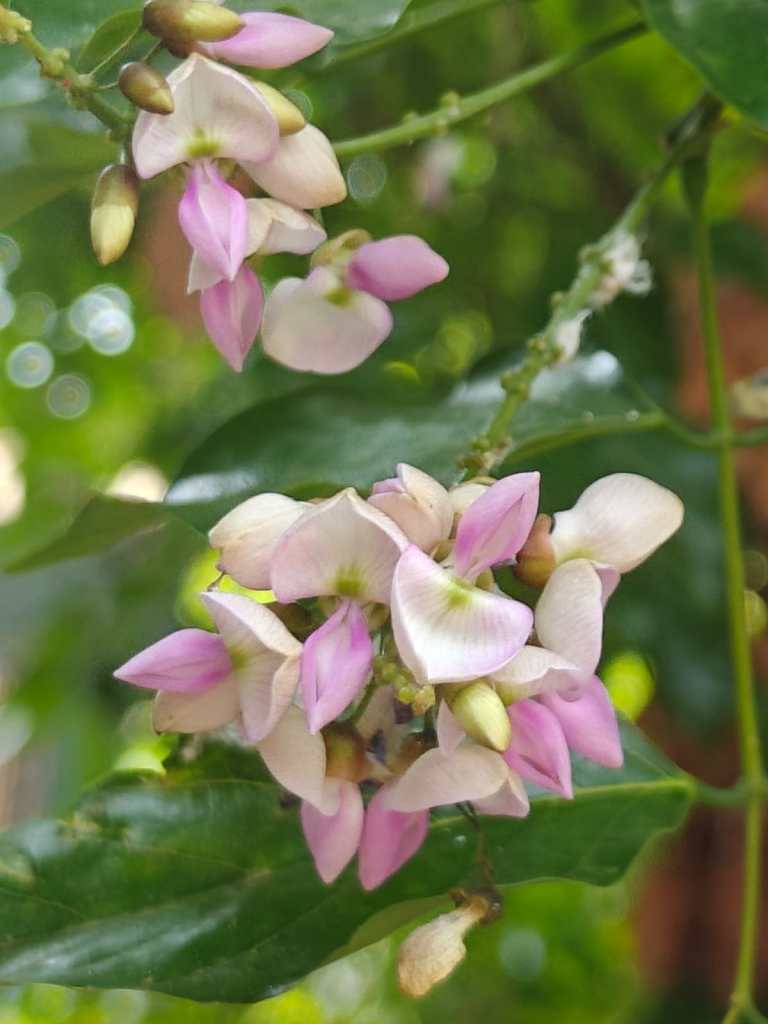
The bloom of Gliricidia is an event unto itself. Delicate pea-like flowers, clustered in small bouquets, emerge in joyful abandon. Initially tinged in soft purple-pink, they gradually fade into a pale ivory, painting the branches with a pastel glow. Their structure, typical of the Fabaceae family, features a delicate banner petal arching over the smaller, nestled petals, forming a shape reminiscent of butterflies poised to take flight. And then, as if surrendering to the whispers of the wind, they fall in a silent, unhurried cascade, carpeting the ground in a thick, fragrant sheet. To walk upon this floral expanse is to step into poetry—one’s feet pressing into a world momentarily borrowed from the heavens. It is a sight that invites reflection, a reminder that nature celebrates beauty in ways grand and subtle alike.
Rabindranath Tagore once wrote, “The world speaks to me in colours, my soul answers in music.” The Gliricidia speaks in a different dialect, in a palette of ephemeral hues, in the rustle of its thick, glistening leaves, in the hush of blossoms as they fall—a music both seen and felt.
An Enchanting Paradox: Foliage and Flowers

Unlike many flowering trees that shed their foliage entirely when in bloom, Gliricidia holds on to its leaves in a graceful contradiction. The bright green, smooth, and almost luminous leaves persist even as clusters of pinkish-white flowers burst forth. This duality—shade and bloom, verdant life and transient beauty—embodies the ceaseless rhythm of nature’s agenda, where decay and renewal are but two parts of the same cycle.
The Soul of a Street
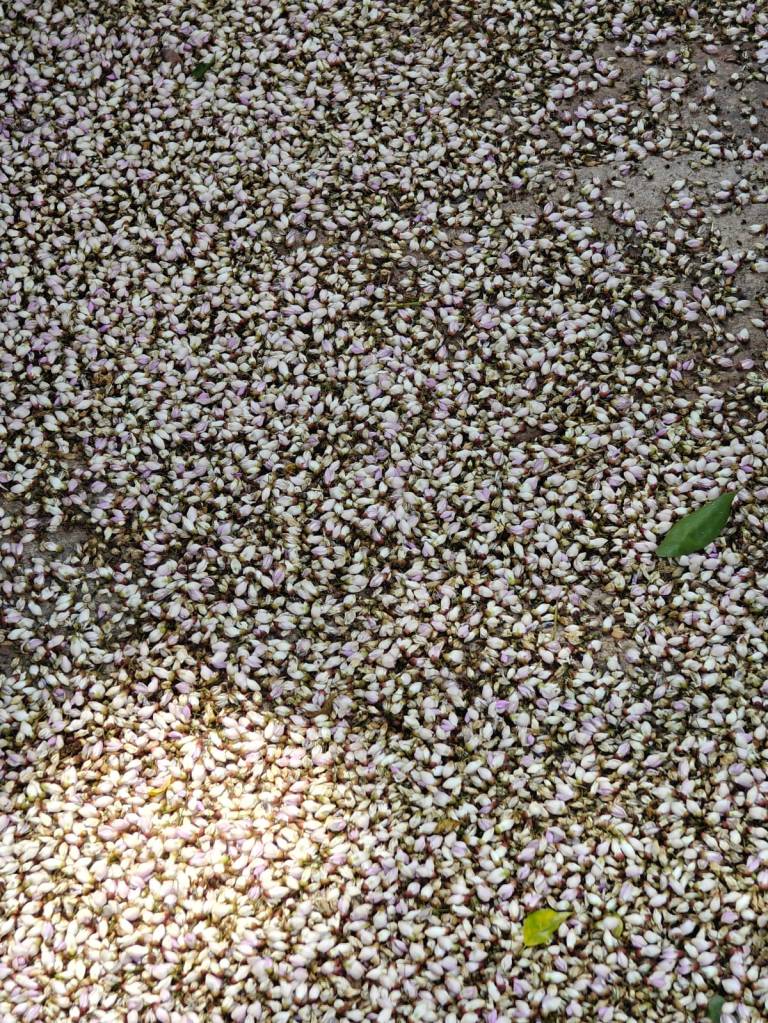
The white carpet on the ground
Every morning, as I step onto that street bathed in soft light and scattered petals, I find myself momentarily displaced from time. The road, lined with these trees, seems less a thoroughfare and more a passage into something serene and sacred. The hush of dawn, the subtle fragrance, the way the fallen flowers form a gentle mush beneath my feet—all conspire to create an experience both sensory and spiritual. There is an unspoken conversation between the tree and the passerby, a quiet companionship that only those who pause to notice will understand.
A Final Thought: Nature’s Sublime Agenda
The presence of Gliricidia is nature’s way of affirming beauty’s gentle persistence. It is a tree that neither clamours for attention nor demands reverence, yet it evokes both in equal measure. The flowers, despite their delicate elegance, must yield to gravity, succumbing to the elements in a quiet surrender that seems both melancholic and inevitable. As they fall and gather on the ground, as they turn roads and pathways into celestial carpets, one is reminded that nature’s grandest gestures are often its quietest.
Perhaps it was William Wordsworth who captured it best when he wrote:
“Nature never did betray the heart that loved her.”
And Gliricidia, in its fleeting bloom, in its persistent green, and in its silent, luminous descent, keeps this promise unbroken.
 scribo ad LX