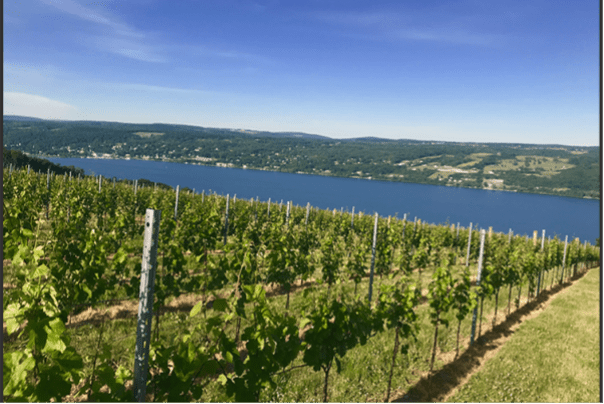
Known for its breathtaking scenery and its large, limpid lakes, the Finger Lakes region of New York State is recognised today as a prominent wine-producing area across the globe. This may come as a surprise to many.
“Whether indulging in the region’s renowned wines or immersing yourself in the beauty of the lakes and waterfalls, the Finger Lakes promises an unforgettable holiday, hopefully with some wine souvenirs to take home to remember your visit. So next time you are looking at a wine-tasting trip, make sure you consider the Finger Lakes region.” Thus recommends Forbes, the American business magazine of high standing, clearly signalling the wines produced there as an alluring attraction of the Finger Lakes. And yet, wine was only an incidental produce of this richly pastoral land until just a century ago, as the cooler climate initially hindered the cultivation of fine grapes.
A Cool-Climate Yet A Wealth of Grapes
Cool-climate regions may not be the most favoured lands for growing high-quality grapes for making wines, but the Finger Lakes region in upstate New York defies this conventional understanding. This cool-climate wine region is gaining recognition for its wines, boasting a surprisingly extensive array of grape varieties.
However, this was not the case a century or even six decades ago. Today, the region has acquired a formidable reputation for its highly acclaimed wines, spirits, and ciders. Whether one prefers an icy martini, a sweet and oaky bourbon, or a refreshing hard cider, the Finger Lakes region offers an array of beverages to discover and savour.
An Old Tradition
Grapes have been grown in the Finger Lakes for a long time. In fact, the Finger Lakes was an established wine region long before Washington and Oregon. While the West Coast developed its wine industry with European grape varieties – Vitis vinifera – the Finger Lakes producers traditionally used native American grape varieties, mainly Concord, a Vitis labrusca.
Origin and Transformation
The roots of viticulture in this region trace back to 1829 when Reverend William Bostwick planted the first vineyard in Hammondsport. By the 1860s, commercial viticulture began to flourish, leading to the establishment of wineries like the Pleasant Valley Wine Company, which became the first bonded winery in the United States. Despite the setback during the Prohibition era from 1920 to 1933, the region sustained its vineyards by producing sacramental and medicinal wines.
A significant turning point came in 1962 when Dr. Konstantin Frank, a Ukrainian immigrant, demonstrated that European vinifera grapes could thrive in the region’s colder climate. This breakthrough heralded a new era of wine production, with numerous new wineries experimenting with a variety of grape types. This innovation positioned the Finger Lakes as a leading wine-producing region in the United States, rivalling California’s Napa and Sonoma Valleys, Oregon’s Willamette Valley, and Washington State.
The Present Landscape
Globally, the Finger Lakes region, while younger compared to historic wine regions such as France’s Bordeaux, Italy’s Tuscany, and Spain’s Rioja, is gaining increasing recognition. It’s cool climate, akin to Germany’s Mosel and Alsace regions, is ideal for producing high-quality white wines, particularly Rieslings. The American Viticultural Area (AVA) of the Finger Lakes encompasses 11 glacial lakes, with Cayuga and Seneca Lakes being particularly notable for their vineyards.
Concord may be the most cultivated grape in the Finger Lakes, but Riesling has made the region known outside New York’s borders. “Thanks to the coolness, Riesling ripens slowly here, which gives rich but still very fresh aromas,” says an experienced Colleen vintner.
Riesling
Riesling is the flagship wine of the Finger Lakes, renowned for its crisp acidity, floral aromas, and mineral complexity. Producers such as Dr. Konstantin Frank, Hermann J. Wiemer, and Ravines Wine Cellars have garnered national and international acclaim for their Rieslings. Other notable wines from the region include Gewürztraminer, with its distinctive lychee, rose petal, and spice notes, produced by wineries like Boundary Breaks and Keuka Spring Vineyards. Cabernet Franc is a key red wine, offering flavours of red fruits, herbs, and pepper, with Ravines Wine Cellars and Red Newt Cellars being prominent producers. The region is also known for its Ice Wines, made from grapes naturally frozen on the vine, with Wagner Vineyards and Sheldrake Point Winery producing exceptional examples. Additionally, Chardonnay, Pinot Noir, and sparkling wines are gaining popularity, with Fox Run Vineyards and Lamoreaux Landing celebrated for their diverse offerings.
A Wine Lover’s Paradise
In terms of statistics, the Finger Lakes region boasts over 130 wineries, contributing significantly to New York State’s wine industry. New York is the third-largest wine-producing state in the U.S., after California and Washington, producing approximately 34 million gallons of wine annually. The Finger Lakes region alone accounts for a substantial portion of this production, with a focus on high-quality, boutique wines that enhance its reputation. The Finger Lakes beers have also made a mark for themselves. Today, one can raise a glass at more than 80 family-owned craft and farm breweries, brewpubs, and microbreweries throughout the region, many of which source their hops, grains, and malts locally.
Comparatively, while California dominates U.S. wine production with regions like Napa Valley producing about 815 million gallons annually, the Finger Lakes stands out for its unique climate and varietals. Internationally, the Finger Lakes holds its own against other cool-climate wine regions, with its Rieslings and Ice Wines particularly noted in global wine competitions.
(To Be Continued…)
 scribo ad LX