Of Slave Trade, Gullah, and Ghosts
Charleston’s history is a multi-layered complexity giving it a mystique of its own. Seen retrospectively and with the advantage of hindsight, some of these aspects are decidedly sordid and disturbing. The unconscionable use of slaves in the plantations whose labour made the aristocratic families notoriously rich is one such aspect that can be viewed dispassionately and with objectivity today.
An Unconscionable Practice
The origins of these slaves varied widely, but a significant number were forcibly brought from West and Central Africa through the transatlantic slave trade. They were typically captured by African intermediaries or European slave traders, sold into slave markets, and then transported in horrific conditions across the Atlantic to the Americas.
Once in Charleston, slaves were often purchased through auctions. Plantation owners and slave traders would advertise sales of enslaved individuals, and interested buyers would bid on them at public auctions. The bidding process was brutal and dehumanizing, treating human beings as property to be bought and sold. Families were frequently separated during these auctions, causing immense suffering and trauma.
Upon purchase, slaves were employed in various roles on the plantations depending on their skills, age, and physical abilities. They worked in agricultural tasks like planting and harvesting crops such as rice, cotton, and indigo. Others were involved in domestic work within plantation houses, serving as cooks, maids, or caretakers. The conditions they endured were harsh, with long hours of labour, minimal rest, and brutal punishments for disobedience or perceived infractions.
Their living conditions on plantations were generally abysmal. Slaves were often housed in crowded and rudimentary dwellings known as slave quarters. These quarters were basic and lacked proper sanitation, ventilation, and privacy. Families were often separated, and the living spaces provided little comfort or dignity. Malnutrition, disease, and violence were common, leading to high mortality rates among the enslaved population.
Serving Their Masters
Undoubtedly, without slaves the plantations would not have existed. Working in the plantations was a life-threatening task. In the marshes, the area had to be cleared of water for plants to be sown, for which trenches and channels had to be dug. With crocodiles abounding, it was done with every possibility of being attacked by them and losing either life or limb. Then there was the dreaded Malaria that every year claimed hundreds of lives, of men but also of women and children. The average length of life that a slave was able to enjoy was just over 30 years.
But the dividend to their masters was enormous. It brought them untold riches, and affluence. Opulent houses with a battery of servants on the plantations became the new sites of luxury and extravagance. Much of it also flowed to the nearby Charleston town, where big grand mansions became the new symbols of high living and immense authority.
The Gullah Culture
This systemic racism, discrimination and exploitation continued for over a century. And even when slavery was abolished in 1865, the emancipated black population faced significant challenges in integrating into society. While some formerly enslaved individuals and their descendants were able to gain education and economic opportunities, many others remained marginalized and impoverished.
A notable upshot of post abolition history of the coastal regions of South Carolina and Georgia was the emergence of ‘Gullah’ culture, as a distinctive cultural synthesis resulting from the interactions and intermingling of African, European, and Indigenous influences. Gullah people are descendants of enslaved Africans who retained strong cultural ties to their African heritage despite the harsh conditions of slavery. They developed a unique language known as Gullah or Geechee, blending English with African languages and preserving African cultural practices, foodways, music, and storytelling traditions. A thriving example of this syncretic transition is best evidenced by a vibrant city market that sells products made and manufactured by Gullahs.
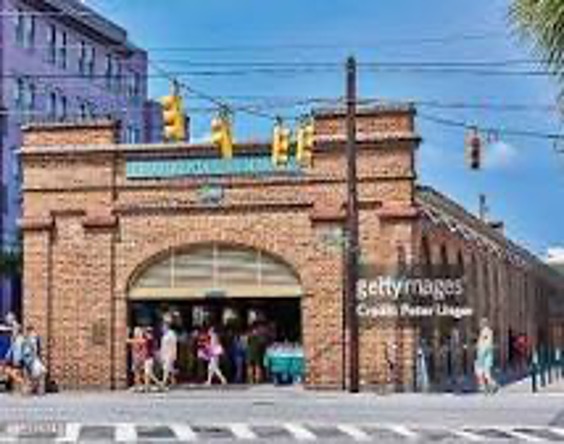
The Gullah culture represents resilience and survival in the face of oppression. It serves as a testament to the enduring strength and creativity of African American communities, maintaining connections to their roots while contributing to the rich cultural tapestry of the United States.
Selling Ghosts
Ghost tours and spooky experiences have become a significant part of Charleston’s tourism industry. Visitors are intrigued by the idea of encountering the supernatural and exploring the darker side of the city’s history. These tours combine entertainment with history, folklore, and a touch of mystery, appealing to a wide range of tourists seeking unique experiences.
Tour operators in Charleston capitalize on the city’s reputation for ghostly encounters by offering guided ghost tours on horse carriages or on foot. These tours take visitors to haunted sites, recounting stories of ghost sightings, unexplained phenomena, and historical events that have contributed to Charleston’s haunted reputation. Charleston’s connection to ghosts and spirits is deeply intertwined with its history, which includes periods of tragedy, suffering, and cultural diversity. The city’s long and often tumultuous past has led to numerous stories and legends of paranormal activity, making it a popular destination for ghost tours and spooky experiences.
Charleston’s connection to ghosts and spirits is a blend of historical events, cultural influences, folklore, and the tourism industry’s fascination with the supernatural. While some may view these ghost tours as purely entertainment, they also serve as a means of engaging with the city’s past and storytelling traditions in a captivating and immersive way.
Horse Drawn Carriages
Horse-drawn carriage tours in historic Southern cities like Charleston provide a unique blend of nostalgia, charm, and a slower-paced exploration that seems particularly suited to soaking in the rich history and ambiance of these locations. The clip-clop of horse hooves on cobblestone streets adds an authentic sensory layer to stories of historical figures, legendary events, and ghostly tales. The horses, big and majestic, these Belgian and Percheron draft horses, and the stylish well kept carriages offer an unusual experience.
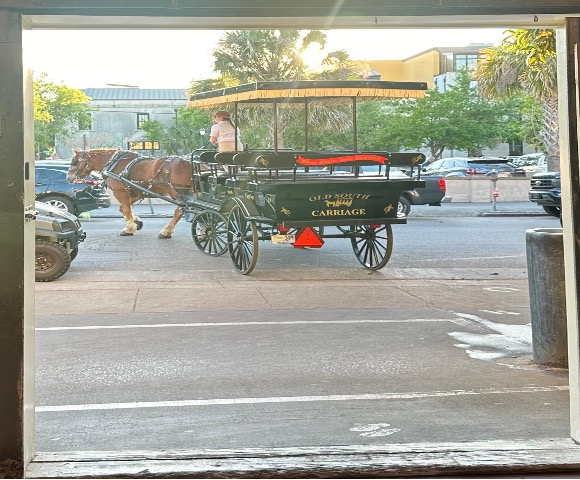
For many visitors, this creates a vivid, immersive experience that goes beyond simply viewing sites from a bus or car window. Furthermore, the intimate scale of a carriage allows for a more personal connection between the guide and tourists, often leading to richer stories and detailed insights.
Do they lead to better sustainable tourism practices? Arguably, they minimally impact environment opposed to the motorized tours and help maintain traditional practices and local economies. But above all, they seamlessly blend the leisurely pace of bygone eras with the storytelling of modern tourism.
Rodney Scot and His Whole Hog BBQ
Among the highpoints of one’s stay in Charleston is a visit to a gourmet place, ‘Its All Wood’, established by the celebrity Chef Rodney Scott. He remains a pivotal figure in Charleston’s culinary scene. Renowned for his mastery of Southern barbecue Scott expanded his horizons by opening Rodney Scott’s BBQ in Charleston in 2017, bringing his signature whole-hog barbecue cooked over wood and seasoned with a vinegar-based sauce to a broader audience.
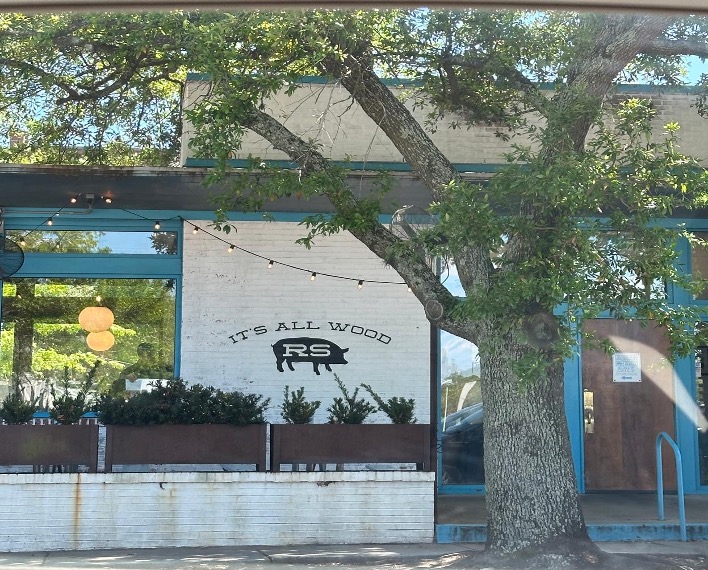
His journey began in Hemingway, South Carolina, where he honed his skills at his family’s barbecue restaurant. This establishment not only showcases his deep-rooted expertise but also celebrates the rich traditions of Southern barbecue. Scott’s restaurant has become a cornerstone of Charleston’s food landscape, offering more than just meals— it serves as a vibrant cultural experience deeply embedded in Southern culinary traditions.
Charleston-Charmingly Complex
Charleston, with its blend of opulence and the echoes of its shady and sombre history, invites visitors to reflect on the profound complexities of its heritage. It stands as a city where history is not just remembered but palpably felt, offering a journey through time that is as enlightening as it is unforgettable.
 scribo ad LX