History, Haunts, and Hospitality
Savannah was now transforming. The cotton plantation and its subsequent trade primed its economy and fuelled its all-round growth.
Antebellum Architecture
The affluence and authority soon began reflecting in the construction of beautiful and grand houses and buildings, what is now commonly known as Antebellum buildings.
Antebellum architecture refers to the style of buildings constructed in the Southern United States before the American Civil War (1861-1865). These structures are characterized by their grandeur, elegance, and often plantation-style designs, reflecting the prosperity and lifestyle of wealthy landowners during that era. Common features include large columns, expansive verandas, intricate detailing, and symmetrical facades.
And Savannah abounds in these Antebellum mansions with their grand columns and sprawling verandas. They invite visitors to step back in time and experience the elegance of the Old South. The city’s streets are a living museum of architectural splendour, from antebellum mansions to stately churches. These homes and public squares, shaded by ancient oaks, embody the spirit of Southern hospitality and grace. The Mercer-Williams House, made famous by the novel and film “Midnight in the Garden of Good and Evil,” is a prime example of this style, with its imposing columns and lush courtyard. The Owens-Thomas House, designed by renowned architect William Jay, showcases the Federal-style elegance that was popular during the early 19th century.
Savannah is also dotted with churches of diverse followers of Christian faith with a notable absence of catholic churches. The pre-dominance of non-Catholic churches has a fascinating background and tale of its own that requires a separate discussion. The one church that stands out for its architectural beauty and grandeur is the Cathedral of St. John the Baptist.
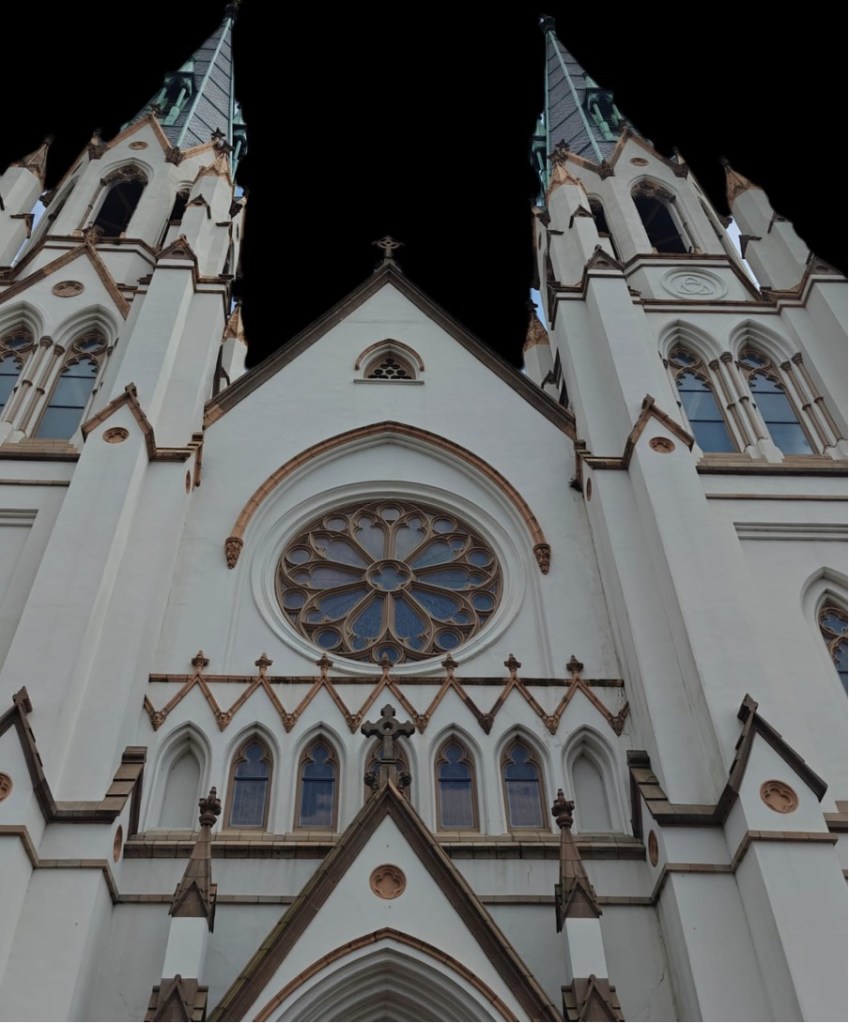
Cathedral of John the Baptist
The Spring Moss
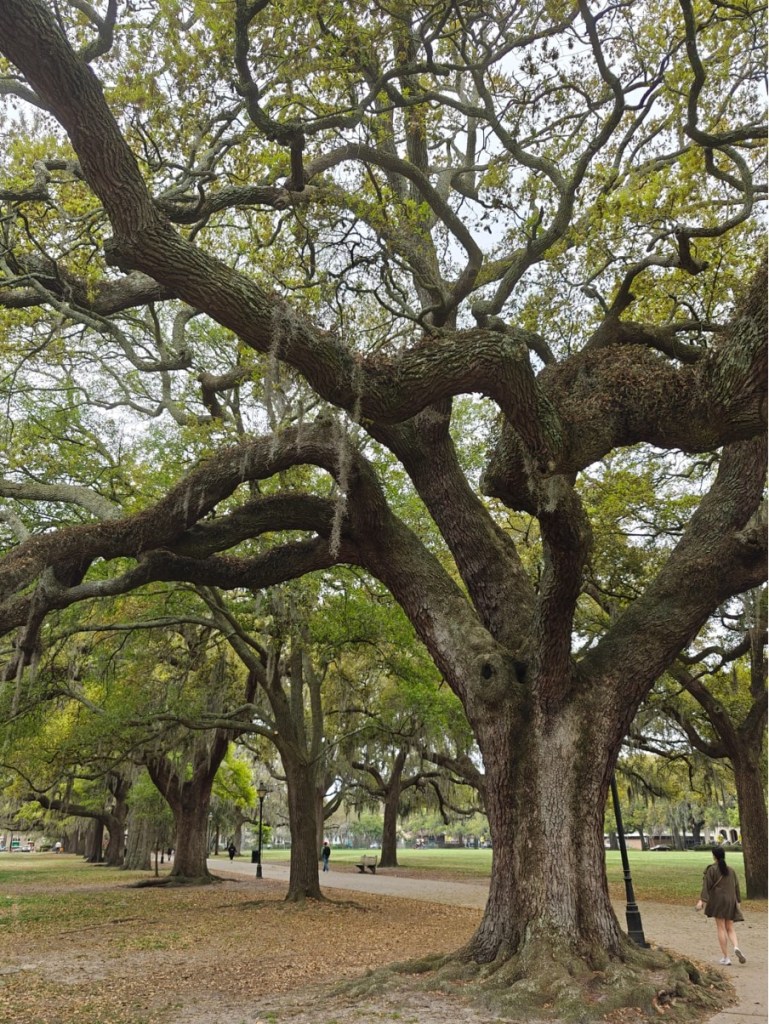
Giant Oaks Draped in Spring Moss
Savannah’s description will be incomplete without a mention of that charm and mystery of this region, people call Spanish moss. Hanging like the luxuriant overflowing beard from giant trees, it is mystical, eerie and perplexing at the same time. Also known as Spring moss or Tillandsia usneoides, it is neither Spanish nor a true moss. It’s an air plant, an epiphyte, that grows on Oaks and similar trees, adding a unique and fascinating feature to the bewitching landscape.

Bonaventure Cemetry
Echoes of the Past: The Mystique of Ghosts and Graves
Beyond its architectural marvels, Savannah is a city of secrets and spirits. Haunted houses, restless souls, and the eerie beauty of Spanish moss draped on ancient oaks add layers of intrigue to its storied streets. The Bonaventure Cemetery, with its haunting beauty, invites contemplation amidst whispers of the supernatural.
Not surprisingly, Savannah must be one of those few cities that sells its graves and ghosts, the eerie and supernatural through special tours, often taken in the night and immensely popular with the tourists.
Culinary Delights and Cultural Richness
No visit to Savannah is complete without indulging in its culinary delights. From hearty Southern breakfasts at Clary’s Cafe to seafood feasts at The Grey, the city’s culinary scene is a journey through Lowcountry flavours and Southern hospitality. Cultural celebrations, from St. Patrick’s Day festivities to solemn tours exploring “Midnight in the Garden of Good and Evil,” offer glimpses into Savannah’s vibrant tapestry of traditions and history.
Savannah’s cultural identity is deeply intertwined with its racial history, from the early interactions between European settlers, African slaves, and Native Americans, to the present-day efforts to preserve and honour the contributions of African American communities. This complex history has fostered a city rich in diversity, resilience, and cultural exchange, making Savannah a place where past and present dialogue in the shadow of Spanish moss.
An ecstasy of Experiences
In Savannah, every street corner is a story waiting to be told, every building a testament to its resilience and reinvention. From its historic roots to its modern charms, the city invites visitors to immerse themselves in a journey into its romantic past and thriving present, where ghosts and graves mingle with economic ascendance and architectural elegance.
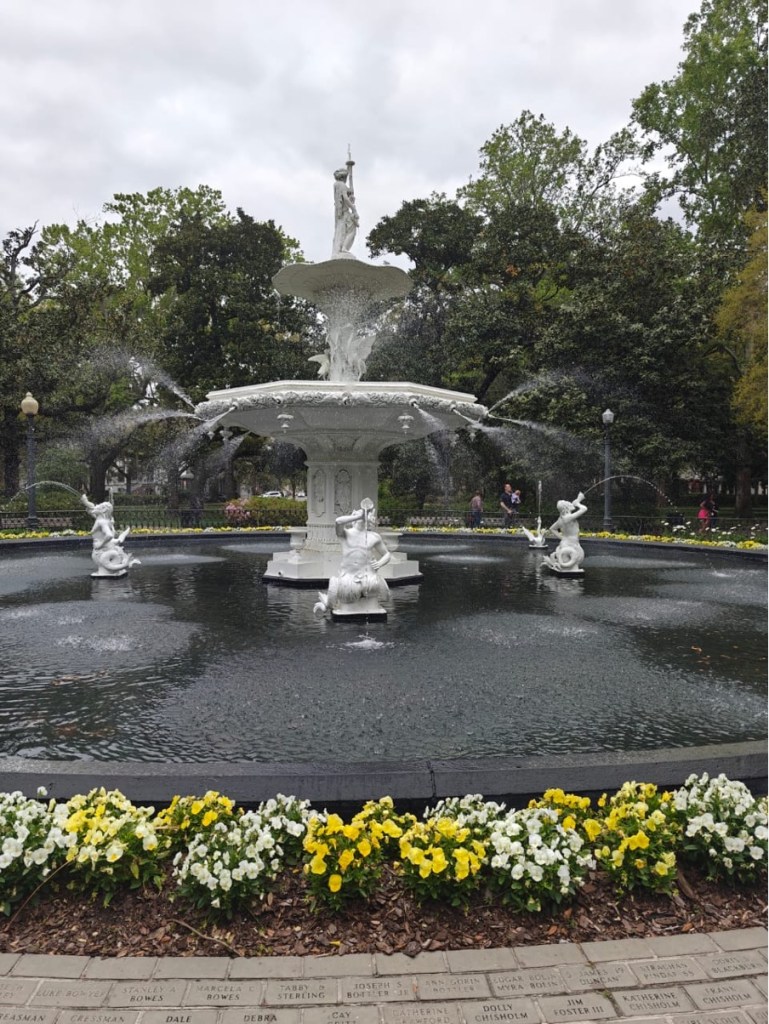
The Iconic Fountain in the Forsyth Park
Savannah offers a Southern hospitality that’s as warm as the Georgia sun, promising a remarkable journey through time and tradition. It’s a place where history, architecture, and the spirit of its people offers a magical and delightful experience.
(Concluded)
 scribo ad LX