On Beauty, Transience, and the Grace of Letting Go
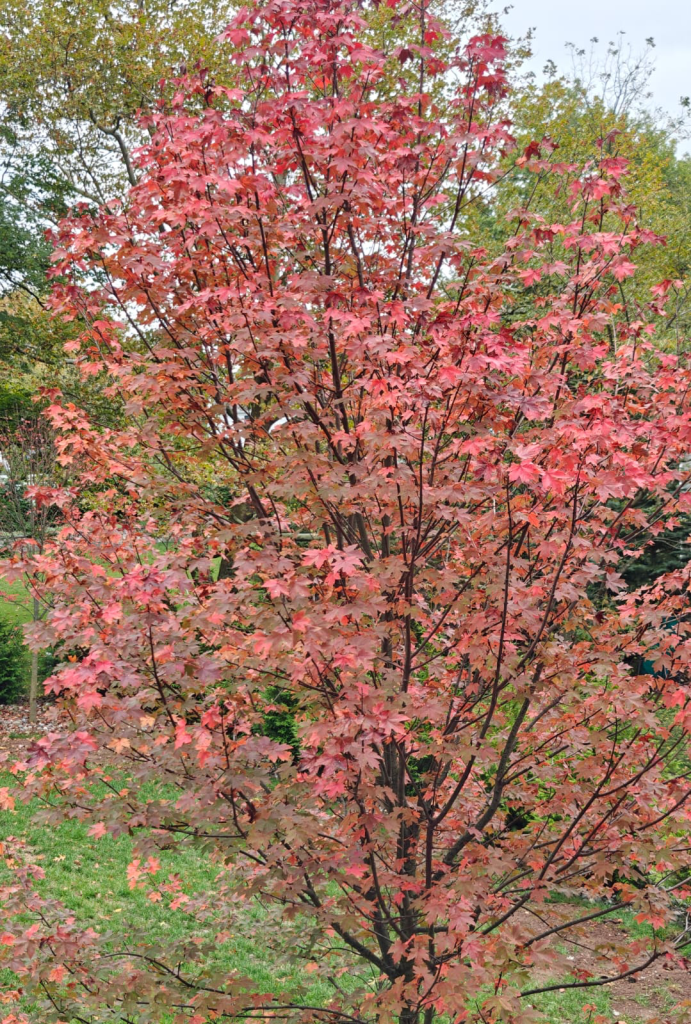
Each morning and evening, as I walk through the quiet streets of Short Hills (New Jersey), I am met by an astonishing theatre of transformation. The maples that only weeks ago stood in tranquil green now burn in gold, in orange, in impossible crimson. Every day they alter their attire, as though an unseen painter were blending new shades of light and emotion on his celestial palette. I stand before them, humbled and moved, and ask myself—how does one bear so much beauty, knowing it will not last?
There is a peculiar ache in witnessing autumn. The splendour of fall is both revelation and requiem. These trees, once serene and full of leaf, now seem to celebrate their own undoing. Their colours blaze brightest just before they fade. The philosopher Marcus Aurelius once wrote, “Everything transitory is but a symbol.” And perhaps these leaves are symbols of our own lives—brilliant, finite, and yet, in their ending, unbearably beautiful.
When the wind stirs, the leaves detach, one by one, and at times in a flurry. They drift and twirl, uncertain whether to rise or fall, like thoughts released from the mind. Some settle softly on the damp earth; others are carried farther, unseen. Yet none seem to resist their destiny. Their descent is not collapse but surrender—a graceful acceptance of the cycle that gave them colour in the first place. They do not cling. They trust the earth that bore them to also receive them.
Standing there, I wonder: must we mourn their passing? Or is this the truest form of peace—to live brightly, and then let go without regret? Rainer Maria Rilke said, “The leaves fall, fall as from far, like distant gardens withering in the heavens.” But perhaps fall is not decay at all. Perhaps it is a visible transformation—the moment when being and becoming coincide. Keats once whispered, “Season of mists and mellow fruitfulness,” and in those soft words there is both fullness and farewell—the serenity of things that have ripened and are now ready to return.
We live our lives yearning for the stable green—the season of safety, routine, endurance, permanence. Yet, secretly, we are drawn to the crimson fire of intensity, the fleeting glory that leaves a trace on the soul. Stability comforts us, but passion awakens us. Between the two, life unfolds—one leaf at a time, one letting go at a time.
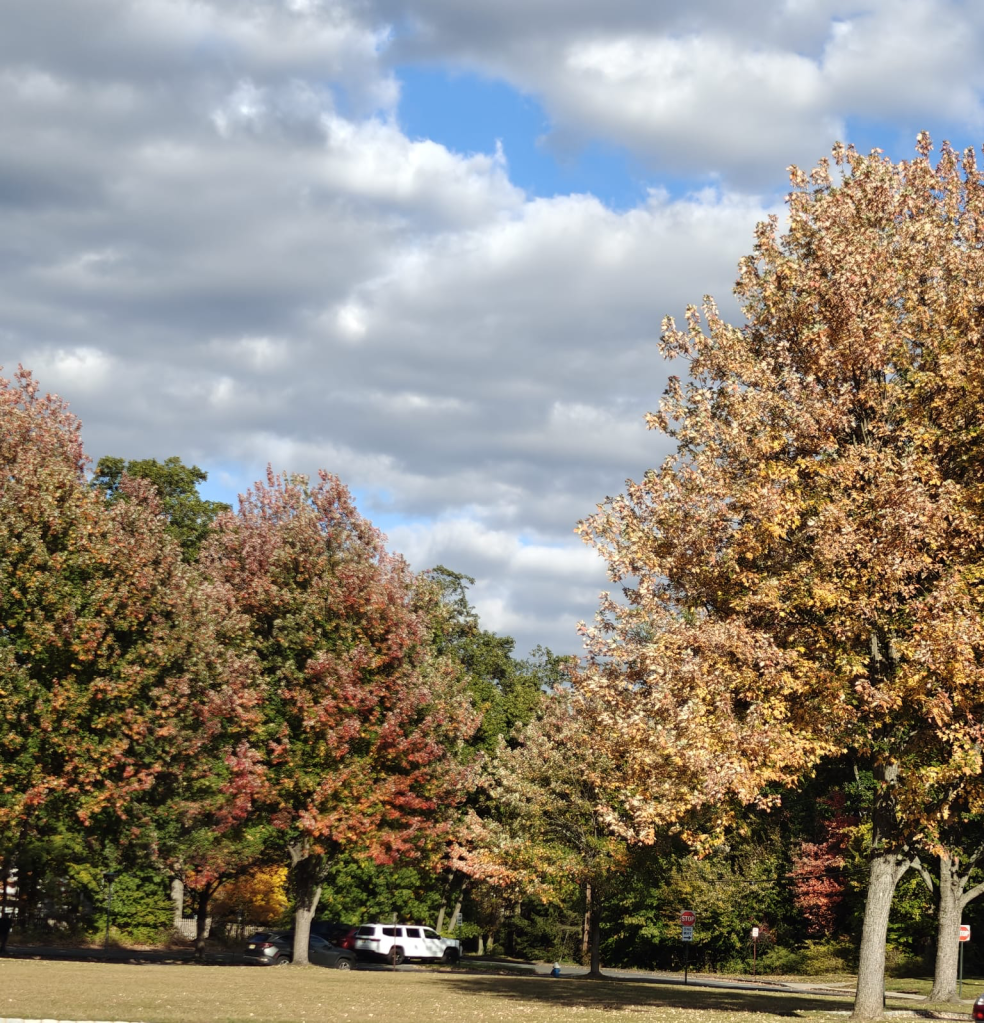
In the late afternoon light, when the sun turns the trees into a living flame, I see no tragedy in their fading. Their brilliance is not diminished by its brevity; if anything, it is made more sacred. For to burn briefly and beautifully is its own form of eternity. Perhaps permanence was never the promise of beauty; perhaps its promise is presence—the fullness with which we inhabit the moment given.
As Wordsworth wrote:
“Though nothing can bring back the hour
Of splendour in the grass, of glory in the flower,
We will grieve not, rather find
Strength in what remains behind.”
In the same vein, poet Robert Frost wrote, “Nothing gold can stay,” but while it stays, it gilds the heart with its radiance.
And then a thought rises, unbidden: perhaps one’s own ending should be like that of these leaves—bright, brilliant, falling with a dazzle and glow. To conclude one’s innings not in dim retreat, but in a blaze of colour, grace, and remembrance. What greater benediction than to leave the world illuminated, even for a moment, by the light of one’s own autumn?
When at last the branches shall stand bare against the pale November sky, I will not feel loss. I will feel recognition. What falls is not gone; it only returns. The leaves become the earth that will nourish spring. The end is not annihilation but renewal—life folding into itself like a secret prayer.
And so, I keep walking under this canopy of changing light. I think of my own days—some green, some golden, some aflame, some lightless—and whisper to myself: let me live like these leaves—bright, glorious, and transient, burning briefly, then at peace with the nature that made me.
 scribo ad LX