In Memory and Intimacy: A Personal Companion
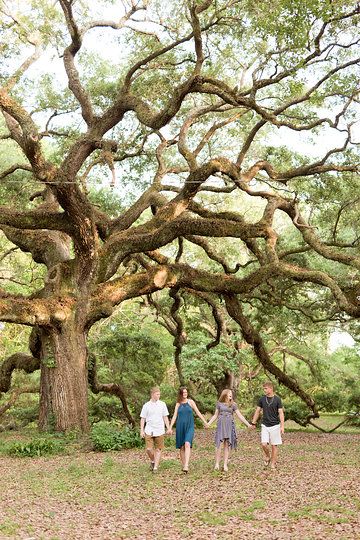
“The tree is the slowest, most patient of all living things. To sit beneath one is to be reminded of what endures when everything else passes.”
— John Fowles
If myth made the oak divine, and art made it eternal, then memory makes it beloved. There are trees we revere from a distance, as emblems of strength or majesty. And then there are those that dwell in our intimate geographies, becoming part of our memory, our stories, and our daily affections. The oak belongs here. It is not only the forest’s patriarch or the landscape’s sentinel; it is also a tree that slips quietly into our private lives.
The English poet Alfred, Lord Tennyson once described the oak as “the noblest tree that ever grew in forest or in hall.” Yet the nobility of the oak lies not only in its grandeur but also in its capacity to be remembered. The family oak becomes the backdrop to birthdays, farewells, or weddings — and later stands as the keeper of silence when those voices have long since gone.
Beyond forests and cathedrals, beyond canvases and sculpture, the oak has lived in the intimate sphere of human experience — the remembered corner of a childhood, the silent witness to a village’s joys and sorrows, the steadfast presence in ritual. Trees, in their stillness, see us more than we see them. And oaks, in particular, have stood as cultural witnesses to human destinies, embodying permanence, shelter, and strength.
The Oak as Preacher of Intimacy
Herman Hesse once wrote: “For me, trees have always been the most penetrating preachers. I revere them when they live in tribes and families, in forests and groves. And even more I revere them when they stand alone.” The oak, whether solitary or communal, has always been such a preacher. To lean against its bark is to feel continuity; to hold an acorn is to hold a fragment of patience itself. Children pocket acorns as keepsakes, lovers carve their initials on its trunk, families gather in its shade. The oak shelters not just birds and beasts, but the invisible presences of memory.
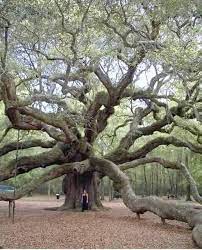
The Oak as a Witness of Lives
History, too, remembers the oak as a companion of human destiny. The “Charter Oak” of Connecticut hid the state’s royal charter from the British governor in 1687 and became an emblem of freedom. The “Royal Oak” at Boscobel sheltered Charles II after his defeat at Worcester. Such trees did not merely stand through history; they absorbed it, holding human stories in their rings as much as in our myths.
Across Europe, villagers gathered under oaks for councils, markets, or festivities — the original public square. To this day, English pubs still carry the name “The Royal Oak.” The tree was not only timber for shipbuilding or emblem of empire; it was also the silent companion of ordinary lives, the hearth of memory.
The Solitary Companion
For writers, thinkers, and wanderers, the oak has been a faithful confidant. Thoreau called it “a strong and living companion,” while Virginia Woolf saw it as a “silent witness of all our moods.” To sit beneath one is to lean upon something older and larger than our own cares. Its silence is not emptiness but presence — a presence that has steadied countless hearts.
Indian Parallels: Banyan and Peepal
As an Indian, I cannot help but feel a resonance between the oak of the West and the banyan (vat) and peepal (ashvattha) of my own culture. Just as the oak anchored villages in Europe, the banyan anchored Indian hamlets: elders met in its shade, councils deliberated, wandering monks found shelter at its roots.
The peepal, meanwhile, has always been sacred — the tree of the Buddha’s enlightenment, and the one described by Krishna in the Bhagavad Gita: “Among trees, I am the Ashvattha.” Kalidasa, in Shakuntala, wrote of trees that “stand like hermits, lifting their arms in prayer, bestowing their shade upon those who seek refuge.” What the oak is to the Western imagination, the banyan and peepal are to the Indian: living cathedrals, memory-bearers, and cultural witnesses.
Trees of the Heart
Memory is not always public. It is also deeply private. A lone oak in a graveyard may become the silent confidant of a mourner. An acorn carried in a pocket may serve as a talisman of resilience. Wendell Berry reminds us: “I don’t believe that a tree grows only from its roots. It grows also from the sky, from the light, from the air, and from what is around it.” So too with us: we grow not only from our roots, but from the presence of those we hold dear.
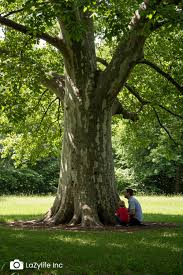
Often the oak appears in the backdrop of family photographs: a wedding party gathered at its base, a summer picnic beneath its shade, a soldier home from war leaning against its trunk. It is rarely the subject, yet always present — steady, faithful, quietly folding human memory into its rings.
Even in absence, it lingers. The stump of a felled oak can bring tears — not merely for the tree itself, but for the landscape of memory severed with it. “That was where we played,” someone says. “That was where she used to sit,” recalls another. The oak, once rooted in earth, becomes rooted in us.
Cultural Witness
Unlike gods distant in heaven or painters immortalized on canvas, these oaks belong to us. They are the trees of our heartscapes, woven into daily life. They teach that intimacy need not be spoken — it can be about presence: something standing there, year after year, watching us grow, falter, depart, return.
Thus the oak becomes less an object and more a presence — a participant in our inner lives. It is both cathedral and hearth, both symbol and companion. It holds our griefs and our joys, without ever speaking, and in that silence it becomes eloquent. Kahlil Gibran’s words seem apt here: “Trees are poems that the earth writes upon the sky.” The oak is such a poem, not merely written in wood and leaf, but in the language of our affections.
Myth gave it majesty, art gave it beauty, but memory gives it intimacy. We remember not just the oak, but ourselves in relation to it — the child climbing, the lover carving, the mourner sitting, the thinker musing. The oak does not only exist in forests; it exists within us.
 scribo ad LX