Oaks in Thought, Word, and Image: Literature, Art, and Human Creativity
“Finds tongues in trees, books in the running brooks,
Sermons in stones, and good in everything.”
-Shakespeare (As You Like It, Act II, Scene I)
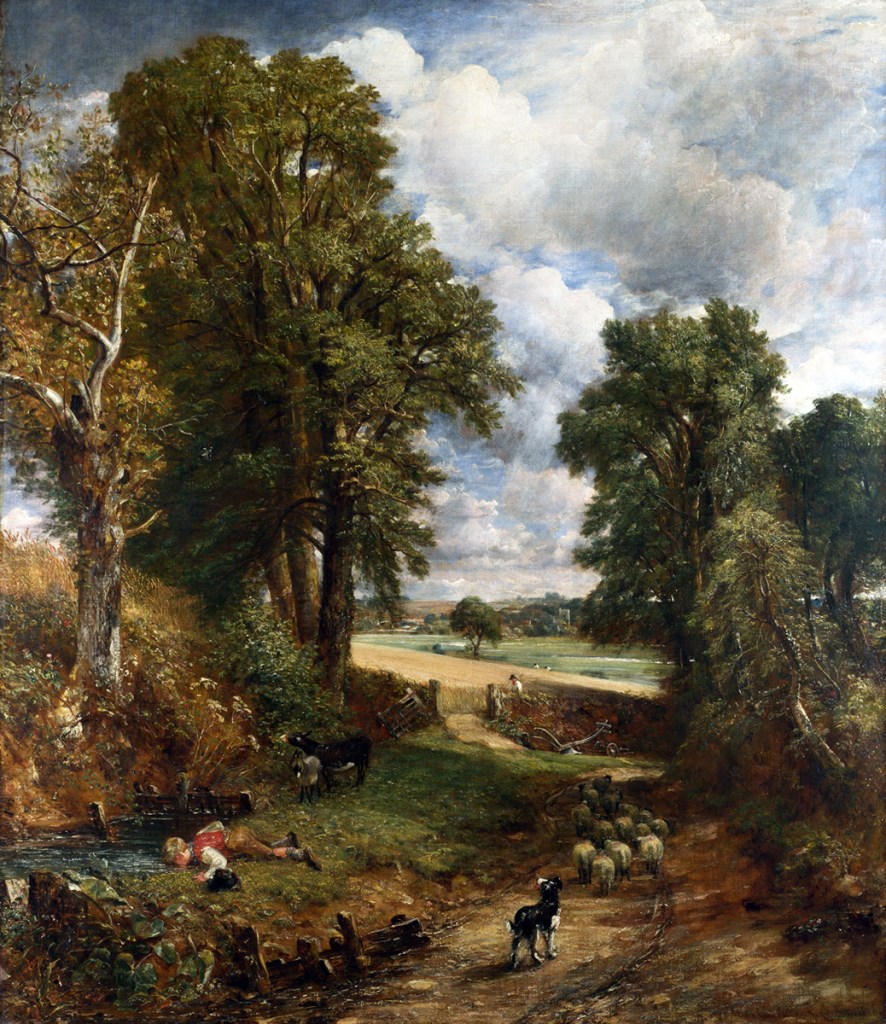
John Constable, The Cornfield (1826), National Gallery, London.
If in myth the oak stood as a sacred emblem, and in ecology it reigns as a keystone of life, then in human creativity it flourishes as metaphor, muse, and material. From poetry and painting to sculpture and speech, the oak has been a canvas upon which humanity has painted its sense of permanence, resilience, and beauty. To write of the oak in literature and art is to enter a gallery of words and images where its silhouette rises like a cathedral, its branches arching into symbol, its endurance lending itself to allegory. No other tree has been so persistently drafted into the service of metaphor, yet so steadfast in its singularity.
The Oak in the Language of Poetry
The oak has stood at the crossroads of poetry since antiquity. For Homer and Virgil, its presence lent weight to epic verse, a natural monument as unyielding as fate itself. In medieval romances, the oak became a marker of both place and permanence—lovers met beneath it, knights rested under its canopy, and wandering pilgrims carved prayers into its bark.

Oak Tree in the Snow—a solitary, wintry oak that symbolizes endurance and rebirth by Caspar David Friedrich (1774–1840)
The Romantics, enthralled by nature’s sublimity, saw in the oak not just grandeur but also intimacy. They, preoccupied with the relationship between humankind and nature, often leaned on the oak as a moral compass. Wordsworth, mourning human violence and selfishness, turns instinctively to the witness of trees:
“To her fair works did Nature link
The human soul that through me ran;
And much it grieved my heart to think
What man has made of man.”
— Lines Written in Early Spring
Here the oak is less a backdrop than a participant, a silent rebuke to human cruelty. Coleridge too composed an Ode to the Oak, seeing in its massive shadow a refuge untouched by axes, a sanctuary of unbroken song. For them, the oak stood as something more ancient, more steadfast than fleeting political systems or fragile human moods.
Walt Whitman, with his democratic expansiveness, declared the oak a comrade—rugged, capacious, unafraid of time. In Emily Dickinson’s compressed lyricism, the oak appears as an image of quiet majesty, “a tree that stands without request / but shelters multitudes.”
Across traditions, the oak is rarely absent when poets seek to invoke strength, patience, and dignity. It is the metaphor par excellence of endurance: oak-hearted is still a synonym for unyielding courage.
The Oak in Fiction and Storytelling
Prose too has found the oak indispensable. In European folktales, it often serves as the tree of counsel, a silent elder to whom heroes confess or from whom they receive cryptic wisdom. In Russian fairy tales, the oak guards the entrance to other worlds, its roots binding together the realms of the living and the dead. In Native American stories, the oak is cast as both provider and protector, a tree that makes kinship possible between humans and the more-than-human.
Modern novelists have also leaned upon its strength. In Thomas Hardy, the oak marks landscapes of rural England with both melancholy and majesty. J.R.R. Tolkien, a philologist attuned to the resonances of myth, folded the oak into Middle-earth’s arboreal lineage, a tree both of ancient memory and future renewal. Contemporary fiction too returns to the oak—whether in Annie Proulx’s sweeping sagas of land and people, or in Richard Powers’ The Overstory, where the oak becomes a protagonist in its own right, a witness and participant in human destiny.
The Oak in Visual Art
Painters and sculptors have not been immune to the oak’s allure. From Dürer’s meticulous engravings of oaks bristling with life, to Constable’s bucolic landscapes where they anchor the English countryside, from Caspar David Friedrich’s stunning visuals to Van Gogh’s restless studies of twisted branches—the oak appears as both subject and frame, emblem and environment.
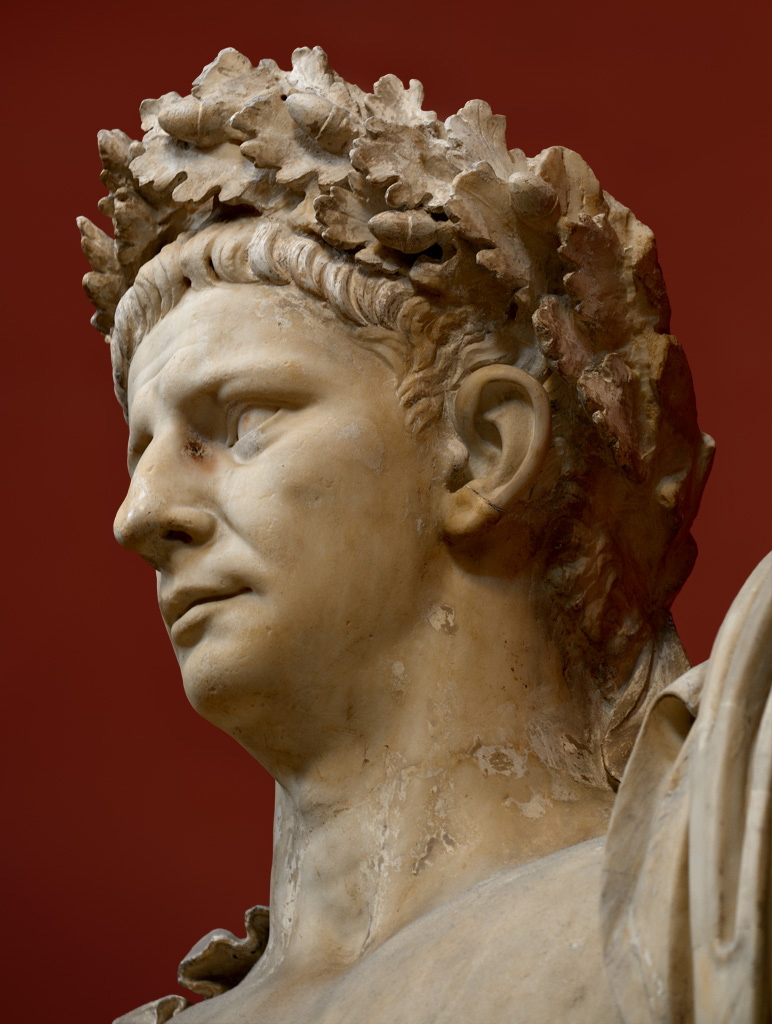
Emperor Claudius adorned with an oak-leaf wreath—symbol of imperial authority and valour.
In sculpture and architecture, oak wood itself has carried the burden of beauty. Medieval cathedrals rose on the strength of oak beams, many of which still hold centuries later. Carvers fashioned saints, gargoyles, and reliquaries from its timber. Even modern artists, from Henry Moore to contemporary eco-sculptors, have drawn upon the oak’s solidity, using it to speak of permanence, of humanity’s dialogue with nature.
The Oak in Music: Resonances of Time
Music, too, owes part of its soul to the oak. Drums fashioned from oak echo with a depth that other woods cannot easily match. Oak-panelled concert halls carry sound with warmth, resonating like an embrace. Folk songs across Europe mention the oak as the village meeting tree, beneath which fiddles were tuned, dances begun, and marriages blessed.
Even when not material, the oak is symbolic. German lieder of the 19th century often placed lovers beneath oaks, their songs filled with longing and shelter. In English folk ballads, the “greenwood oak” was a place of freedom and rebellion. In Indian devotional music, while banyan and peepal dominate imagery, the oak’s essence lingers in the idea of the eternal tree that watches, blesses, and shelters.
The Oak in Everyday Speech
So ingrained is the oak in cultural imagination that it has seeded everyday language. To be sturdy as an oak is to be unshakeable; to be oak-hearted is to be courageous; to weather life’s storms is to be like an oak standing firm against the wind. In heraldry, oak leaves and acorns symbolize honour and civic duty; in political rhetoric, leaders are praised as oaks—deep-rooted, unbending, reliable.
Even in the subtle rhythms of daily idioms, the oak lingers. We call friendships “oaken” when they endure. We invoke the acorn proverb—from little acorns mighty oaks grow—to remind ourselves of potential hidden in humble beginnings. The oak has thus entered not only our art but also the way we speak, shaping the metaphors by which we live.
A Living Archive of Creativity
To look at the oak in art and literature is to walk through a museum of humanity’s longings. It is at once poet and painting, symbol and sculpture. Its meanings shift with each era, yet its presence remains unshaken. To poets, it is metaphor; to painters, form; to builders, matter; to storytellers, symbol. It has provided both the material and the imagery of creation. To speak of the oak in art is to glimpse humanity’s ceaseless attempt to articulate its relationship with time, strength, and belonging.
Milton’s lines in Paradise Lost capture that timelessness:
“…the broad and stately tree,
That never knew decay.”
Here is the paradox of the oak: mortal in wood, yet immortal in symbol. We have harvested its timber, carved its leaves, printed its form, and sung its name. And still it endures, an infinite trunk in the gallery of the human mind.
Closing Note
In the chapters so far, we have traced the oak as fossil, as ecological sovereign, as sacred emblem, and now as muse of creativity. Each vantage point reveals a different facet of its majesty, yet all circle back to the same truth: the oak endures not merely in forests but in our imagination.
The next chapter will explore this most intimate of relationships: the oak in the realm of personal memory and lived experience. If the oak has shaped the imagination of civilizations, it has equally shaped the lives of individuals who have sat under its branches, carved their names into its bark, or simply drawn breath in its shade.
 scribo ad LX