The Green Sovereign: The Oak’s Environmental Generosity
“When one tugs at a single thing in nature, he finds it attached to the rest of the world.”
— John Muir
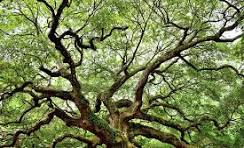
There are trees that stand in quiet splendour, content to let the centuries pass without fanfare. And then there is the oak — a monarch not only in stature and age but in its profound, unassuming generosity. If the previous chapter of its story is written in the language of antiquity and endurance, this one speaks of a tireless, life-giving presence — a keystone in the grand design of nature.
If the Amazon is the lung of the planet, then the oak is its patient, beating heart. Wherever it grows—on wind-swept hilltops, in shaded valleys, or along the gentle curve of a river—it radiates a quiet beneficence, a generosity so understated that one could walk beneath its branches for a lifetime without realising the immensity of the life it sustains. Yet to those who pause, who linger, who look closely, the oak reveals itself as a self-contained world.
The Keystone Monarch
Ecologists call the oak a keystone species—a term borrowed from architecture, where the keystone holds an arch in place. Remove it, and the whole structure crumbles. In the temperate forests of the Northern Hemisphere, no other tree harbours more biodiversity than the oak.
A single mature specimen can host over 500 species of moths and butterflies, countless fungi, mosses, and lichens, and an ever-shifting cast of mammals, birds, reptiles, and insects. Its leaves, bark, and acorns feed the visible and the hidden alike: from the deer that browses on tender shoots to the microscopic soil fungi that entwine themselves around its roots.
The oak is less an individual and more a republic — a parliament of species gathered under its sovereign shade.

Oak leaf and Acorns
The Banquet of the Forest
Every autumn, the oak offers up its signature gift—the acorn. To the casual observer, they are merely hard-shelled nuts scattered underfoot. To forest life, they are sustenance and survival. Jays and squirrels cache them, often forgetting where some are hidden, inadvertently planting the next generation. Wild boars, bears, and even ducks feast on them. In lean years, acorns can mean the difference between starvation and survival for countless creatures.
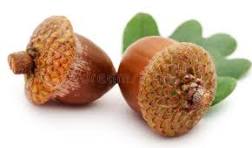
A Close up of Acorns
And the generosity does not end there. In spring, it feeds pollinators with catkins heavy with pollen; in summer, its shade shelters the moisture of the forest floor, allowing ferns, wildflowers, and mosses to flourish beneath. Even in death, an oak continues to give—its hollow trunks become nesting sites for owls, bats, and woodpeckers; its fallen branches nourish the soil with rich humus.
As the poet Ralph Waldo Emerson once said, “The creation of a thousand forests is in one acorn.” In the oak’s banquet, the future is always being served.

An Oak tree with diverse under-storey
The Living Canopy
Stand beneath a mature oak and you are not under a tree; you are inside an ecosystem. Its canopy is both roof and habitat. Warblers flit among its leaves; wasps and beetles explore its twigs; tiny spiders spin glistening nets between the serrated edges of leaves. The rough bark harbours colonies of lichens that, in turn, shelter minuscule invertebrates. Roots spread like a subterranean mirror of the branches above, binding soil, storing carbon, and tapping deep into underground reservoirs of water.

The root system of an Oak tree
This vast interconnectedness means that an oak’s health is rarely its own—it is shared. If the soil is poisoned, the fungi suffer; if insects vanish, birds leave; if the oak falls, the chain is broken.
The Silent Engineer
Beyond visible life, the oak is a master engineer of its environment. Its deep roots anchor the soil, preventing erosion along hillsides and riverbanks. In times of heavy rain, the canopy slows the fall of water, reducing runoff and flooding. The root system acts like a sponge, drawing water deep into the ground and releasing it slowly, sustaining nearby plants during droughts.
In the great, unseen cycle of air, oaks play their part as carbon sinks—absorbing carbon dioxide and storing it in their wood for centuries. An old oak is thus a living archive of the planet’s atmospheric history, each ring a record of rains, droughts, heat, and frost.
Resilience in the Face of Change
Oaks have lived through ice ages and interglacial thaws, through human deforestation and industrial soot. They are not immune to modern threats—pests, pathogens, climate shifts—but they possess a resilience born of time itself. Their ability to sprout anew from a cut trunk, to send roots around rock and through clay, to adapt leaf shape and growth to changing light—these are the quiet tricks of survival.
In the age of climate change, oaks may prove critical allies. Their capacity to endure heat, hold water, and stabilise soils will help anchor ecosystems under stress. In some rewilding projects, oaks are being reintroduced as the structural backbone of restored forests, a role they seem to accept without fanfare.
The Generosity We Overlook
We live in an age of extraction, where generosity is often measured in transactions. But the oak’s gift is not transactional—it is intrinsic. It gives because that is its way, because its very being is an act of sustenance. A forest with oaks is a richer, more stable, more abundant place. A forest without them feels somehow emptier, its heart missing.
In Celtic lore, the word for oak—duir—is related to the word “door.” Perhaps it is indeed a doorway, not just to the forest’s abundance, but to a different way of seeing: a reminder that strength can be gentle, and that giving, when done without expectation, becomes part of the fabric of life.
As we step away from its shade, it is tempting to think of the oak’s gifts as belonging only to the forest. But in truth, its role in regulating climate, cleaning air, holding soil, and feeding wildlife touches our lives as surely as it does the smallest wren or wildflower. The oak’s story is the earth’s story, and by extension, our own.
Closing Note
In this part, we have seen the oak not as a solitary giant, but as a sovereign presiding over a court of innumerable lives—a green monarch whose reign is measured not in years but in centuries of quiet service.
In the next, we will step away from the ecological into the realm of story and symbol, tracing how human cultures—European, Native American, and beyond—have woven the oak into their myths, emblems, and civic pride. If in nature the oak is a keystone, in culture it is a cornerstone.
 scribo ad LX