Antiquity and Evolution –From Fossil Records to Timekeeper of Forests
“Oaks are not merely trees. They are hieroglyphs of time, their rings a silent language spoken in centuries.”
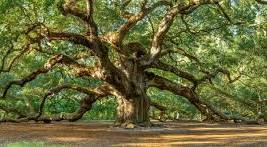
A Tree Older Than Memory
The oak is not only ancient—it is ancestral. Its story begins not in the pages of human myth or literature, but deep in the strata of the Earth itself. Fossil evidence traces the presence of oak ancestors to the late Cretaceous period, more than 56 million years ago, when the Earth was warmer, wilder, and filled with towering reptiles and early mammals. In the understorey of those primordial forests, amidst cycads and ginkgos, the early relatives of the oak began to evolve, developing the traits that would one day make it one of the most beloved and enduring genera in the plant kingdom.
Quercus (Yes, that is how science calls it) is thought to have radiated from an ancestral origin in Southeast Asia, spreading westward and northward in a patient, branching migration—one leaf at a time. From these deep-time origins, the genus (Latin for “fine tree”) diversified into a vast and generous lineage of over 500 species across four continents. North America, in particular, boasts the greatest diversity, with over 200 native species adapted to microclimates ranging from the arid chaparral of California to the temperate forests of the Appalachians. Europe, Asia, and parts of North Africa too have their share—slow-growing, broad-crowned, and rooted in both earth and culture. They are broadly grouped into white oaks and red (or black) oaks, differentiated by leaf form, acorn maturation, and wood grain.
Botanically, oaks belong to the beech family (Fagaceae)—cousins to chestnuts and beeches—but in stature, cultural resonance, and ecological influence, the oak far exceeds its kin. Even in their earliest forms, oaks stood apart—not just for their stature, but for their silent capacity to mark time, weather storms, and shelter lifeforms both great and small.
The Architecture of Longevity
What sets the oak apart is not merely its age, but its architecture of endurance. Its dense, fibrous wood is among the hardest and most durable in nature, resistant to rot and decay, and once prized for warships, temples, and homesteads. Its leaves are often lobed, its bark thick and fissured—protective, fire-resistant. Its root systems run wide and deep, anchoring the tree against both storm and drought.
Oaks may be deciduous or evergreen depending on species, and are often monoecious—bearing both male catkins and female flowers on the same tree. The familiar acorn, humble as it appears, carries a genetic blueprint for resilience. A single oak may produce millions of acorns in its lifetime—an act of quiet abundance, an evolutionary wager on endurance through generosity.
Such traits confer longevity. Many oaks live for 500 to 1,000 years, though legends tell of older ones. The Bowthorpe Oak in Lincolnshire, with a hollow trunk wide enough to host a dinner party, is thought to be over 1,000 years old. The Ivenack Oak in Germany is older still—estimated at nearly 1,200 years. In the Eastern Himalayas, lesser-known but equally enduring oaks have grown in monsoon fog for centuries, untouched by axe or ambition.
These trees do not simply age. They accumulate time—monuments rewriting themselves, ring by ring.
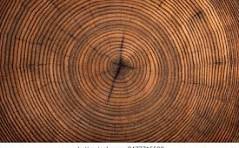
Rings splendidly revealing Oak’s Age
The Oak and the Clock of Forests
Perhaps the oak’s most poetic contribution to science is its role as a biological clock. Within its core lies an unbroken script of concentric rings—each line a year, each year a record. This is the realm of dendrochronology, the study of tree rings, and oaks are among its most faithful recorders.
A narrow ring may signal drought or fire; a broad one, abundance and rain. By aligning ring sequences across trees in the same region, scientists can reconstruct timelines stretching back thousands of years—dating climatic shifts, volcanic eruptions, even archaeological finds.
In this way, oaks are natural archives. When volcanic ash from Santorini blanketed Europe in 1620 BCE, the oaks of Central Europe remembered. When rivers flooded, when empires rose and fell, the rings in oak timbers kept the evidence—quiet, unbiased, enduring.
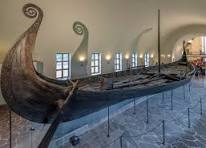
Oseberg ship – the best preserved ship from viking era. Norway, 9th century
Oak beams in Viking ships, Roman bridges, and Gothic cathedrals still whisper their histories. A stave church in Scandinavia may help date a Norse settlement; a plank from a Tudor wreck might tell of a year of failed harvest. Even in death, the oak remembers.
“Each ring is a chapter; each chapter, a year. No novelist has written as slowly or as truthfully as the oak.”
A Witness to Earth’s Changing Face
The evolutionary success of the oak lies not in domination, but in symbiosis. It does not crowd out rivals; it shapes ecosystems with quiet authority. Oaks create cooler, richer microhabitats under their canopies. Their leaves feed the soil, their branches cradle birds, their roots harbour fungal networks that communicate underground like a hidden parliament of the forest.
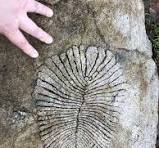
A well preserved Fossil
Even in fossil pollen retrieved from ancient peat bogs, the oak’s journey is legible. During the Pleistocene glaciations, oaks retreated southward into warmer refuges. As glaciers melted, they advanced northward—slowly, stubbornly—reclaiming lost ground over millennia.
They have seen continents drift, climates shift, species vanish and new ones appear. The oak endures not by resisting change, but by folding it into the architecture of its branches.
Toward the Sacred
Is it any wonder that ancient peoples, seeing this unshakable giant, assigned it divinity? That they came to see in its form the axis of the world, the home of gods, the gateway to other realms?
But that is a tale for another chapter.
For now, we dwell on its age and essence. The oak does not merely exist—it abides. It reminds us that not all greatness is quick or loud. Some is rooted, repetitive, resilient—like breath, like tide, like truth.
“He who plants an oak looks beyond his lifetime. He who walks under one treads on time.”
In an age obsessed with speed and spectacle, the oak offers a counter-vision: deep roots, slow time, quiet knowing. It does not rush, it does not demand—it simply grows into itself. And thus, in bark and leaf, acorn and shadow, the oak continues its long journey—not only through landscapes, but through meaning.
A witness to evolution. A vault of memory. A keeper of forest time.
End Note to Part II
In this part, we have journeyed with the oak from its fossil dawn to its present role as a keeper of both forest time and planetary memory. In the next part, we will turn from deep time to the present moment, from the oak’s origins to its quiet environmental generosity. We will explore how these ancient trees sustain ecosystems, anchor soils, shelter birds and insects, store carbon, and give shade to humans on summer afternoons. We will see how, in their enduring patience, they embody a truth the modern world too easily forgets: that the measure of greatness lies not in what we take from the earth, but in what we give back.
 scribo ad LX