The Yellow Radiance of Amaltas
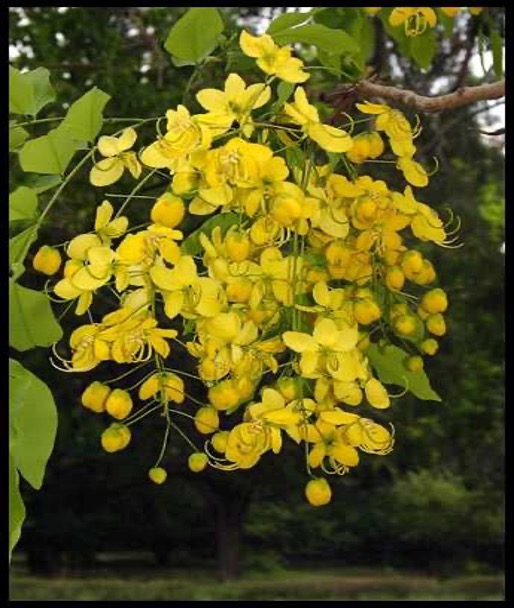
Following the fiery red of the African Tulip and the ethereal white of the Indian Cork Tree, Bengaluru’s lush canopy bursts into a brilliant yellow each spring, thanks to the spectacular Amaltas, or Cassia fistula. Commonly known as the Indian Laburnum or Golden Shower Tree, Amaltas is one of the city’s most iconic trees, symbolizing vitality, elegance, and the energy of a new season.
In my series on the colours of Bengaluru, it’s the turn of yellow-the radiant, bright, the auspicious hue that brings endless joy to the beholder. And no flower represents yellow in all its glory and splendour better than the most bewitching and mesmerising Amaltas.
It’s radiant, golden blooms are a true spectacle, painting Bengaluru’s avenues in hues of sunshine. Its inflorescences, though delicate, embody a strength and vibrancy that commands admiration. As the golden petals drift to the ground, they leave a soft, sunlit carpet, allowing us a moment of tranquillity beneath its leafy canopy. To walk under the Amaltas in bloom is to feel a gentle brush with nature’s abundant beauty—a beauty that thrives in simplicity, grace, and a touch of golden magic.
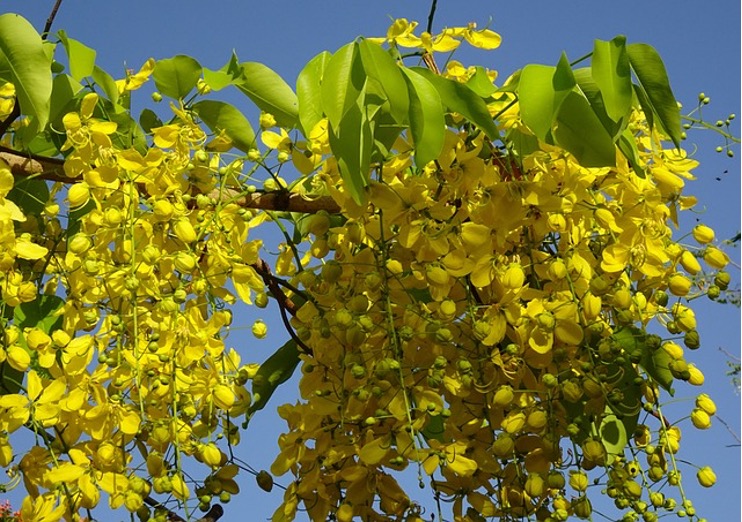
Bengaluru’s green cover is home to several trees that bear yellow flowers, each with its own unique charm. Cassia siamea and Cassia spectabilis add their own splashes of yellow throughout the city, contributing to the vibrant, ever-changing cityscape. And then there is, the Cassia javanica, or Java Cassia a close cousin, , that blooms with delicate pink flowers that gradually turn white, creating a dreamy spectacle. These trees, from near and far, create a harmonious mosaic, showcasing shades of yellow that enrich Bengaluru’s verdant urban spaces.
A Botanical Marvel
Amaltas, with its origins in India, Burma, and Sri Lanka, has an unmistakable appearance. Its slender, drooping inflorescences, cascading in strings of bright yellow, evoke the image of golden chandeliers swaying gently in the breeze. Each flower, soft yet radiant, adds a sunny hue to the tree’s sparse green foliage, lending it a delicate charm. The long, cylindrical pods that follow the bloom add to its distinctive allure, housing seeds in individual compartments within a sweetish pulp. This pulp is not only beloved by animals like sloth bears but is also recognized in traditional medicine for its mild laxative properties.
The tree blooms between February and March, a time when Bengaluru’s streets and gardens are tinged with a sunlit glow from its flowers. These radiant blossoms attract butterflies, particularly from the Catopsilia and Eurema species, which lay their eggs on the tree’s tender leaves.
Its yellow splendour, coupled with its modest size and elegance, makes Amaltas a favoured choice for ornamental purposes, especially in parks and avenues.
Culture, Literature and Lore
The Amaltas is more than just a flowering tree; it is a symbol that echoes through ancient texts and traditional tales. Known as Kakke mara in Kannada, the tree has woven its way into the texts of Sanskrit and Hindi literature, often appearing as a metaphor for joy, prosperity, and nature’s resilience. In poetry and folk stories alike, Amaltas represents the warm embrace of spring, its golden blooms standing as a poetic reminder of hope and renewal. Its beauty and medicinal properties have earned it an almost revered status, one that is cherished in many parts of India.
In many Indian traditions, Amaltas flowers are seen as symbols of prosperity, auspiciousness, and renewal, especially since the tree blooms with the onset of summer. The timing aligns with several Indian festivals, particularly Vishu in Kerala, which celebrates the harvest and is marked by the appearance of bright yellow Amaltas flowers.
Amaltas has been historically valued in Ayurveda for its medicinal properties, especially for treating digestive issues, skin diseases, and inflammation. This practical and sacred role enhances its status in Indian society, where medicinal plants are revered. Amaltas, or Aragvadha in Sanskrit, is mentioned in ancient texts like the Charaka Samhita and the Sushruta Samhita, two foundational texts of Ayurveda. The tree is celebrated for its therapeutic properties, especially for purging toxins from the body, symbolically representing purification and rebirth.
In literature
झूमर से झूम-झूम पीत रंग खास के,
डाल-डाल झूल रहे फूल अमलतास के।
In modern Hindi poetry and literature, Amaltas often symbolizes the Indian summer, bringing brightness to otherwise scorching days. Poets like Sumitranandan Pant and Subhadra Kumari Chauhan have used imagery of the Amaltas tree to evoke the beauty of Indian summers, marking a contrast between the harsh heat and the tree’s graceful flowers.
In the works of the classical Sanskrit poets trees like Amaltas are often referenced as part of their poetic landscape, adding both visual and metaphorical richness.
Amaltas is a recurring metaphor for resilience, beauty, and joy in adversity in several poems and has the distinction of having several books of poetry named after it.
Indian folk culture and proverbs also mention Amaltas often as a metaphor for transient joys and moments of beauty in life.
The Yellow Hymn
Amaltas, thus, resonates deeply across generations, embodying resilience, seasonal beauty, and the renewal of life—a cultural symbol celebrated in texts, oral traditions, and everyday language in India.
Under the canopy of Amaltas' gold,
Soft petals spill, and stories unfold.
Each flower, a sunburst, gentle and bright,
Swings like chandeliers, holding the light.

In tales of lore, its beauty famed,
In quiet gardens, joy proclaimed.
A haven for wings, for bees and dreams,
Its shade a gift in sunlit beams.

So here it stands, radiant and rare,
A yellow hymn to Bengaluru’s air.
 scribo ad LX