“Stately as a king, he stands,

At the right hand of the throne,

In the hall of Irish legends,

Where his noble breed is known.”

                                              – David Wood
Considered the tallest of the large sized dogs, the magnificent Irish Wolfhound commands a stature that inspires awe and yet radiates comfort. Reflecting both calm and ferocity in equal measure, the Irish Wolfhound stands tall as not only the loftiest of the American Kennel Club breeds, but also as a symbol of grace, strength, and loyalty.
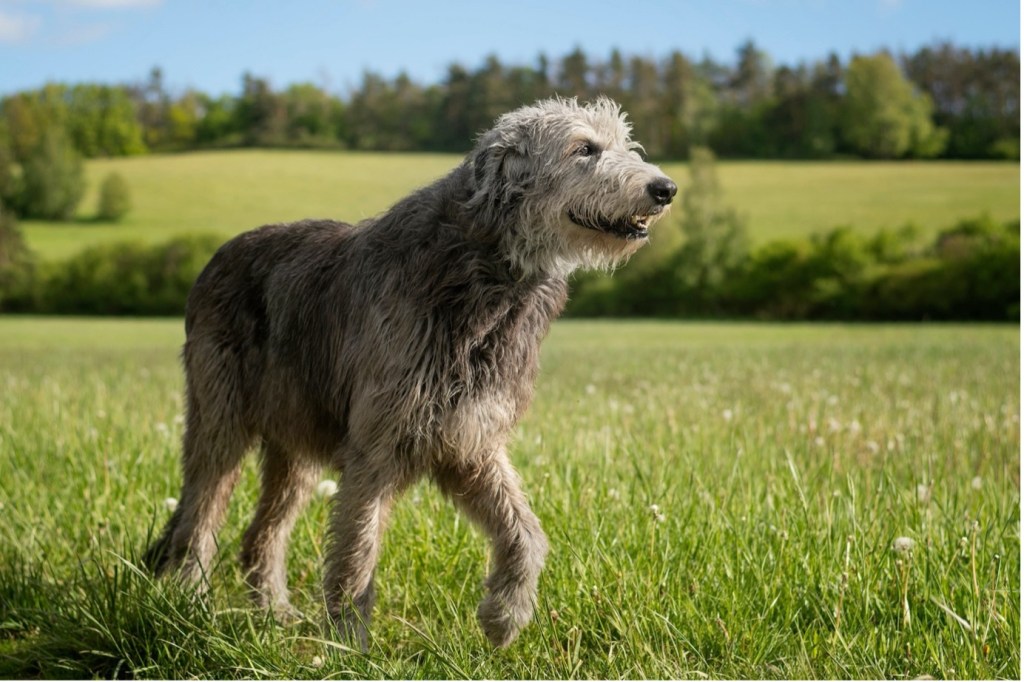
Described aptly as “gentle when stroked, fierce when provoked”, these immense muscular hounds trace their lineage through centuries of history abounding in captivating mythology and rich legend. They have left an indelible mark on the societies that not only relied on them but also immensely benefitted from their intrepid aggression and unqualified loyalty.
Legend has these magnificent hunters roaming the emerald island, their prowess unmatched as they pursued formidable Irish elk and marauding wolves. Theirs is a legacy of bravery and loyalty, immortalized in the tales of Gellert, the faithful hound, whose tragic fate resonates through the ages.
History and Mythology
Irish Wolfhounds enjoy a history with the patina of both myth and legend. In the early days of international trade between the British Isles and the Middle East, these noble beasts were born from the fusion of indigenous British dogs and the coursing hounds of distant lands. By the time the Roman Empire gained a toehold in the British Isles, these giant hounds were already long established. In the year 391 AD, the Roman consul received a gift of seven of these hounds that “all Rome viewed with wonder”.
A poignant Welsh legend tells the tale of Gelert, a loyal hound of Prince Llewelyn the Great. In the story, Gelert is wrongly accused of harming the prince’s son, only for the truth to be revealed too late, leading to a tragic end, a tale like the one of the mongoose and the child found in India’s Panchatantra. Gelert’s unwavering loyalty and sacrifice have immortalized him as a symbol of devotion, echoing the virtues embodied by the Irish Wolfhound.

Irish wolfhound is on the right
Victims of Autophagia?
These large hounds were used initially to hunt big game. In the 15th century, they were put to work in hunting the overpopulation of wolves in Ireland. They were such effective hunters that the wolves were hunted to extinction. Tragically, the wolfhound breed as a whole almost died out as a result because these dogs had served their purpose.
With the extinction of their quarry and the changing tides of time, the Irish Wolfhound itself faced a perilous precipice, teetering on the brink of oblivion. The very success of their hunting endeavours spelled danger for the breed, as their purpose became obsolete, and their numbers dwindled to near extinction.
Resurrection and Renaissance
In these times of adversity and existentialism for the canines, a saviour arrived in the form of British army captain George Augustus Graham, whose tireless efforts breathed new life into the dwindling lineage of Ireland’s national hound. With unwavering dedication, he embarked on a quest to safeguard, standardize, and promote the breed, ensuring its survival for generations to come. The echoes of his efforts reverberate through time, a testament to the enduring bond between man and hound.
Characteristics and Traits
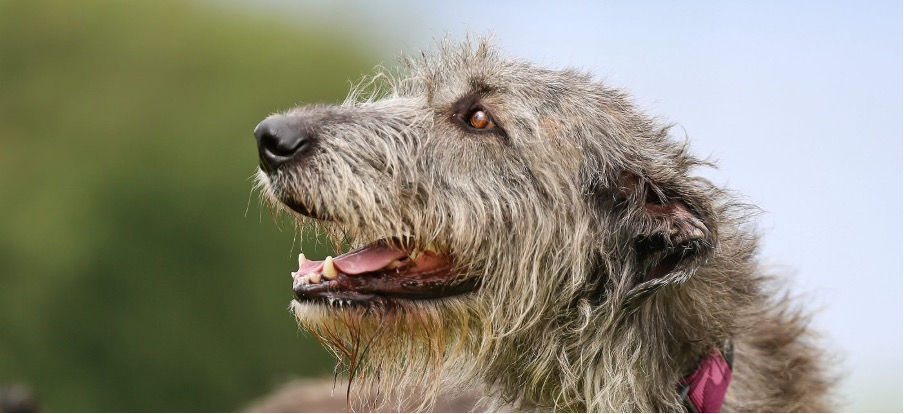
Standing tall with a regal bearing and a lanky, muscular frame, the Irish Wolfhound epitomizes a union of strength and elegance. With a minimum height of 30-32 inches and weighing from 105-180 pounds, these gentle giants command attention wherever they tread. Capable of great speed at the gallop, males stand nearly three feet at the shoulder, truly a whole lot of hound.
Their rough, hard coat comes in many colours, including white, grey, brindle, red, black, and fawn. They may be far too serene to be guard dogs, but what they lack in temperament is more than compensated by looks, for just the sight of one of them is enough to deter intruders.
Care and Considerations
Owning an Irish Wolfhound is not merely a privilege but a profound responsibility, demanding a commitment as vast as the dog itself. From health considerations such as bloat and heart disease to grooming needs and exercise requirements, caring for these majestic creatures requires diligence, dedication, and devotion. Yet for those willing to embark on this odyssey, the rewards are boundless, as the bond forged between the human and hound will transcend mere love and loyalty and truly be something special.

In Literature and Folklore
Gelert is not the only one who has won the hearts and earned the admiration of countless Irishmen. The Irish Wolfhound has left an indelible mark on literature and folklore, its majestic presence inspiring writers, poets, and storytellers throughout the ages.
In Shakespeare’s timeless tragedy, Macbeth, the character of Macduff is likened to an Irish Wolfhound and “not in the roll of common men”, underscoring the Irish Wolfhound’s noble lineage and fearless nature and its association with qualities of bravery, strength, and nobility.
Emily Dickinson, famous for using imagery from nature on abstract and universal themes, refers to the Irish Wolfhound as a symbol of mourning and loss, using the imagery of “seven hounds” to evoke a sense of sorrow and lamentation. The reference to the hounds emphasizes their significance as companions and guardians even in moments of sorrow and grief.
In Joyce’s seminal work, ‘Ulysses’, the character Leopold Bloom muses on the breed, reflecting on its majestic stature and noble bearing. The mention of the Irish Wolfhound adds depth to Bloom’s contemplations, highlighting its symbolic significance as a representation of strength, loyalty, and companionship.
These references offer a glimpse of the breed’s fascination with poets and litterateurs, immortalizing its legacy as a beloved companion and guardian throughout history.
An Ideal Family Dog
Originally bred as a big game hunter, the Irish Wolfhound is now primarily a family dog. A true gentle giant, it has an imposing stature but a calm demeanour and is a wonderful companion if one can only afford the space for them. As a hunter or a companion, the Irish Wolfhound stands as a symbol of and a testament to the enduring power of companionship, loyalty, and love.
Once on the verge of extinction, today the noble spirit of the Irish Wolfhound endures from the emerald shores of Ireland to the farthest reaches of the world, a shining star of the canine universe. A glance at their towering stature and an understanding of the depths of their gentle souls leaves one in no doubt that in the heart of every Wolfhound beats the timeless rhythm of friendship and fidelity unmatched by any of their canine ilk.
 scribo ad LX