
“In the presence of cherry blossoms, time stands still, and the world becomes a sanctuary of serenity and grace.”
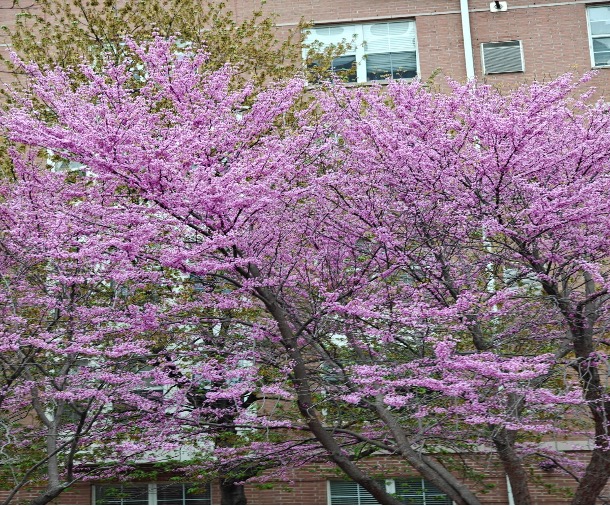
Cherries are in bloom these days- The lovely delicate flowers that cover the whole tree in full bloom, may not be as well-known as the Japanese cherry blossoms or closer home, for instance, that of Washington DC, but they are unmistakably here, bringing in joy, cheer, calm and colour. Some of the streets or swathes of streets are fully transformed. No leaves, the branches laden with only flowers in bunches, pink, white and mauve transforming mundane avenues into ephemeral galleries of nature’s artistry.
The colours they display may seem difficult to define. They are far prettier than one can ever describe, even with the most vivid imagination. Their delicate petals, a ballet of pink and mauve, hang like whispers suspended in the air, evoking a sense of joy and rare calm.
The bloom arrives amidst the shifting whims of weather, its timing a dance orchestrated by temperature and breeze, though it is typically around late March to early April, This year, a lingering cold spell has extended their stay into late April, a testament to nature’s unpredictable rhythms.
Symbolizing renewal and life’s fleeting nature, cherry blossoms hold profound significance, especially in Japanese culture. They embody the transient beauty that captivates hearts, reminding us to cherish fleeting moments of grace and vitality. As they bloom, they herald spring’s arrival, infusing the air with hope and the promise of rejuvenation.
Cherry blossoms are a symbolic flower of the spring, a time of renewal, and the fleeting nature of life. Their life is very short. After their beauty peaks around two weeks, the blossoms start to fall. During this season in Japan, people like to have cherry blossom parties with colleagues, friends, and family.
The soul of Japanese Life
While Cherry blossoms have a profound symbolism in various cultures, its deep significance in Japanese culture remains unique and unrivalled. Revered as a national flower, their delicate beauty also represents the transient nature of life and the beauty that lingers in fleeting moments. The arrival of cherry blossoms signals the onset of spring, bringing hope, renewal, and a sense of rejuvenation after the long winter months. The short bloom time of cherry blossoms entreats to appreciate the joy of the present moment. It symbolizes both life and death, beauty and violence, renewal and decay, vibrancy and stillness, passion and its dissipation.
The Japanese saying, “Hana wa sakuragi, hito wa bushi,” , literally “the [best] blossom is the cherry blossom; the [best] man is the warrior” places cherry blossom as the best among the blossoms just as warriors were deemed the best among men. A phrase framed during Japan’s medieval period, it also reflects the deep-rooted connection between cherry blossoms and the ephemeral nature of existence. It underscores the beauty found in impermanence, urging us to embrace each moment with reverence.
Haiku and Cherry Blossom
Few sights evoke the poet in humans as this blossom does. Endless poems have been written on the serenity, peace and joy that they radiate. In the
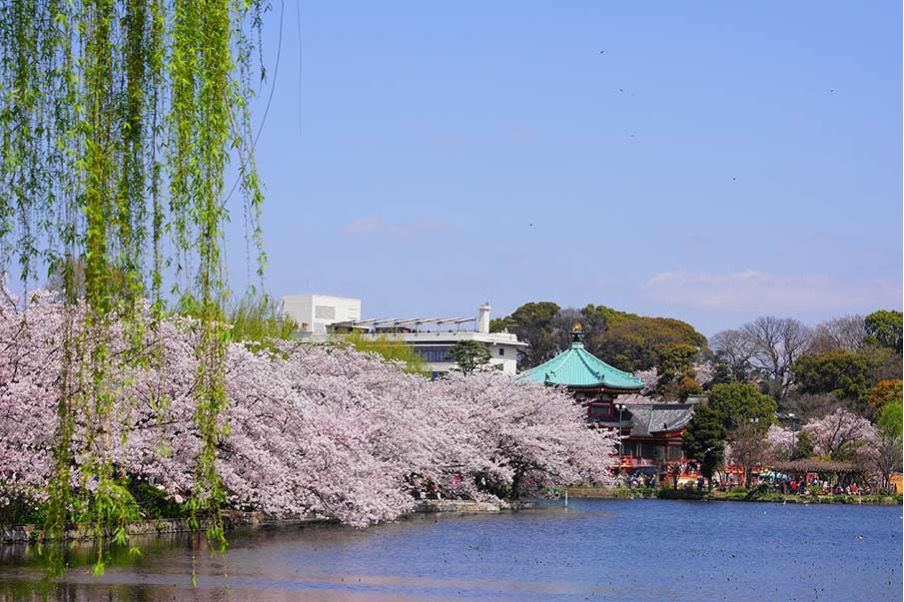
Ueno Cherry Blossom Festival in Japan.
embrace of cherry blossoms, weary souls meet solace, and a sad heart finds a healing balm. One of the finest expressions of emotions and life’s philosophy have been portrayed in the Haiku poems of Japan.
Considered a poetic capsule that contains the essence of a moment in time and reading it one should be able to conjure the scene in one’s mind’s eye. Often, the season isn’t spelled out, but rather signified through a kigo (seasonal keyword). For spring, this keyword can be anything from “sowing” and “swallows” to everyone’s beloved cherry blossom-“sakura.”
Haiku, the poetic form that encapsulates life’s essence in 17 syllables, finds its muse in cherry blossoms. These poems, like delicate brushstrokes on a canvas, capture the essence of spring, weaving emotions and nature into a harmonious tapestry.
Matsuo Basho, the revered haiku poet, immortalized cherry blossoms in verse:
Drunk by cherry blossoms,
a lady wearing a haori coat
and a sword.


This haiku, steeped in symbolism, invites us into a world where the ordinary becomes extraordinary under the spell of nature's fleeting beauty. Basho’s words echo the joy and whimsy that accompany cherry blossom gatherings, where laughter mingles with the fragrance of blooms.
Another of Basho’s haiku reflects on the melancholy woven into sakura’s transience:
The blossoms unfailing,
my grief this unopening
pouch of poetry
Although sakura signifies new beginnings and positivity, it also stands for transience and loss of youth and this haiku encompasses that melancholy In these lines, the poet’s introspection mirrors the bittersweet truth of life’s impermanence, where beauty and sorrow intertwine like petals and poetry.
Other Cultures
Cherry blossoms also find echoes in Western literature, where their ephemeral beauty symbolizes fleeting moments of joy and sorrow. In Arthurian legend, the cherry tree is associated with the tragic love story of Sir Tristan and Isolde, where their love blooms like the cherry blossoms but is destined for a brief and poignant existence.
Moreover, in Chinese folklore, there’s a legend of the “Princess Shouyang” who turned into a cherry tree after sacrificing herself for her people. Her blossoms symbolize her eternal love and selflessness.
Cherry blossoms are as much an inspiration for beautiful verse as they are an invitation to feast the eyes on an extra-ordinarily spectacular yet tenderly bewitching sight. They are a refulgence, a radiance, a resplendence, their colours a soothing sensation and their proximity an uplifting experience. Amidst the gentle breeze, cherry blossoms dance, painting the world in hues of pink and white.
Ephemeral Yet a Joy for Ever
Alas! No beauty lasts for ever. It is always transient and ephemeral. But its memory lingers, for a long time and at times for ever. The beauty and charm, the brilliance and vibrance of the eye-pleasing hues, the tenderness and freshness of these lovely flowers, never cease to please our faculties, our memories, and our emotions. Like poppy flowers, cherry blossoms stand as reminders of life’s transience, drawing parallels between their ephemeral beauty and the fleeting nature of existence.
Cherry blossoms fall, perhaps too soon, yet their beauty is eternal. Perhaps its beauty lies not in a heart-warming and vibrant serenity but the evanescence lurking behind the bloom, not in their duration, but in their fleeting existence.
Cherry blossoms, though ephemeral, etch themselves into memory, their fleeting presence a reminder to find beauty in simplicity. As they paint the world in hues of pink and white, they invite us to embrace life’s transient moments, where even the briefest bloom leaves an everlasting imprint on the soul. They are emblematic of a simple truth, the truth of seeking beauty in simplicity, the very essence of nature and her scheme of grace and beauty. As cherry blossoms adorn the branches, they remind us that even the simplest moments can be filled with extraordinary beauty. It is this extra-ordinary beauty that lingers in our memories long after the flowers have faded and fallen and have returned to the elements.
 scribo ad LX