A Tree Beyond Its Design
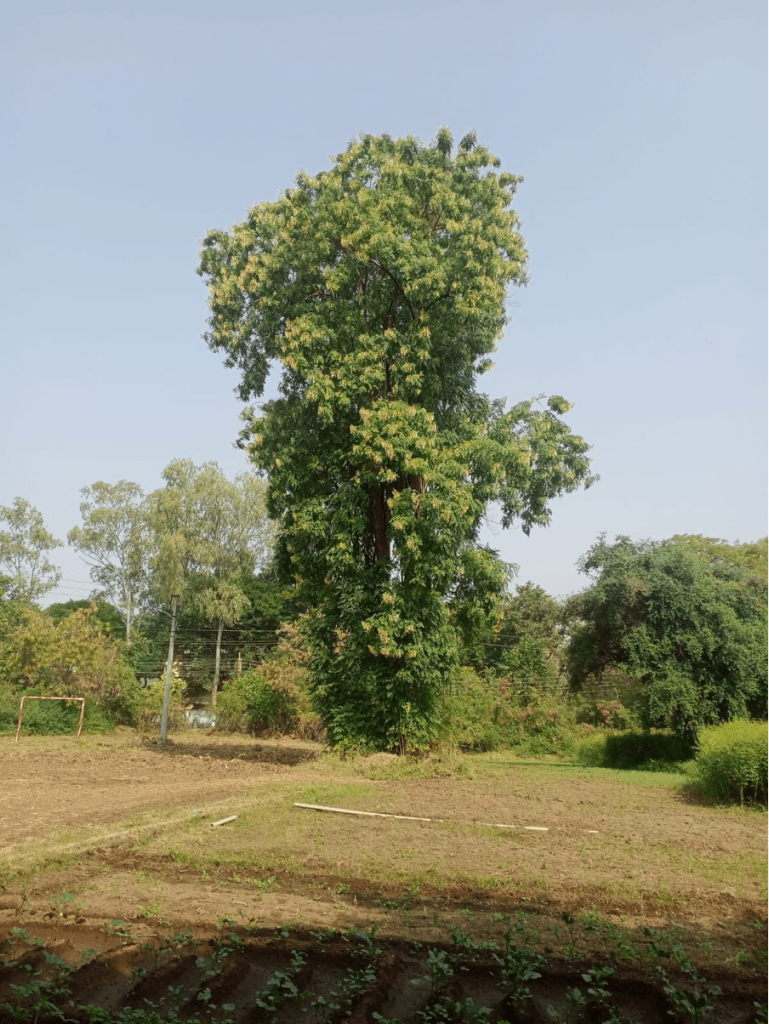
In a quiet corner of my heavily wooded home’s backyard, it stands amidst a sea of humble bushes and unassuming grasses: solitary, stately and magnificent. This remarkable specimen of nature’s grace is adorned with clusters of ivory flowers that shimmer like silver in the sunlight. As you approach, the air is filled with an intoxicating fragrance, a sensory delight that lures you closer. On a moon lit night, the white carpet of delicate flowers that the tree sheds in abundance create a surreal sight, soothing, mesmerising.
Yet, it’s essential to understand that this captivating entity was never intended to be a tree; nature designed it as an overgrown bush. How and why it transformed into this majestic tree in my lush sylvan haven remains a mystery. It is supposed to grow well in arid soils and yet it thrives here in conditions contrary to its native habitat, defying convention. Perhaps it’s the unpredictable climate that encouraged its growth into a towering tree. By any account, however, this is a tree that captivates and inspires even those who merely view trees as a fundamental part of our natural world.
Meet the ‘Glory Bower,’ known in Sanskrit as अग्निमंथ, in Hindi as अरणी, and scientifically as Clerodendron phlomidis. Its botanical name, “Clerodendron,” is derived from the Greek words “kleros” (chance) and “dendron” (tree), a chance tree indeed. But once it decided to be a tree, few others could rival its beauty, grandeur, charisma, and versatility. It is a tree of enchantment and mystery.
The Botanical Wonder: Clerodendron phlomidis
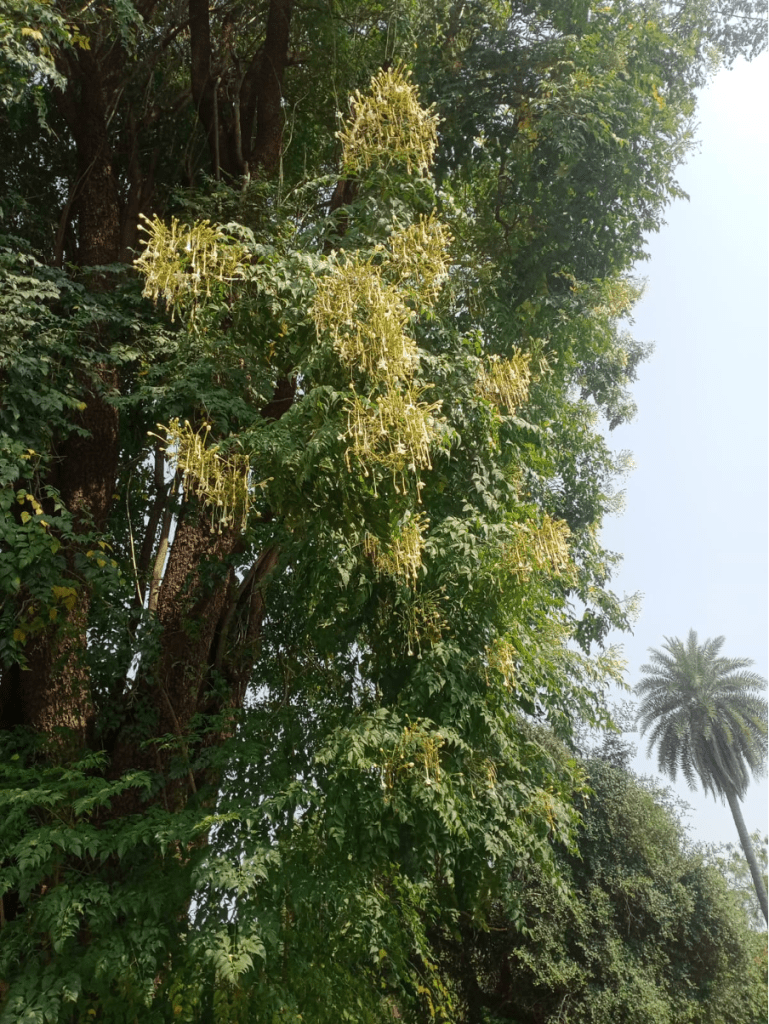
Clerodendron phlomidis is a species of flowering plant within the family Lamiaceae. A large shrub native to the Indian subcontinent and Myanmar, it boasts ovate, opposite, deltoid leaves that are hairy underneath and have a wavy appearance. Its small, rounded terminal panicles bear fragrant white or pinkish flowers, which bloom from August to February. The plant’s foliage, with its lush green leaves and serrated edges, adds a touch of opulence to any landscape. When in full bloom, the vibrant flowers against the backdrop of deep green foliage create a breath-taking view, a visual feast for the soul.
The Aesthetic Allure: A Feast for the Senses
The Glory Bower’s aesthetic appeal is undeniable. Its slender, arching branches bear clusters of trumpet-shaped blossoms that exude an intoxicating fragrance. Often, these flowers are a delicate shade of pink, which fills the air with a sweet aroma, evoking a dreamy ambiance. The sight and scent in full bloom offer a sense of serenity and elegance, making it a popular choice for gardens, courtyards, and public spaces.
Medicinal Marvel: A Blessing in Disguise
Its aesthetic charm is only part of the story. It has much to offer in the realms of culture, social impact, and medicine. Its aromatic and astringent properties have found diverse applications. This tree is an essential component of Ayurveda and the Siddha system of medicine, used to treat various ailments such as inflammation, diabetes, nervous disorders, asthma, rheumatism, digestive issues, urinary disorders, and even as a bitter tonic. Its extracts have demonstrated analgesic, antidiarrheal, antimalarial, hypoglycaemic, anti-asthmatic, antifungal, nematocidal, anti-amnestic, and anti-arthritic properties.
Notably, one of Clerodendron phlomidis’s crucial contribution to Ayurvedic medicine, is as an antidote for sexually transmitted diseases. It has been used to combat syphilis and gonorrhoea with reasonable success. The juice of its leaves serves as an alterative remedy for neglected syphilitic complaints, while its root acts as a demulcent for gonorrhoea, and a decoction of the plant is considered an effective alterative, proven to restore normal health.
An Integral Part of Heritage
Cultural significance is deeply ingrained in its legacy. Native to the Indian subcontinent, this ornamental shrub holds a prominent place in traditional medicine. Various cultures have utilized it for its therapeutic properties, and its place in Ayurveda, the ancient Indian system of medicine, is well documented. While its medicinal virtues have engaged the attention of researchers, its aesthetic grandeur has often elicited references to it in literature. And it is quite understandable, given its uncommon beauty.
A Blessing for Communities
Beyond its medicinal uses, Clerodendron phlomidis holds a special place in the hearts of garden enthusiasts and horticulturists. Its captivating, fragrant, tubular flowers, often displaying a delicate shade of pink, attract pollinators like butterflies and hummingbirds, contributing to biodiversity and ecosystem health. This tree symbolizes the interconnectedness of all living beings and enhances the natural beauty of our surroundings.
Moreover, the Glory Bower’s graceful appearance and sweet fragrance make it a source of joy and tranquillity in urban landscapes. It is often used to adorn public gardens and parks, providing a sense of serenity and well-being to city dwellers and contributing to the overall harmony of urban communities.
A Source of Prosperity
From an economic standpoint, Clerodendron phlomidis has the potential to boost local economies, especially in regions where it is cultivated. Its ornamental value should not be underestimated, as it finds a place in the horticultural market, with nurseries and garden centres featuring it as a sought-after plant. Additionally, the propagation and cultivation of this species can offer employment opportunities and support local livelihoods, making it a valuable resource for rural communities.
A Multi- Faceted Beauty
The Glory Bower, then, is a multifaceted gem of the arboreal world, with cultural, social, economic, and aesthetic dimensions that continue to enchant and enrich our lives. Its journey from traditional medicine to urban landscapes and horticultural markets demonstrates the diverse ways in which nature’s beauty and bounty impact our world, transcending time and boundaries to connect us with the wonder of the natural world. As it stands, the Glory Bower serves as a reminder of nature’s resilience and versatility, a true testament to the multifaceted beauty of nature’s universe. All that a realisation of this glory needs is a quiet conversation with it and its silent eloquence will captivate and enthral you no end. As Candy Polgar has said,
“Alone with myself

The trees bend to caress me

The shade hugs my heart.”
 scribo ad LX