“Silent, bamboo shadows,
Bamboo breezes,
Whistling bamboo,
Bamboo leaves and bamboo stems,
Bamboo poetry, bamboo verses,
Bamboo groves, bamboo forests.”
— ‘Bamboo’ by Lin Zhao
One of the most enticing sights so generously on offer in this beautiful house are the clumps of green, tall, stately bamboos standing majestically around the boundary of the sprawling landscape. They ring the borders of the sylvan surroundings intermittently but boldly. In early mornings and late afternoons, they become the roosting theatre for a variety of birds, and in daytime its sun-dappled shade becomes a vibrant playground for foraging and gambolling of squirrels and the like.
Sitting in the open veranda of this colonial house, I see this symphony of green adorning the sylvan and picturesque estate. I see the regal bamboos rise tall and grand yearning to kiss the skies with passion and impatience. I regard with peace and solace, their steadfast and ethereal encircling of this sylvan oasis. And I watch, at dawn and dusk, their dense grove transforms into an avian theatre, where an array of captivating birds, fill the air with a rare sonority and enliven the atmosphere with their agile manoeuvres. What more can ask from mother nature?
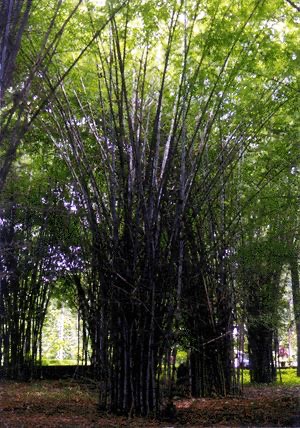
The Grove
Few natural wonders can compete with the beguiling charm, abundance, and opulence of the bamboo. Its gifts to mankind are numerous. With its graceful, swaying canes and vibrant green foliage, it has become an intrinsic part of the landscape in this part of India, namely Central India. Among the diverse array of bamboo species that thrive in this region, Dendrocalamus strictus, known as Male Bamboo, Solid Bamboo, or Calcutta Bamboo stands out for its exceptional morphological features and its multifaceted economic, cultural, and folk significance. This resplendent, and yet resilient plant has seamlessly woven itself into the very tapestry of local life, serving as an ally for so many of the needs of the people, who call this land their home.
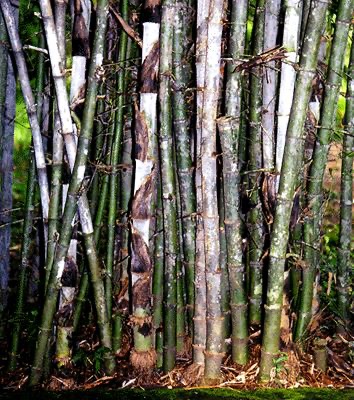
Culms
Morphological Marvels
Scientifically identified as Dendrocalamus strictus, but more commonly referred to as Male Bamboo, Solid Bamboo, or Calcutta Bamboo, it hails from the tropical and subtropical climes of Southeast Asia. Characterized by medium-sized canes, with their towering heights of 15 to 25 meters and diameters of 5 to 10 centimetres, they are admired for their striking straightness and exceptional strength.
Its internodes measure 30-45 centimetres, with thick walls rendering the canes either hollow under humid conditions or nearly solid in dry climates.
The young culms of Dendrocalamus strictus display a captivating pale blue-green hue, which gradually matures into a subdued green or yellow shade, often marked with a subtle zig-zag pattern from the middle to the top. Notably, its nodes have a pronounced swelling, and basal nodes often develop into roots, further enhancing the bamboo’s tenacity.
Adorning these canes are lance-shaped leaves, arranged alternately along their length, creating a dense canopy. This canopy not only enhances the bamboo’s aesthetic allure but also provides essential ecosystem services, including shelter and shade for wildlife. The extensive yet shallow root system of Dendrocalamus strictus plays a crucial role in stabilizing soil and controlling erosion, further underlining its significance in the region’s ecology.
No wonder, all these exceptional attributes so ideally position them for a plethora of application.
Economic Empowerment
The relationship between the land, the people and Dendrocalamus strictus extends far beyond its visual appeal. This bamboo species is a cornerstone of livelihoods in the region, serving as an economic backbone. The straight, robust canes are highly sought after for their utility in construction, particularly for scaffolding, fences, and temporary shelters. Its flexibility and durability also make it a preferred choice for crafting tools, furniture, and intricate handicrafts.
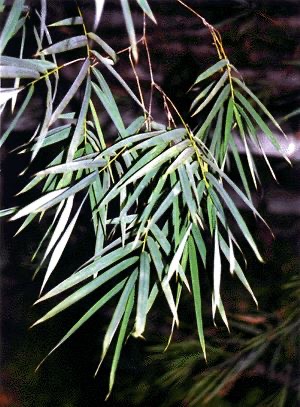
The Lance-shaped Leaves
Beyond construction, Dendrocalamus strictus has found its niche in agriculture. Farmers ingeniously employ bamboo as a support structure for crops like tomatoes and beans, facilitating vertical growth and maximizing land usage. This eco-friendly and cost-effective practice holds the promise of boosting agricultural productivity while conserving precious resources.
In recent years, the bamboo industry in India has witnessed a resurgence, buoyed by its sustainability and versatility. The demand for bamboo products, both domestically and internationally, has breathed new life into countless communities in the region. The economic significance of Dendrocalamus strictus has not only improved the lives of those who work with it but has also contributed substantially to the broader Indian economy.
And yet the modesty and anonymity that personifies its existence is exemplary. No aspect of horticulture, floriculture or silviculture is devoid of its presence. Imagine what would happen to the supine tomatoes and eggplants, the magnificent marigolds and the stunning Dahlias, , the straggling creepers of beans and a variety of vegetables, the vines laden with bunches of green and black grapes without the strong and stable support of the splinters hewn from the culms of this benevolent plant.
“The bamboo that bends is stronger than the oak that resists.” – says a Japanese Proverb. Its suppleness is its strength, its sacrifice is its legacy, its utility is its majesty, and its selflessness is its beauty. How many of us, animals, or plants, can seek pride and glory in our existence?
As we delve deeper into our understanding of this magnificent plant, we uncover not just the physical presence of bamboo and the economic manifestations of this uncommonly generous plant; but a whole universe of vibrant cultural and ethnic tapestry scintillated by its endless nexuses stand out to celebrates this magnificent plant.
In the second part of our exploration, we will delve even further into the rich traditions and contemporary innovations that revolve around this enduring symbol of Central India’s identity—the Male Bamboo.
(To Be Continued…..)
 scribo ad LX