The Gotmar Mela of Chhindwara
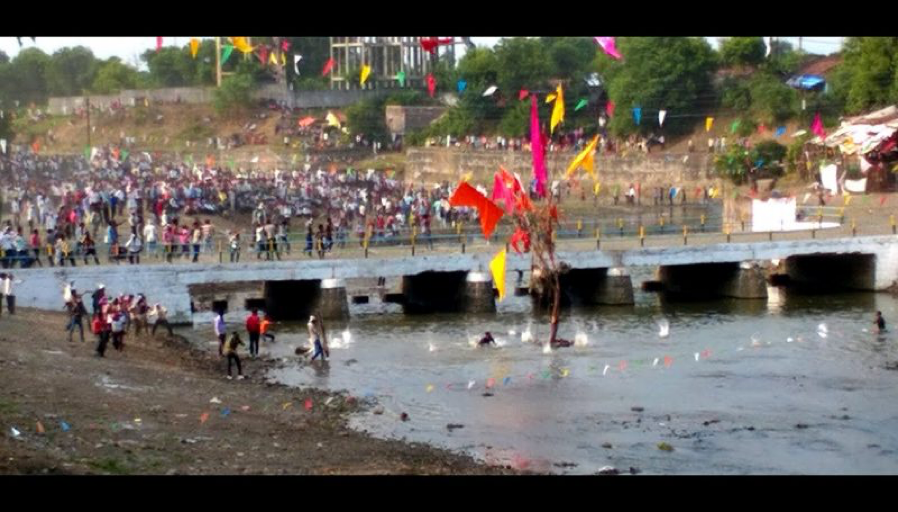
The River, The Tree, The Victory Flag
Defying Logic, Celebrating Brutality
Nestled along the serene banks of the river Jaam in the heart of India’s Chhindwara district exists a tradition that defies all logic. It is a ritual that has endured the test of time, a celebration that transforms into a brutal rivalry for just one day. This is the Gotmar Mela, a blood-soaked spectacle that has persisted for centuries, where stones become weapons, and a river becomes the battleground for a relentless clash of two villages.
A Tradition Shrouded in Mystery:
The origins of this tradition are shrouded in mystery, lost to the sands of river Jaam. No one can pinpoint exactly when or how it began, but for the oldest residents of these villages, it’s a part of their lives they’ve known since childhood. There’s no remorse, no discomfort in their hearts, even as they witness the toll it takes year after year. To the older generation, it’s a transformation fuelled by liquor and catapults that has tainted the purity of their tradition, and to the families who have lost loved ones to this brutal exchange of stones, it’s a festering wound that refuses to heal.
Chaos, Camaraderie, and Cruelty
The Gotmar Mela, celebrated annually on the second day of the New Moon in the Hindu month of Bhadrapad, unfolds in the Pandhurna tehsil, a mere sixty-five kilometres from Chhindwara. It’s a festival that paints a vivid picture of chaos, camaraderie, and cruelty, all within the span of a single day.
A Palash tree stands tall in the middle of the river, crowned with a flag fluttering at its apex. On one bank, you have the residents of Savargaon, on the other, Pandhurna, and they come together not in peace but in pursuit of

The Battle in Progress
victory. Their mission: to hurl stones, or ‘Got,’ at the daring souls from the opposing village who dare to venture into the river, attempting to snatch that flag from its lofty perch. The village that succeeds in this perilous mission is declared the victor. All of this unfolds amidst the rhythmic chanting of the sacred name of Maa Durga, the Goddess of Power.
A Blood-Soaked Tradition:
The bloodshed and mayhem are not incidental; they are an integral part of this tradition. Every year, people are injured, some seriously, and lives are lost. In 2018 alone, as the sun dipped below the horizon, a youth fell victim to the relentless barrage of stones, and more than three hundred others were left nursing their wounds. The toll continues to rise, and the scars are etched deep in the collective memory of these villages. This year, over 200 suffered injuries, fortunately with no fatal consequences.
In the name of tradition, the Gotmar Mela is more than just a competition; it’s a life-and-death struggle, claiming many lives and maiming countless others in its gory and brutal history.
Tragedy Amidst Tradition:
On one fateful occasion, fifteen injured individuals were rushed to the hospital, their conditions described as serious, while five others teetered on the brink of life and death in a Nagpur hospital. The cause of death for one youth was shrouded in mystery, as no visible injuries were evident. It’s possible that a cardiac arrest or some other unseen ailment had snatched away his life. This tragic incident underscores the perils of a tradition that is as senseless as it is relentless.
The deceased, a 28-year-old named Shankar Bhalavi, and like him, many others are forever etched in the annals of this violent tradition. The administration, incredibly, condones this bloodshed, permitting its continuance in the name of tradition and even assisting the villagers in organizing the fair. It’s a paradoxical situation where a government that should protect its citizens ends up being complicit in this self-inflicted violence. More than a decade ago, for two years the local administration had banned this ritual but the public pressure was so overwhelming and persuasive that the political leadership of the state against the advice of local administration preferred the risk of loss of lives and limbs than to invite the ire of these two villages. Incredible and unbelievable and utterly absurd that it may sound, yet it remains the grim truth and unfortunate reality.
The Ominous Name: Gotmar – A Brutal Reality
The very name, Gotmar, offers a grim insight into what transpires during this event. “Got”means stone, and “mar” means beat, and the festival lives up to its name with brutal honesty. Stone-throwing becomes a deadly art form, and the consequences are grave.
The Evolution of a Dangerous Ritual:
A once a year ritual steeped in blood and violence is fought to establish the pride of the two villages involved. A tall tree stands as a symbol of contention, bearing a flag as its coveted prize. Savargaon and Pandhurna, two rival villages, face each other from the opposite banks of the river. Stones flow through the air, and casualties mount by the hour in this gruesome contest. Amidst the chaos, the villagers chant the sacred name of “Chandi Mata Ki Jay,” a prayer for protection that seemed almost ironic in the face of such brutality.
Over the years, the festival has evolved from a dangerous ritual into an outright menace. People either leave the event battered and bloodied or, in some cases, never return. Despite attempts to bring change, both by persuasion and coercion, including switching from stones to rubber balls in 2001 and 2002, and an outright ban in 2010 and 2011, the tradition persists, immune to the pleas of reason and safety.
Such is the hold of tradition and the idea of pride that madly seizes its participants. The bloody rituals persists and endures.
(To Be Continued…)
 scribo ad LX