In the heart of Bastar, a land where tradition and wilderness intertwine, lies an institution that has captured the imagination of many—the Ghotuls. These unique sanctuaries belong to the Muria tribes of Bastar, and they are nothing short of enchanting.
If ever there were to be a marriage between the carnal ecstasy and a delightful levity and liberation, one must think of Ghotuls- the unique institution of Muria tribes of Bastar.
Ghotul is a magical institution; a tantalising mystery that teases the outsiders as much as it mesmerises and consumes these who are allowed to be a part of it, the adolescent, unmarried girls and boys, and fill them with joys of unadulterated and pristine passion of love and discovery.
Ghotuls and Salphi-A Mesmerising Fusion
Salphi is intimately associated with this institution of remarkable uniqueness and emancipation. Together they present a mesmerising image of the superior and marvellous tribal culture of Bastar. Seen together they present a fascinating fusion of the exclusivity of a beverage extra-ordinary and an institution far ahead of contemporary times.
The Ghotul culture is an integral part of Muria tribal life. Often misunderstood by the outsiders and presenting it as a place where uninhibited adolescent emotions find expression in disapproving terms only exposes the debased and vitiated imagination of these outsiders. They are the temples where young affection and attraction finds an energetic and beautifully healthy expression, and not as place of debauchery as many of the ignorant and less evolved people would make us believe.
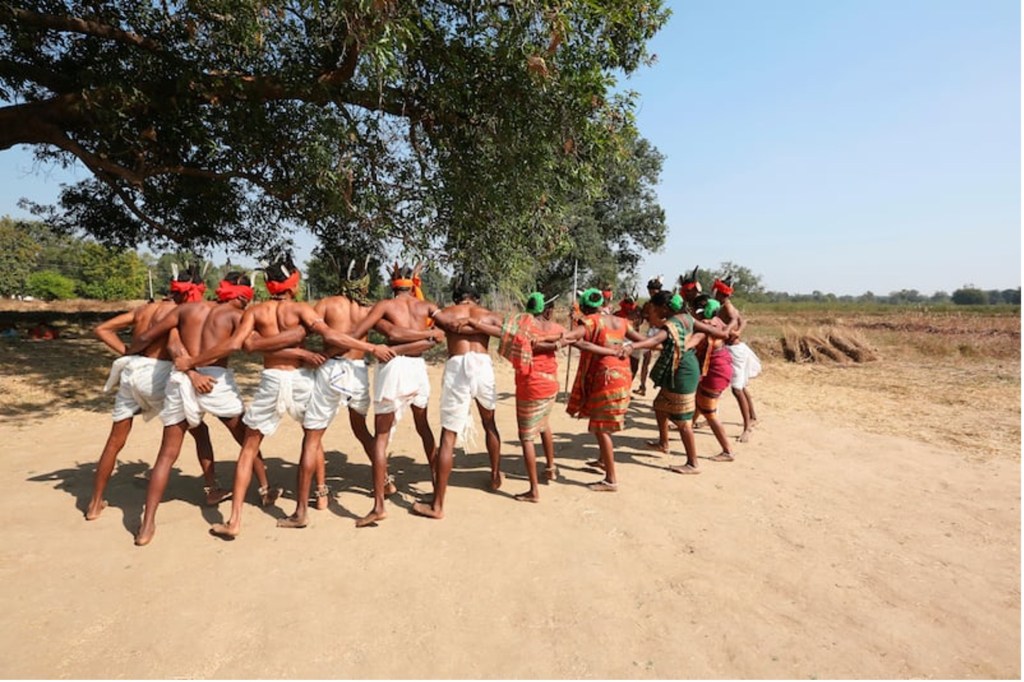
Image Credit: Alamo.com
A Path to Love and Understanding
Ghotul is social arrangement for the Cheliks (unmarried boys) and Motiaris (unmarried girls) who are encouraged to go to the exclusive living space where they meet, greet, dance, sing and spend nights together in an earthen and wooden hut at the outskirt of the village.
The purpose of the Ghotul culture is not just to find the potential life partner, but they are given an exclusive time to know each other before the big commitment. In Ghotul, they learn about various tribal customs, rituals, social responsibilities, various life-saving skills and are also taught about sexuality.
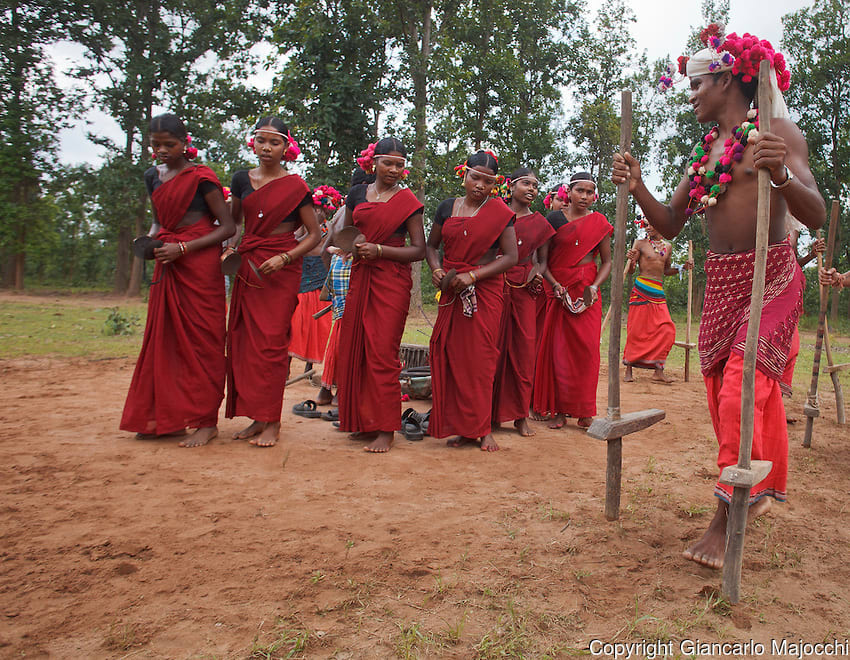
Gedi Dance: Wooing Damsels
The young women and men, after finishing their household work, go to Ghotul. Everyone wears their best attires. Women adorn the beautiful traditional sari, decorated bun with Mahua flower, traditional jewellery and headgear which enhances the beauty.
A Culture of Evolved Emotions
The Ghotul culture is an indispensable part of the Muria way of life. They believe that the Lingo, their supreme deity, created the first Ghotul.
Verrier Elwin, who spent years in Bastar describes them thus, “The Ghotul was not just a club, but a place where freedom and happiness were treasured. Sympathy, friendliness, unity and hospitality were of primary importance.
Love was beautiful, clean and precious and seen as a part of life. ”.
On deciding upon the prospective groom and bride, the respective parents are informed about the decision. Eventually, it leads to marriage.
At weddings in Bastar, there is “Reverse Dowry” system where the groom family has to offer dowry to the bride’s family before marriage. However, the dowry doesn’t follow the traditional Indian footsteps; rather they offer Mahua drinks, rice, goats and sometimes Mahua flowers as dowry.

Ahead of Times
The Ghotul culture celebrates a great sense of liberation. It is almost unlikely to believe that a community living in the middle of dense forest, far away from the spell of modernity, is practicing a system which is way forward in comparison to the so-called modern folks who are living in the metro cities with closed minds.
To invoke Verrier Elwin again, “The message of the ghotul—that youth must be served, that freedom and happiness are more to be treasured than any material gain, that friendliness and sympathy, hospitality and unity are of the first importance, and above all that human love—and its physical expression—is beautiful, clean and precious, is typically Indian.” Equality and freedom are what make the fabric of the Ghotul and tribal life in this region, long before someone conjured up a slick video.
A few sips of this wonder drink loosen their tongue and emboldens their conscience. Their articulation dramatically improves and the desire for sharing one’s tender feelings of love and affection gets so effectively manifest. There seems romance and a certain lightness in the air around them.
Celebrating Life
And then, there’s Salphi—the missing piece of the puzzle that elevates the Ghotul experience to new heights. But for Salphi, the Ghotul experience would have been only half complete and tantalisingly unfulfilling. “I have taken more out of alcohol than alcohol has taken out of me,” mused the witty Winston Churchill in a moment of clarity and sobriety. His words resonate with the young boys and girls who gather every evening at the Ghotul. Salphi performs a similar enchantment on the youth of the Muria tribe in Bastar, offering them a reason to celebrate life, embrace the present moment, and savour the essence of their culture.
In the harmonious union of Ghotuls and Salphi, Bastar’s indigenous culture continues to flourish—a testament to the resilience of traditions that celebrate love, freedom, and the sheer joy of being alive in the heart of the forest.
 scribo ad LX