Bringing Cheer to Everyday Life
“Wine is sunlight, held together by water.”
—Galileo
India’s famed diversity is a tapestry of multiple forms, many of them enigmatic and esoteric. But one diversity that is truly outstanding is the tradition of local beverages. Whether nestled in the mystical hills of Manali, the tranquil backwaters of Kerala, the lush terrains of Sikkim, or the arid deserts of Rajasthan, India showcases an array of indigenous elixirs, each steeped in unique cultural significance. From the mild to the potent, from health-enhancing to purely intoxicating, many of these elixirs have successfully navigated the societal taboos associated with alcohol, becoming an integral part of local culture and celebrations.

The White Nectar
Photo Credit: Bastariya.com
Bastar, the quintessential forest heartland of Central India, boasts its own tradition of local brews. Amidst the treasure trove of traditional brews, Mahua and Handia have special place. Still, it is Salphi that reigns supreme in this tribal heartland. Salphi, derived from the sap of the Salphi tree, holds a sacred place in the hearts and traditions of the tribes inhabiting the Bijapur and Dantewada regions of Bastar.
Mahua, Handia, and Salphi
Mahua, Handia, and Salphi – these three elixirs illumine the simple, uncomplicated lives of Bastar’s tribal inhabitants. Mahua, extracted from Mahua flowers, carries significant socio-religious importance in Bastar’s folklore. Handia, a rice beer brewed by fermenting rice in earthen pots (Handis), earns favour for its mild potency and the ability to keep the body cool during sweltering summers, effectively warding off sunstroke. But it is Salphi, the sparkling drink, spontaneously fermented and served in leaf cups called chipdi, that brings joy, particularly among the youth. It enjoys a unique place in Bastar’s cultural tapestry.
These gifts of nature are best enjoyed in the company of others, often in bustling marketplaces, where people of all ages and genders gather in small, intimate groups, sipping from chipdismade of green leaves, which lend a special flavour to the experience. Festive moods and light-hearted banter enhance the joy of its consumption.
And then there are the festivals and rituals, both celebratory and solemn, where these beverages become integral. Be it a joyous birth, a merry wedding, or a sombre funeral, these libations are as essential to tribal life as the soul is to the body.
The Essence of Salphi
In contrast to many traditional alcoholic brews that demand lengthy brewing processes, Salphi stands apart as a nearly instant concoction derived from the Salphi tree’s sap. This extraordinary tree not only thrives in Bastar’s climate but has also been an intrinsic part of the region’s culture for generations. In a place where organic and locally sourced ingredients dominate the culinary landscape, the Salphi tree holds a sacred place.
The Salphi Tree
Scientifically known as Caryota urens, the Salphi tree is a remarkable native plant found in countries like Sri Lanka, India, Myanmar, and Malaysia. Its striking appearance features a solitary trunk that can reach heights of 18

Photo Credit: Wikipaedia
meters and widths of 30 centimetres. The grey trunk is adorned with distinct leaf-scar rings, culminating in a magnificent leaf crown spanning 6 meters in both width and height. Vibrant green, triangular bipinnate leaves can grow up to 3.5 meters in length, attached to 60-centimeter-long petioles with pointed and jagged edges.
One remarkable characteristic of the Salphi tree is its long inflorescences, up to 3 meters in length, which bear clusters of white, unisexual flowers. It is tapped to create a liquor akin to toddy, similar to what is produced from other palm varieties. Caution, however, is warranted when handling its fruit, as it contains oxalic acid that can irritate the skin and mucous membranes. But what truly sets this tree apart is its monocarpic life cycle, signifying that it dies once it completes its flowering and fruiting process.
The Salphi tree’s significance transcends its botanical wonders; beyond producing the tribal people of Bastar’s quintessential local brew, the tree offers an array of other applications. Its trunk harbors a substantial starch
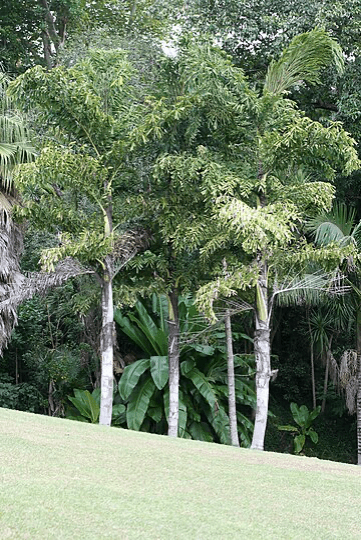
Photo Credit: Wikipaedia
content, while the juice extracted from its flowers can be boiled down to create a sweet syrup. The edible cabbage of the tree can be consumed both raw and cooked.
In Sri Lanka, where it is known as ‘kithul,’ the Salphi tree is renowned for being the source of kithul treacle, a unique and dark syrup obtained by boiling the tree’s sap for many hours. This treacle is used to enhances the flavor of various dishes in Sri Lankan and Western cuisine.
Moreover, the mature Salphi plant’s pulp can be sun-dried and powdered, resulting in a sweet and nutritious substance. In coastal districts of Karnataka, this powder is highly esteemed, while in Sri Lanka, it is mixed with coconut milk to create a delicacy known as Kithul Thalapa.
The Salphi tree also extends beyond culinary uses. Its leaves possess robust fibers, making them valuable for basketry in Cambodia, where the tree is referred to as ‘tunsaè.’ Additionally, the heart of the tree’s trunk contains starch similar to sago, and the trunk itself can be used for construction purposes.
For the tribal communities of Bastar and other regions, the Salphi tree holds a special place as a significant source of livelihood. These trees take about 15 to 20 years to mature and can provide sap for 5 to 10 years during their lifetime. This sap, essential for Salphi liquor production, plays a central role in their economic well-being, offering families an annual income of 10 to 12 thousand rupees. Beyond its economic importance, the Salphi tree is deeply intertwined with their cultural and social practices. It is given and accepted in dowries and even regarded as a foster son by childless couples.
Notably, the Salphi tree is not only cherished for its utility but is also cultivated as an ornamental tree in tropical and subtropical climates. It enhances the beauty of gardens and parks and can be kept as an attractive interior or houseplant when maintained in a smaller form.
Beyond its striking appearance and diverse uses, it epitomizes the intricate interplay of nature, culture, and livelihoods, illustrating how a single plant can play a pivotal role in sustaining communities and enriching their lives.
The Elixir of Joy and Exuberance
The Art of Collecting Salphi
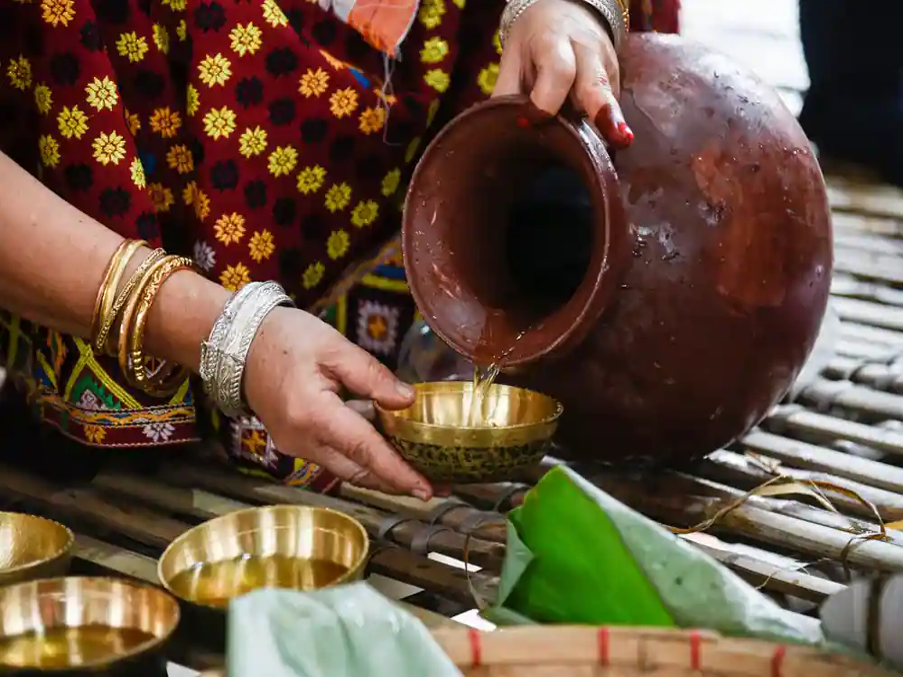
The process of obtaining Salphi is as simple as it is fascinating. Tribal men ascend the tree, positioning themselves on opposite sides of the trunk. They suspend an earthen pot from a branch using a rope and make a precise incision with a tool known as Haasiya. This incision allows the sap to flow into an awaiting earthen vessel. The resulting brew offers a smooth, mild flavour reminiscent of coconut water, yet with subtle bitterness and a slight pungency towards the end. A gentle shake produces white froth, earning it the nickname “Beer of Bastar.”
Fermentation of Salphi is a natural, organic process initiated by yeast present in the surrounding air as soon as the sap begins to drip into the pot. Occasionally, residual yeast at the container’s base further aids fermentation. Sap collection typically occurs at sunrise or, occasionally, at sunset. However, Salphi must be consumed promptly, ideally within an hour of collection, as its natural fermentation continues unabated. Excessive fermentation can lead to digestive discomfort, making freshness paramount.
Yet, these precautions are second nature to the tribal communities who have perfected the art of tapping Salphi, weaving it seamlessly into their lives.
(To Be Continued….)
 scribo ad LX