Reconciling Worlds: Development Vs. Culture
Patalkot, except for its location in the deep bosom of mother earth, today looks like any developing village. Paved roads have replaced stone steps and earthen paths, clean drinking water is available through pipes, electricity has reached the households and village streets are lit up in the night. There is a school, even a dispensary. Every sign of physical prosperity is evident and is unmissable to visitors, a great many of them tourists.
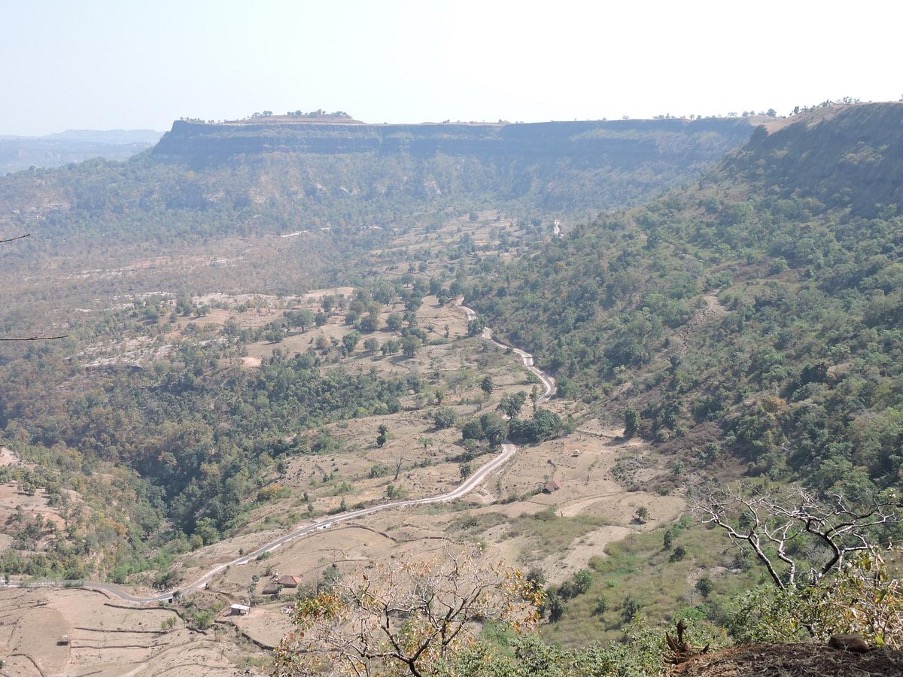
Inroads in A Sanctuary
On Road to Development
Largely led by government and partly lured by the tourism potential of this area of unique and unusual beauty and tranquillity, the place looks transformed.
But that is the perception of visitors, of those who have observed from outside the transformation of this sunken valley over time. But how do Bharias, to whom Patalkot belongs, see these changes? Are they excited and happy? Have the slew of modern facilities enhanced their zest and passion for life? Do they look forward to harnessing the opportunities of life to which they have been exposed now? Do they find the new phase of their existence promising and exhilarating? Are they eager to break out of their cocooned culture of centuries and adopt the ways of the modern world?
The answers are not clear. The signals are confusing.

A Paved Road inside a village
Pull of the Home
A few years ago, during a particularly intense monsoon month, a part of the hill side caved in, inundating with mud and rubble their modest abodes. The unexpected avalanche of debris destroyed their houses and killed over a score of them. There was a widespread concern. The government machinery swung into action to rescue them. Relief was promptly organised. They were not only brought up higher on the hills but temporary huts were quickly constructed to accommodate them till they found their own homes habitable. In its wisdom, the zealous administration even decided to relocate them permanently and shift some of the villages in their entirety to the top of the hills. And to that intent, modern huts were also built as their future permanent dwellings. They shifted to these houses dutifully. Demanding help or protesting the absence of it, was neither their nature nor their ambition. But after a few months, each of these houses was abandoned. Gradually they went back to their own habitat still willing to brave a future catastrophe of the kind that had just visited them and continue with their traditional way of life.
Development: An Enigma to Them
Why did they do this? Why did they give up the comfort of safer, cleaner and better dwellings to the old ways of living despite witnessing and experiencing first-hand the advantages of a modern living?

Evidence of Modern Development
The answers to this enigma is difficult to find. Obviously, in their perception, having modern amenities is not the same thing as a cherished way of living. The physical comforts are not strong enough magnets to make them move away from their emotionally and culturally compelling life styles, howsoever primitive they appear to our eyes. Possibly, they have an entirely different prism to view and assimilate the concept of development and progress as seen by the state, and being offered to them, even imposed on them. Laconic and uncommunicative as they are, it is difficult to fathom what goes on in their minds.
Surely, some of the younger boys having got the education up to high school have moved out of the place, mostly employed in government establishments as a teacher or at lower posts. They possibly may not like to come back to these villages. Elders feel they have lost them for ever, but for majority of them their habitat remains sacrosanct, binding them to the soil with an attachment of extra ordinary feility and intensity.
A Different Lens on Development
The impact of modern development on tribal cultures is a complex and nuanced issue. It’s important to recognize that there isn’t a one-size-fits-all model of their development, as the effects can vary based on the specific context, region, and approach to development.
When we think of development, we often conjure up images of modernity, wide roads and safe water, electricity, education and health and above all commerce. However, the Bharia tribals offer a unique lens through which to perceive development. For them, development is not merely a matter of infrastructure and economic growth, but a harmonious coexistence with nature, a preservation of traditions, and the safeguarding of their cultural heritage.
Cultural Heritage of development
In Patalkot, development isn’t synonymous with economic prosperity alone. The Bharia tribals have an intrinsic connect with the land, water, and forests that surround them. To them, true wealth lies in the abundant natural resources that sustain their lives. The forests provide them with food, medicine, and shelter. The rivers offer sustenance and a means of transportation. In their eyes, development doesn’t mean extracting every resource available, but preserving these lifelines for future generations. For the Bharia, development means living in harmony with nature rather than exploiting it for short-term gains. Their bio-diversity is as vital to them as are the traditional farming practices that are organic and sustainable.
Development isn’t solely an economic endeavor for the Bharia tribals; it’s intrinsically linked to their cultural heritage. Their traditions, rituals, and oral history are passed down through generations. For them, development means preserving these traditions in the face of an ever-changing world. It means ensuring that their language, dance, and songs continue to thrive, not just as relics of the past, but as living expressions of their identity.
Challenges to Bharia Development
The development of Patalkot and its denizens offers one of the most engaging and daunting challenges. It may imply standing many of the conventional approaches to development on their head.
The most difficult challenge is to protect their identity and that of their environment. As the outside world encircles Patalkot, the Bharia find themselves in a struggle to protect their identity and territory. The lure of development, often driven by commercial interests, threatens their sacred sites and disrupts their traditional way of life.
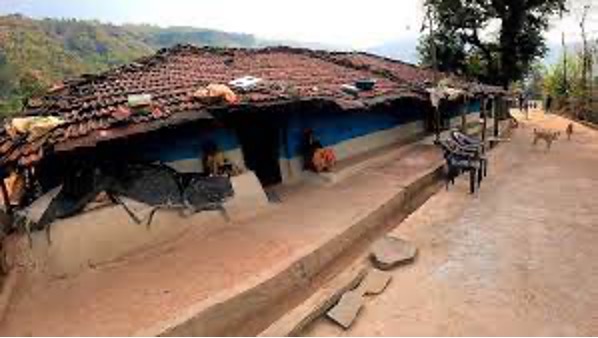
The tell-tale sign of modernity- the plastic chairs
The Bharia tribals possess a wealth of traditional knowledge about the plants, animals, and ecosystems of Patalkot. Their indigenous medicine system is unique. This knowledge is a valuable resource not only for their own survival but also for broader environmental conservation efforts. Development should involve efforts to document and preserve this traditional wisdom, ensuring that it benefits future generations.
Reconciling Worlds
As we navigate the labyrinthine pathways of Patalkot, we find ourselves at a crossroads of conflicting worldviews. On one hand, there’s the relentless march of modern development, with its promise of progress and prosperity. On the other, there’s the Bharia way of life, rooted in ancient wisdom and a deep respect for the land that sustains them.
The challenge lies in harmonizing perspectives rather than imposing one upon the other. Through the Bharia lens, development becomes a delicate dance, preserving the past while embracing future opportunities, empowering the Bharia tribals to choose what benefits their community without sacrificing culture or the environment.
Development shouldn’t solely measure material progress. While modern comforts improve living standards, they may not align with Bharia values, beliefs, or identity. Their return to tradition indicates profound ties to the valley for well-being.
To grasp Bharia development, a comprehensive assessment is needed. Consultation with Bharia people is vital, seeking their input on what aspects of life they cherish most. It may reveal that community, land connection, and cultural identity are pivotal to their happiness and fulfillment.
Patalkot isn’t just a gem of geography; it’s a tapestry of centuries of human experience. The Bharia tribals offer a unique perspective where nature, culture, and tradition take precedence. As our journey through this sunken valley concludes, we’re left pondering: Can we globally learn from the Bharia, reimagining development as inclusive, sustainable, and culturally respectful? This answer may unlock a more harmonious and equitable future.
A Pristine Culture at Stake
Most human at the time of their death do not regret a material want, they regret a suppressed expression of emotions, their inability to live a relationship that they cherished, or a loss of their identity they were born with. Cultures also may perhaps feel the same way as they face and fear a threat of extinction, or their assimilation in a larger overwhelming but different culture.
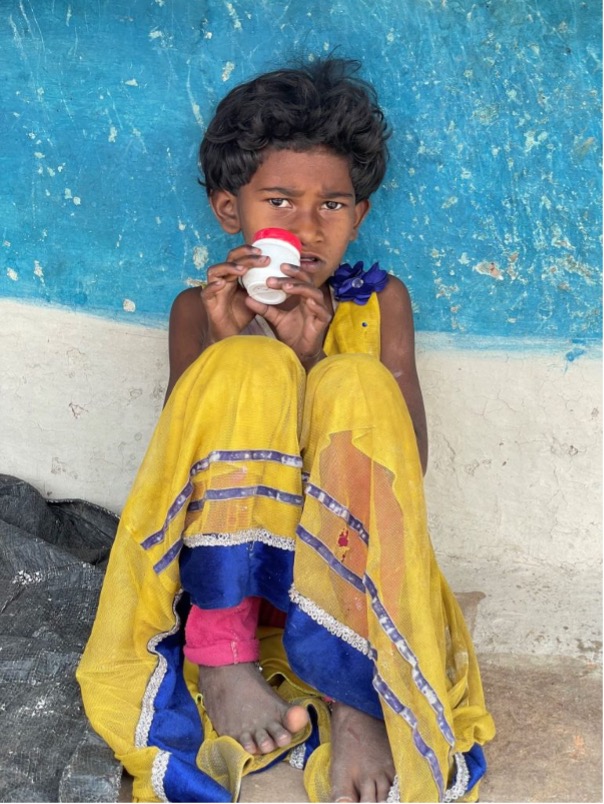
Waiting at Cross-roads
The future survival of Bharia tribe, not the physical existence but what represents the essence of their culture and beliefs is scripted in distant future years. Whether the current approach to their development preserves and enriches their culture and belief- systems or become an instrument of their demise, is both premature and unwise, to predict. The history in such matters, however, ominously suggest disturbing precedents.
Shall the interventionists and proponents of their development heed this vital dimension as they set upon to bring prosperity to this region?
One can only hope!
 scribo ad LX