One sees great things from the valley; only small things from the peak.
-G.K.Chesterton

Madhya Pradesh, a state synonymous with verdant forests and natural riches, presents a treasure trove of landscapes that beckon explorers and nature enthusiasts. Amidst this bounty, nestled in the Tamia region of the Chhindwara district, lies an exquisite gem known as Patalkot, a valley that boasts both geographical splendour and cultural richness. This ethereal haven, located 78 kilometres from Chhindwara and 20 kilometres from Tamia in the North-East direction, unveils itself like a well-guarded secret of Mother Nature. Stretching over an expanse of 79 square kilometers, Patalkot is a sanctuary of breathtaking beauty where the meandering Doodhi river serenades the lush surroundings.
Within Patalkot’s embrace reside just twelve villages and thirteen hamlets, each a testament to the symbiotic relationship that humans share with nature. Around 2000 people, belonging to Bharia tribe have thrived on their interdependence with forests and natural resources, call this valley their home. Patalkot is a living testament to the intricate balance between mankind and the environment.
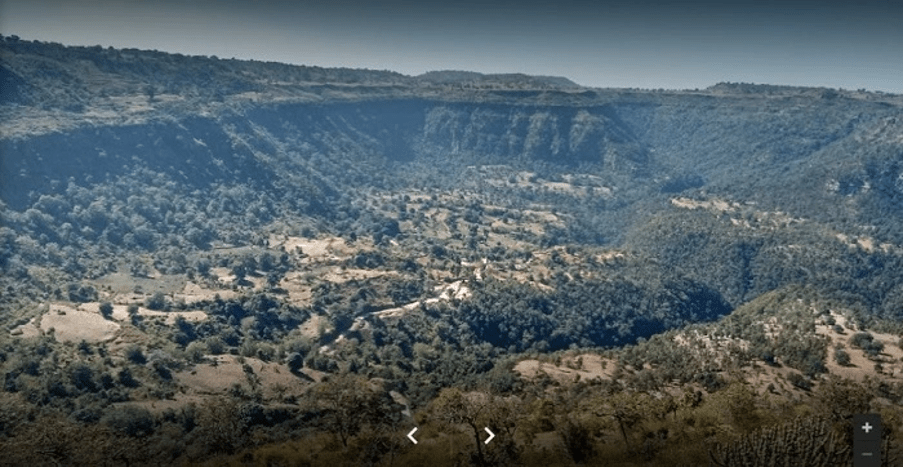
This horseshoe-shaped valley cradled by hills offers multiple pathways leading to villages nestled within its embrace. The landscape’s beauty unravels at a depth of 1200 to 1500 feet, and as the clock strikes 4 pm, the valley succumbs to a mesmerizing twilight, a realm cloaked in shadows as the sun bids its adieu.
Lost in Nature, Forgotten by Civilization
For years, Patalkot remained veiled from the outside world, cocooned in its own mystery. The valley’s isolation, a result of its treacherous terrain and the sprawling, impenetrable forests, concealed its existence. Bharias tribes, inhabitants of the valley for over six centuries, forged their lives in harmony with nature, untouched by the rapid changes sweeping the external world. Their disconnection was a consequence of the natural barriers guarding Patalkot’s tranquility.
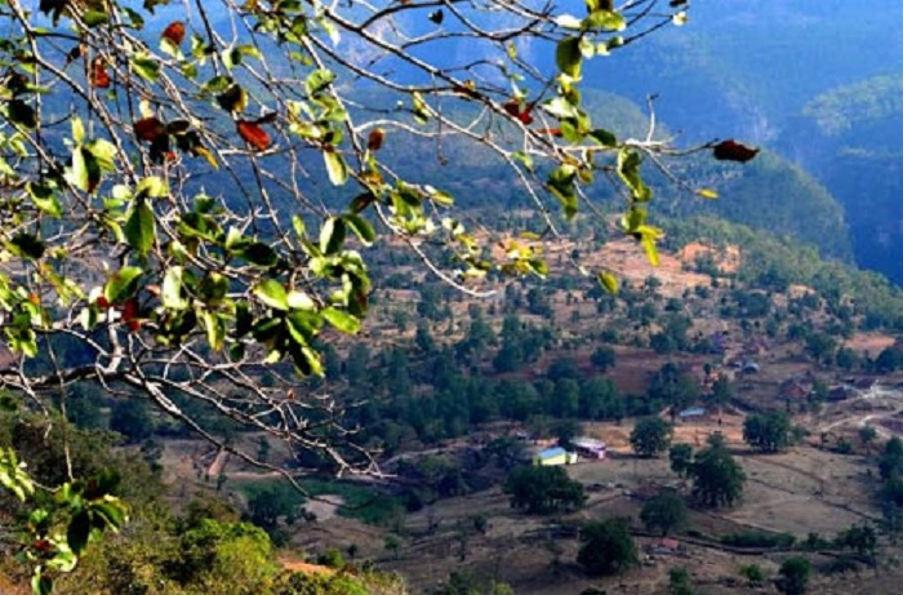
Patalkot owes its name to the ancient Sanskrit term “Patal“, meaning unfathomable depths, and “Kot“, a dwelling place. According to local lore, the valley’s history weaves through the annals of the 18th and 19th centuries, when the Bhonsle Kings sought refuge here after their defeat at the hands of the British Army. Patalkot’s allure extends beyond its historical significance; it is a testament to the raw grandeur that nature can bestow upon a place. A long-forgotten tunnel, rumoured to have connected Patalkot to Pachmarhi in Hoshangabad district, only adds to the enigma surrounding the valley.
A Slice of Culture Frozen in Time
A spectacle unique to Patalkot is the fair of ‘Meghnath,’ a celebration that unfolds on the night of Chait Purnima, a full moon night usually in March or April. During this event, tribal communities unite, encircling a monumental pillar with an array of traditional musical instruments—Nagada, Shehnai, Tambura, Bansuri, Ghunghru, Khadtaal, Madar, and Dhol. It’s a testament to their vibrant culture, a rhythm that echoes through the valley, uniting the past and the present.
Yet, the allure of Patalkot is not confined to its geographical mystique. Legends intertwine with its landscapes, adding an ethereal layer to its allure. One such tale narrates the journey of Prince Meghnad, son of Ravana, who, after venerating Lord Shiva, is said to have traversed through Patalkot to PatalLok—a concealed realm beneath the earth’s surface. It’s a place where mythology and reality blur, where the footsteps of Lord Hanuman resonate, a spot from which he embarked on his mission to rescue Rama and Lakshmana from the clutches of Ahiravana, the king of PatalLok and Ravana’s kin.
A Geologist’s Fascination
Patalkot’s geological history is as intricate as its cultural narratives. The valley’s horseshoe shape and deep gorge speak of its formation, a landscape shaped by time and natural forces. Here, the Satpura mountain ranges stand as silent guardians, their beauty a complement to Patalkot’s allure. A hidden depression in the hilly terrain, this valley defies expectations, carving a niche for itself in the annals of geological wonders.
Geologists find intrigue in the Pachmarhi Formation, the clay facies of which punctuates the landscape with multistorey sandstone bodies. These remnants of an ancient era, hailing from almost 2500 million years, bear witness to the earth’s history. Granite gneiss, green schists, basic rocks, and quartz, interspersed with Gondwana sediments, chronicle the passage of time and the evolution of the land.
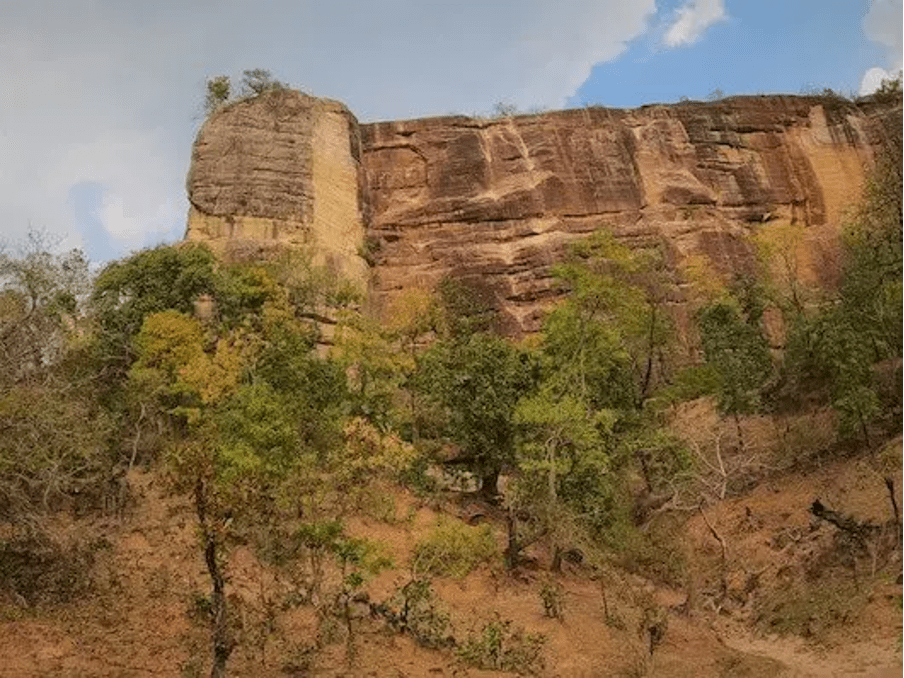
Within the bosom of Patalkot, the Satpura Gondwana basin unfurls its secrets. The layers of history, inscribed upon rock and sediment, tell a tale of cycles—of glaciomarine, fluviodeltaic, and fluvio-lacustrine phases that marked the ebb and flow of nature. The Pachmarhi Formation, a relic of this journey, bears the marks of braided river systems that meandered through warm, humid, and subhumid climes, shaping the landscape as they flowed.
Venturing in Patalkot
Venturing into Patalkot is a journey of both physical and spiritual significance. Villagers tread upon concrete steps that wind their way up the valley from the inner hamlets, bridging the chasm between economic accessibility and remoteness. The labyrinthine geography of the region has ensured that only a handful of villages are linked by mainstream pathways, a testament to the unyielding power of nature’s design.
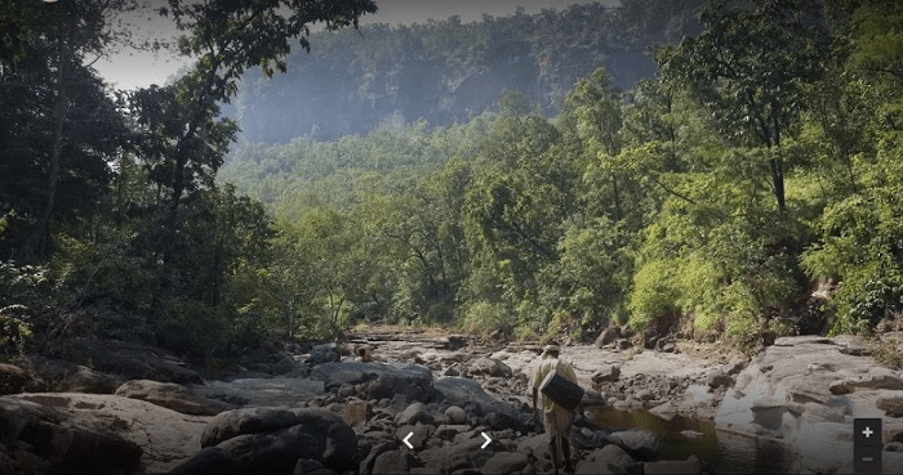
To visit Patalkot during the monsoons is to witness nature’s resplendent symphony. The sheltered haven resonates with the melody of raindrops, an orchestra conducted by clouds that grace the heavens. From July to September, Patalkot unfolds its cultural tapestry and scenic splendor, offering a spectacle that resonates with the heart and soul.
A Heaven likely to Be Extinct Soon?
In the heart of Patalkot, nature’s rhythm harmonizes with humanity’s beat. The valley stands as a testament to the resilience of both the land and its people. Its enigmatic allure, veiled from the world for generations, has finally been unveiled, offering a glimpse into a world that oscillates between reality and myth, science and wonder. Patalkot, with its mystical depths and cultural tapestry, continues to beckon, inviting us to explore its hidden treasures and embrace the stories that it holds within its heart.
But even more fascinating is the story of the Bharia tribe, a handful of them that have inhabited this pulchritudinous but isolated valley for centuries. Shy and withdrawn, untouched, unaffected, and unadulterated till recent years on account of their unique location, they have crafted a life style that embodies a simplicity and ingenuousness rapidly getting lost to the wily and vicious ways of modern development.
And yet the valley, a heaven in every respect, is under relentless invasion by insensitive and obstreperous hordes of tourists and the purveyors of cheap luxury in the name of promoting tourism.
Are the days of this serene and silent slice of heaven, regretfully numbered?
(To be Continued….)
 scribo ad LX