24 miles or about 38 km south of Chhindwara town is situated the famous historical fort of Deogarh. The fort, imposingly aloft a hill, stands circled by a deep valley. In most months of the year, it is covered with dense forest rich and luxuriant with verdant vegetation and offers a most pleasing and pacifying sight, but come monsoons, and the splendour, the richness and the beauty of the forest acquires a celestial proportion. The dark green canopy of foliage, often under a thin veil of floating clouds, appears as if the local gods were unsuccessfully protecting this damsel of resplendent beauty from the prying eyes of Gods of heaven standing above. This rich display of nature’s mesmerising aspect continues till early spring when the dryness of the surrounding breeze saps part of vitality and tenderness of its diverse flora. And then comes summer, whose severe dryness substantially thins down the thick foliage and, in the process, allows the full view of the grandeur and majesty of this marvel of raw and uneven stones.
A Spent Glory
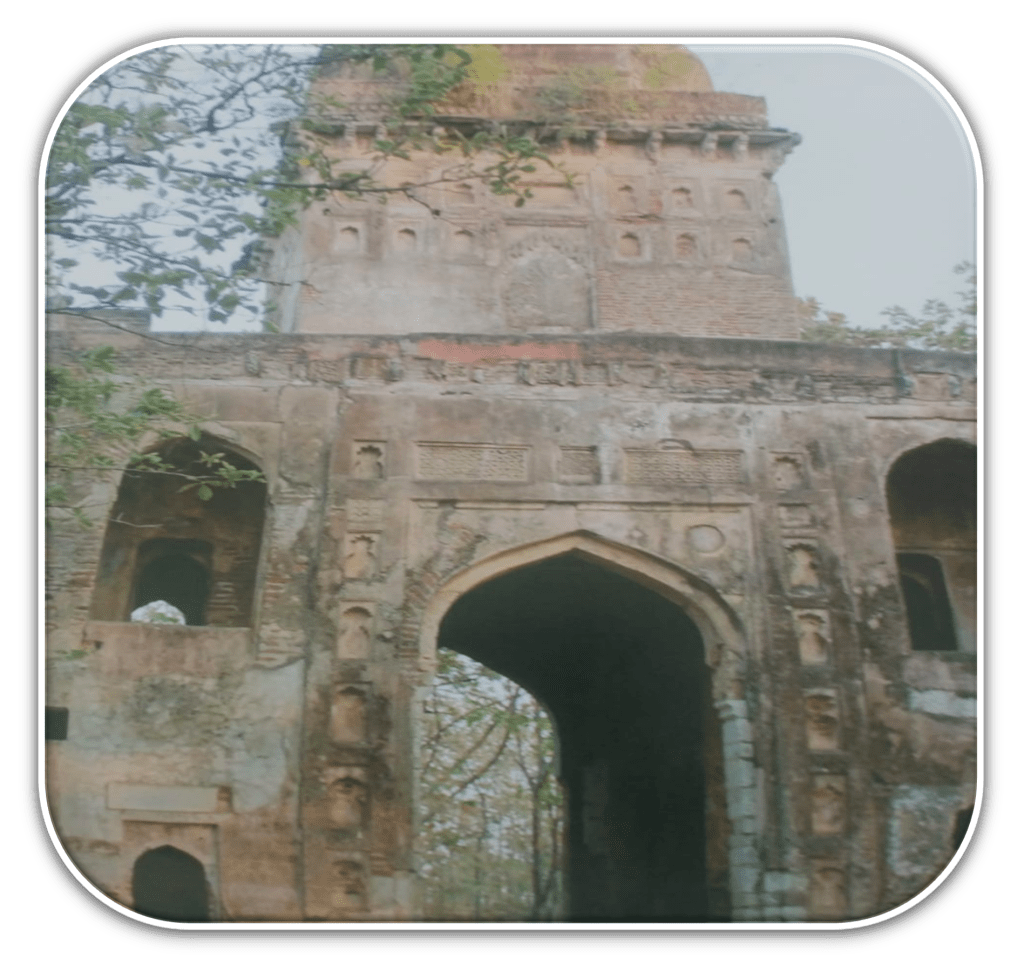
The Fort itself, today though, is a very impoverished reminder of what one time would have been an imposing and formidable structure. Spread once over several acres, what remains of the fort is its north facing main gate, lofty and royal even after centuries. The other surviving structure, the naqqarkhana, which at one time, may have been always bustling with trumpeters and buglers to herald the important events as also the arrival and departure of royalty from and in the fort, is reduced to a decrepit walled structure only to be matched by the ruined remains of once the heart of the fort, the Darbar Hall.
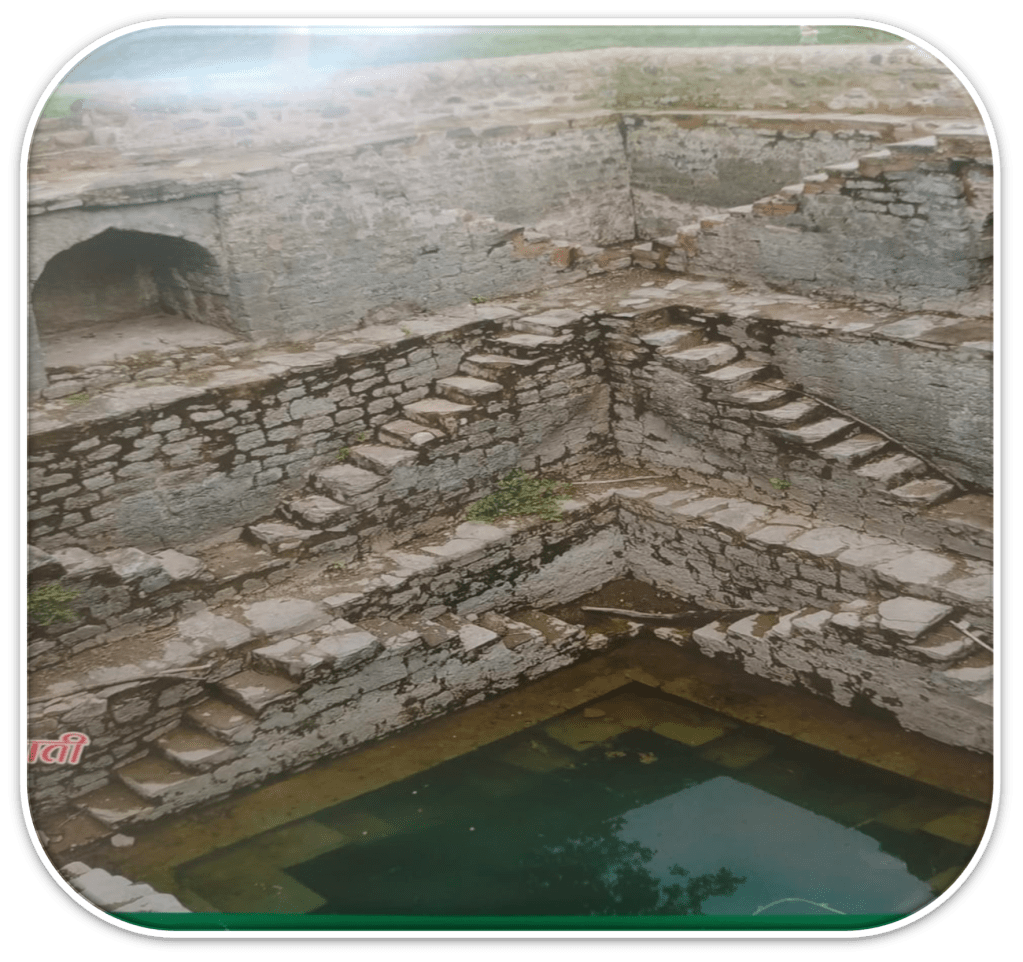
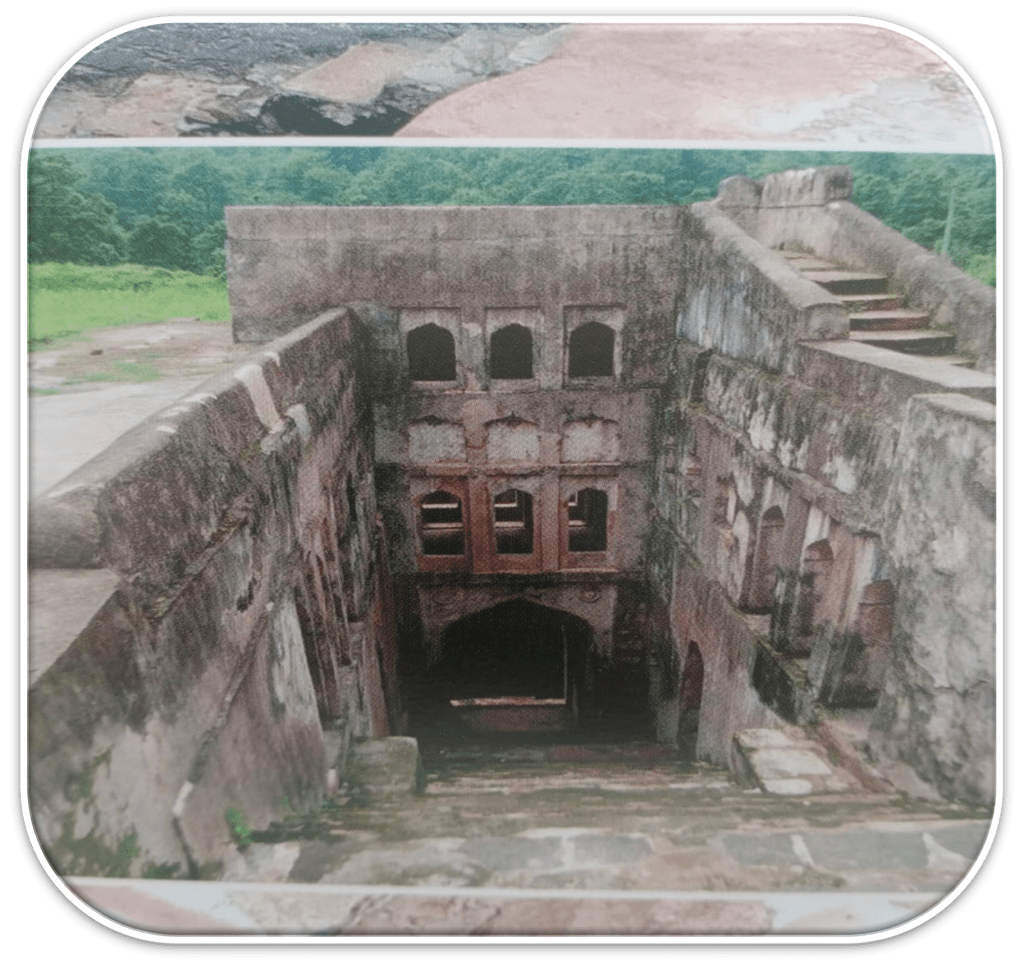
But the most captivating part of the fort is a sprawling water tank, a marvel of human ingenuity and local architecture, for it is situated at the top of the fort. Deep and led by downward sloping stone stairs even in its state of decay its architectural beauty stands out. This is one structure that no local or the returning visitor misses talking about. What they don’t also fail to mention is that the stored water in the tank was so clean and transparent that even a coin lying at its bottom could be clearly seen by the onlookers. It is believed that several such tanks were once in existence but with the passage of time and disuse,only their indistinct ruins remain.
History that Is Hazy
The history of the fort is however hazy and unsubstantiated by either documents or inscriptions. It is shrouded in popular versions that are either denials or exaggerations of plausible historic accounts.
Today, the decaying walls, the decrepit corridors and the damaged ramparts of this once formidable fort stand in mute witness to the valour, the intrigues, the treachery, the treason and the foibles and capriciousness of its occupants. It tells the confused but connected stories of successive rulers here, the Gonds, the Gawalis, the Mughals, the Bhosales and eventually the British. The determination of Sangram Shah to establish and expand a Gond Kingdom, the treachery of his own commanders Ransur and Dhansur, the emergence of the intrepid and courageous Jatwa Shah, the compulsion and the opportunism of an ambitious man Bakhta Buland to embrace Islam to regain the control of the fort and the territory, the desperate gesture of a widowed queen to hand over the reins to a neighbouring king.
Within 300 years spanning between 15th century and 18th century, the fort walls saw the collapse of the local power and witnessed its seizure and appropriation by a foreign sovereign who decided to consign the fort, the perceived seat of power of the local region, to humiliating subjugation and neglect.
Clearly, the history of the fort is jumbled up without much logical connection. And yet it paints the broad contours, weak in authenticity but rich in complexity and confusion. It is fascinating and engrossing and desultorily describes the ambitious machinations of the local chieftains to carve out a niche during an obscure slice of history and an occasionally successful resurgence of local honour and esteem.
A Symbol of Failed Ambitions
Originally belonging to Gond kings and usurped by their own allies the Gawalis for some time, to be regained by more enterprising Gonds, the fort did change hands many times till Bakhta Buland, a tribal turned muslim, with the help of Mughals occupied this fort for a substantial period. His occupation of the fort is corroborated by the architecture of the fort that has distinct Mughal imprint. It seems that he had substantially reconstructed and expanded the fort during his occupation the fort. Bakhta Buland was succeeded by Chand Sultan Shah whose widow after death, in the internecine war, sought the help of Raja Raghuji Bhonsle of Berar, ceding the sovereignty of the rule and the fort then onwards to Berar’s rulers.
A fort, thus, that began as a symbol of tribal power and territory ceded the cultural, historic, and strategic control to first Mughals then to the local non-tribal rulers and eventually to Britishers. Soon after the Bhosales lost their territory on account of doctrine of lapse, Deogarh firmly and inalienably became part of British Empire. Montgomery became the first British Deputy Commissioner, who incidentally is credited with getting the Gazetteer of the district written.
So, the local lore celebrates as much the intrepid valour of Sangram Shah as it does the energetic enterprises of Jatwa Shah, it speaks as much of the earthy and practical strategies of Bakhta Buland as it captures the insidious moves of Raghuji Bhonsle.
While it is not difficult to make out that the fort was originally built by tribal kings of those times, the successive enlargement and modifications carry the stamp of those strong-willed rulers who chose Deogarh to be the seat of their territory. It carries the imprint of Mughal architecture superimposed on the original architecture and the occasional additions brought out by those who could manage to occupy the fort for a reasonable period.
Apart from the fort, Deogarh today is like any other small village still basking in its past glory, which, for the present, survives in the dusty streets of the village of Deogarh. To recall Ban Bhatt, the famous Sanskrit poet and playwright, it bemoans its rich past and heydays of power like a dried-up tree reminiscing its ones sprawling expanse, its spread, strength, and majesty.
“नीरस तरुवर विलपति पुरुत:”
 scribo ad LX