If one were to name the most popular ethnic cuisine across the globe, Mexican food qualifies for this distinction hands down. In US alone, host to the widest diversity in food, Mexican is the most liked ethnic food type. As of December 2020, over 73,000 restaurants provide a Mexican menu, representing 11 percent of all restaurants in the USA.
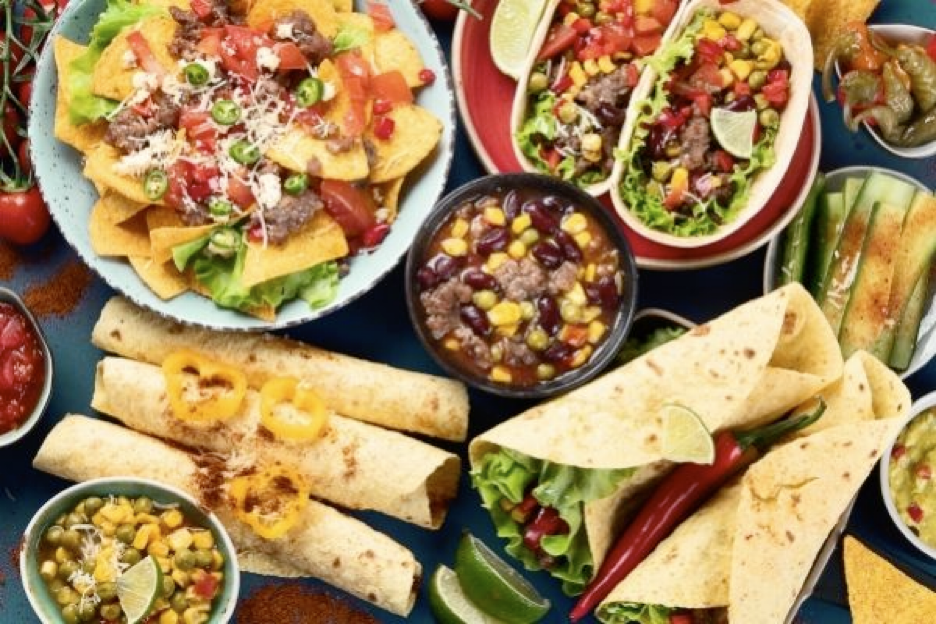
Bold, Colorful and Vibrant
Mexican cuisine is indeed a worldwide sensation. The popularity of dishes like burritos, guacamole, salsa, and tequila is universal. The exotic element in this cuisine is overwhelming. A Mexican dish called ‘quesadilla de huitlacoche’ is made using a fungus that grows in corn. It also includes a range of edible insects like ‘jumiles’ (a field bug). One of Mexico’s national dishes Chile en Nogada, which hails from the Puebla region, requires a complicated process where a grilled poblano chile is stuffed with a picadillo mix, then topped with a walnut-based sauce and pomegranate seeds.
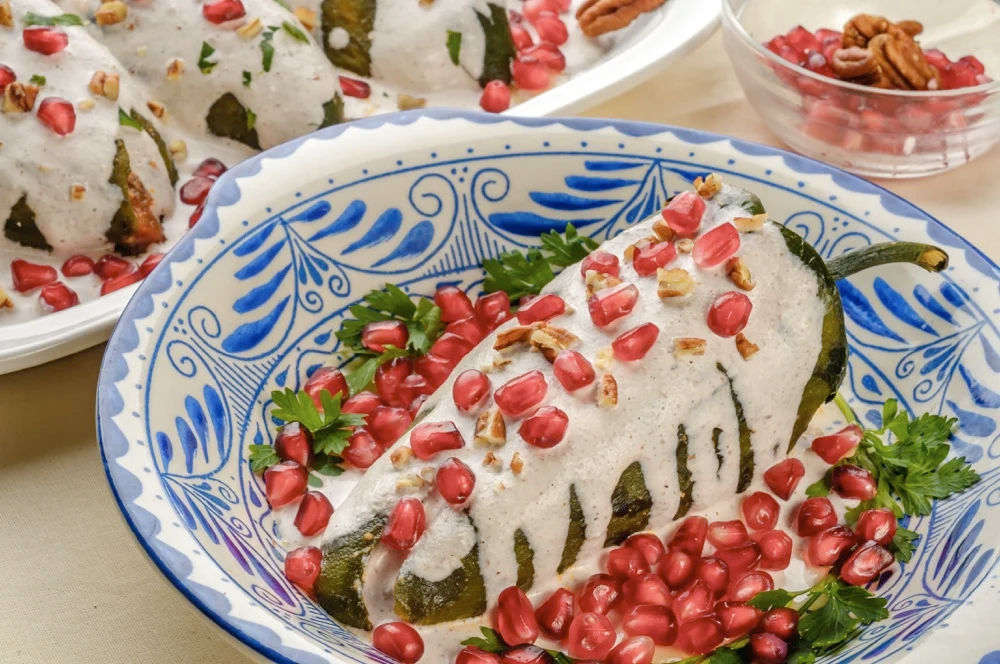
Chile en Nogada
Mexican cuisine is a diverse and flavorful cuisine that is heavily influenced by indigenous ingredients and cooking techniques, as well as Spanish, African, and other European influences. It has a long and rich history that spans thousands of years, and has evolved over time to become one of the most popular and beloved cuisines in the world.
A Hoary Tradition, A Rich History
Mexico’s cuisine is old. The history of Mexican cuisine can be traced back to pre-Columbian times, when the ancient Maya and Aztec civilizations developed complex agricultural systems that relied on native ingredients such as corn, beans, squash, tomatoes, chilies, and chocolate. These ingredients were used to create a wide range of dishes, including tamales, stews, soups, and sauces.
After the Spanish conquest of Mexico in the 16th century, new ingredients such as beef, pork, chicken, cheese, and wheat were introduced, as well as new cooking techniques such as frying and baking. The fusion of indigenous and Spanish influences gave rise to a new style of Mexican cuisine that was both familiar and exotic.Corn, chili, and beans were the “holy trinity” of food for
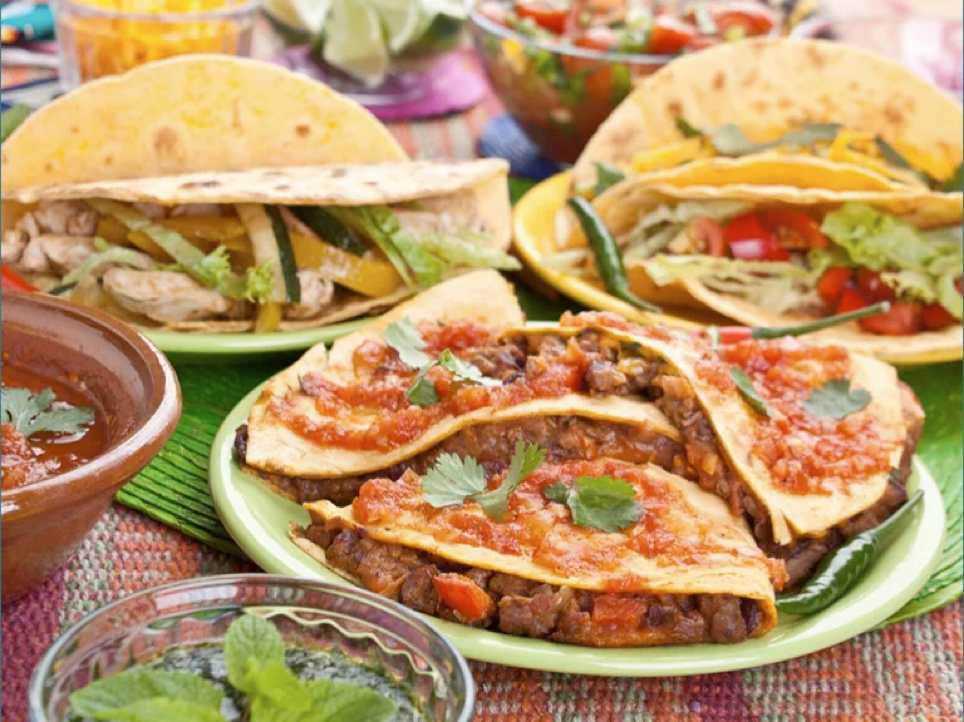
Tacos and Tortila
Mesoamerican civilizations. In fact, corn is the source of great Mexican dishes such as ‘enchiladas’, ‘huaraches’, ‘machetes’, ‘tlacoyos’, ‘sopes’, ‘molotes’ and ‘quesadillas’.The three staples in the cuisine of Mexico even today are dishes of corn, beans and chillies (hot peppers), all present before the Spanish arrived. Corn is consumed in all possible forms, but most importantly as a tortilla (a thin, round pancake made from corn dough).
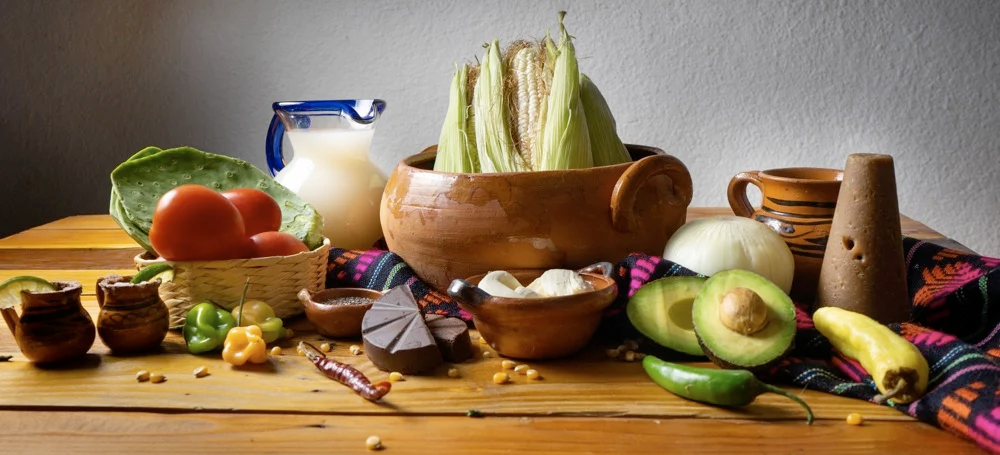
The Ingredients
Over time, Mexican cuisine continued to evolve and adapt to new influences and ingredients. Today, it is known for its bold flavors, vibrant colors, and complex layers of spices and seasonings. In addition to tortilla, other signature dishes of Mexican cuisine include guacamole, a creamy avocado dip that is often served with tortilla chips or used as a condiment for tacos and other dishes; mole, a complex sauce made from a blend of spices, chilies, and chocolate that is often served with chicken or other meats; and ceviche, a seafood dish that is marinated in lime juice and seasoned with chilies and other spices.
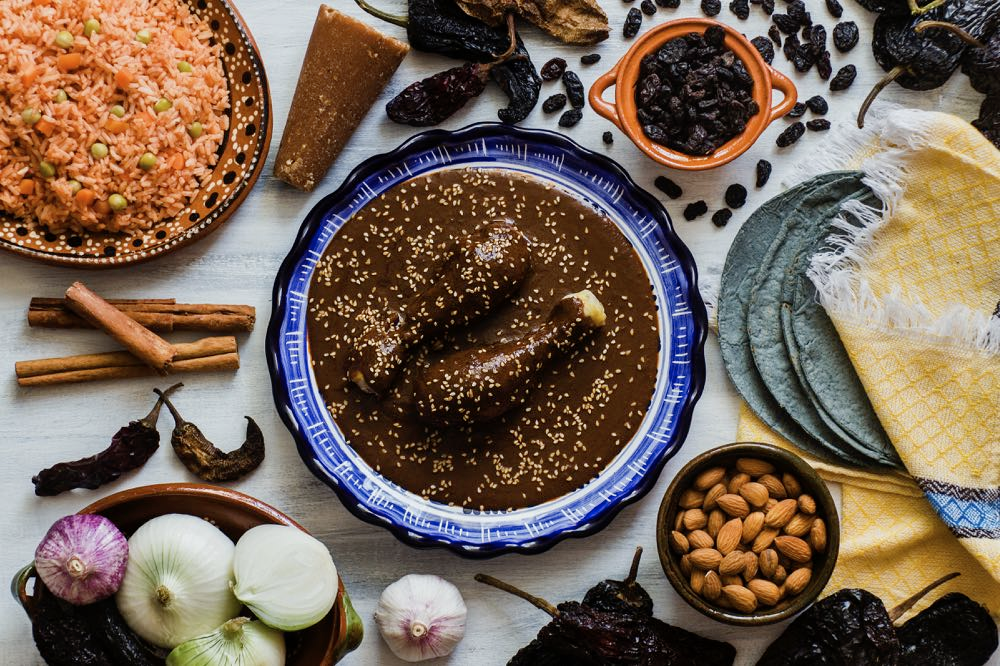
Mole is a Must Try
Mexican, Italian, French and Chinese
Mexican cuisine is unique and distinct from other cuisines such as Italian, French, or Chinese, due to its use of indigenous ingredients, bold flavors, and complex spice blends.
Italian cuisine is known for its focus on simple, high-quality ingredients, such as tomatoes, olive oil, and fresh herbs. Italian dishes are often characterized by their use of pasta, pizza, and risotto, as well as sauces like marinara and pesto.
French cuisine is known for its rich sauces, buttery dishes, and emphasis on presentation. French dishes often incorporate ingredients such as duck, foie gras, and truffles, and are typically accompanied by wine.
Chinese cuisine, on the other hand, is characterized by its use of bold flavors, such as sweet, sour, salty, and spicy, and the use of ingredients such as soy sauce, ginger, and garlic. Chinese dishes are often prepared using various cooking methods such as stir-frying, steaming, and deep-frying.
While Mexican cuisine shares some similarities with other cuisines in terms of the use of certain ingredients and cooking techniques, it is known for its distinct and complex flavors that are a result of the blending of indigenous and European influences. Mexican cuisine is also known for its use of a wide variety of chili peppers, which give it a unique heat and complexity.
Traditional yet Innovative
While there may be some similarities between Mexican cuisine and other cuisines, it is a unique and distinct cuisine that is loved by millions for its audacious flavors and for a delicious amalgamation of Mexican history and heritage in its varied creations. And yet it is a cuisine that continues to evolve and innovate, while remaining rooted in tradition and history, rich in flare, finery and sophistication.
(To Be Continued….)
 scribo ad LX