The magic of Peruvian Cuisine
Part I
Few countries on this planet are gifted with the amazing geographical diversity than Peru, a remote Latin American country, washed by the Pacific Ocean. And nothing else reflects so beautifully and vibrantly its charming diversity, than its unique cuisine.
From the snow-capped Andes mountain range and desert to seashore and Amazonian tropical forests, 30 kinds of microclimates can be found there. With 84 of the 104 climatic zones on the globe, it is one of the 12 countries in the world with the greatest mega-diversity It has suitable conditions for growing fruits and vegetables throughout the year. The Humboldt Current of cold oceanic waters that run through the Pacific Ocean off the Peruvian coast allows the existence of a great variety of fish and shellfish (Peru is one of the main fishing countries in the world).
Therefore, If your impression on Peru stops at the Machu Picchu or Inca Empire, it’s time to discover far more, and what better than its cuisine, nurtured and enriched over centuries and emerging out of the cultures and customs of different races and ethnicities that migrated and mingled with the natives on its soil for centuries.
A celebration of rich cultural heritage
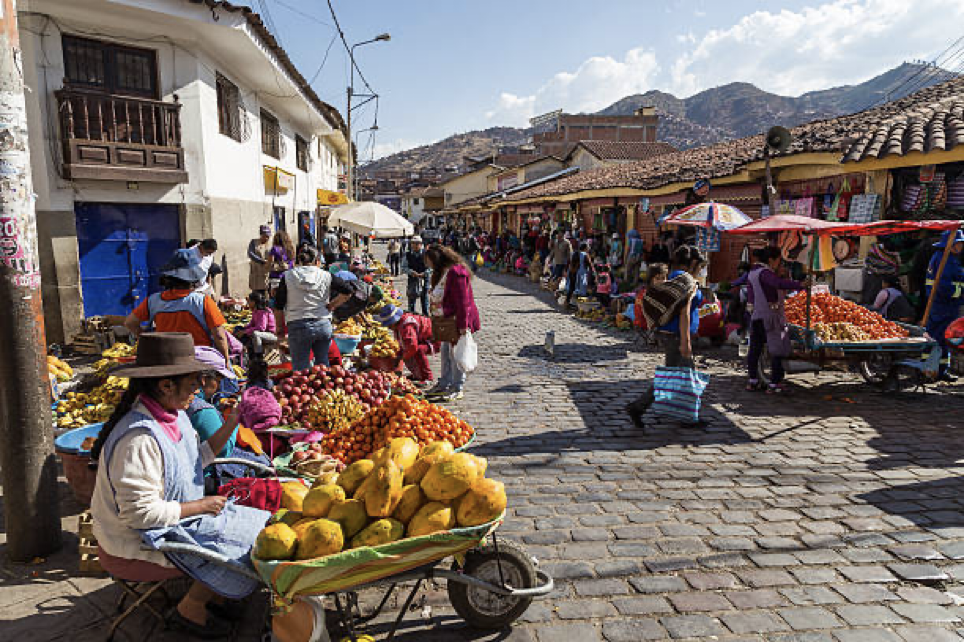
Peru-Nature’s bounties
Peruvian cuisine is known for its incredible diversity and unique flavours, which are influenced by the country’s history and culture. Peruvian cuisine is a fusion of indigenous ingredients and cooking techniques – European flavours and techniques brought over by Spanish colonisers, African influences from the slave trade, and Asian influences from Chinese and Japanese immigrants. This has resulted in a cuisine that is both familiar and exotic, and which features a wide range of ingredients and flavours.
Peruvian cuisine makes use of a wide range of native ingredients, such as potatoes, corn, quinoa, and various types of peppers. These ingredients have been cultivated in Peru for thousands of years and are a key part of the country’s culinary heritage.
Peru’s long coastline provides an abundant supply of fresh seafood, which is used in many traditional dishes. Ceviche, a dish of marinated raw fish, is perhaps the most famous example of Peruvian seafood cuisine.
Peruvian cuisine makes use of a wide range of spices, including cumin, oregano, and ají (chili pepper), which give many dishes their distinctive flavour.
Peru’s diverse geography and climate have given rise to a wide range of regional cuisines, each with its own distinct flavours and ingredients. For example, the coastal region is known for its seafood, while the highlands are known for hearty stews and soups.
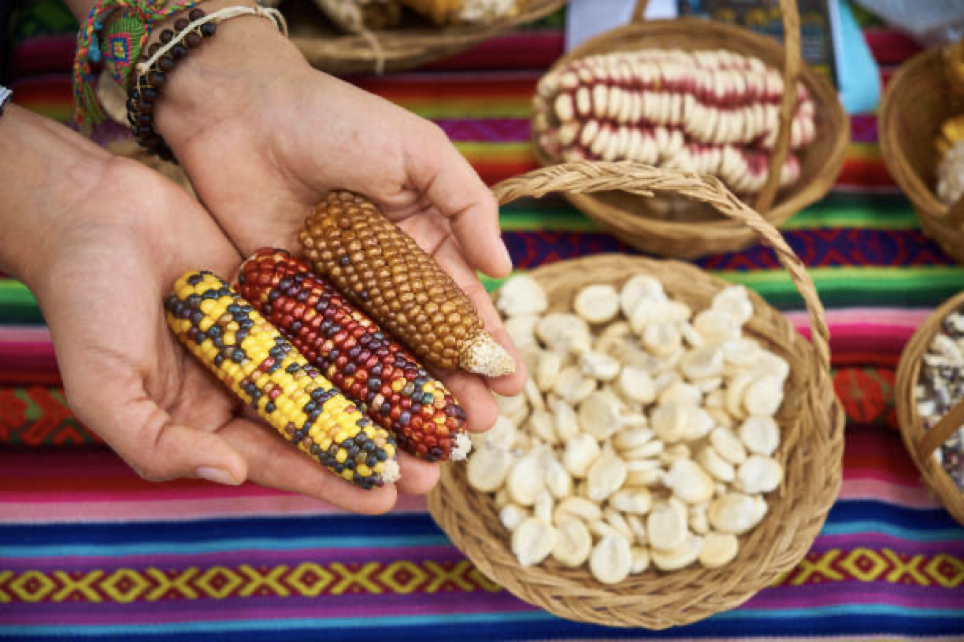
The Peruvian Corn
Peruvian cuisine reflects the country’s complex history and cultural heritage. The fusion of indigenous, European, African, and Asian flavours is a testament to the country’s history of cultural exchange and migration. The use of native ingredients and spices reflects Peru’s long history of agriculture and trade. And the diversity of regional cuisines reflects the country’s varied geography and climate. Overall, Peruvian cuisine is a celebration of the country’s rich cultural heritage and the diversity of its people.
Traditional Peruvian cuisine can be divided geographically into three branches: seaside, mountain and rainforest. The depth of the food has also been attracting global attention in recent years, as many local restaurants receive international exposure.
From ceviche to quinoa, Peru has made a mark on contemporary food trends, and a culinary tradition that has its origin more than a thousand years ago, is fast becoming a flavour and favourite in many parts of globe.
What then defines the gastronomic culture of Peru?
Papa-The Ubiquitous Potato
Long before quinoa, Peruvian had brought the world a staple food in the form of a humble root vegetable. It all began with the Spanish expedition and subsequent discovery of the new continent. After landing on the Americas, the explorers initiated Columbian Exchange which saw them take home foods unheard of in the Old World, such as potato, tomato and maize. The life in Europe was never the same since then.
The adaptability and fast growth rate of potato made it instantly popular in European countries. It would be almost unimaginable how people there would survive the difficult episodes in history without it.
Peruvian potatoes come in all shapes and colours, and more importantly, genetically unmodified. As the birthplace of potato, Peru’s Instituto Peruano de la Papa estimates there are more than 3,000 varieties grown on home soil. And they form an inseparable component of Peruvian Cuisine.
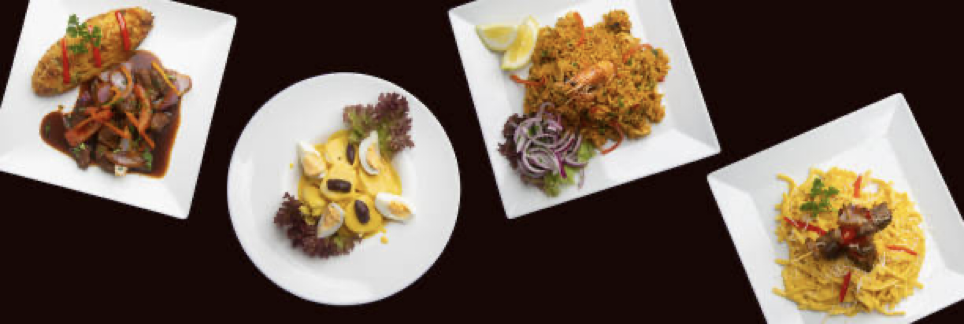
An assortment of Dishes
Corn is Everywhere
Corn is another significant export from Peru besides potato. Similarly, it boasts a great amount of varieties in different hues, with the purple maiz morado being the most expensive. Corn can be
eaten as a snack or in a meal. For instance, choclo, distinctive for its large kernels, can be toasted in oil for making the crispy snack cancha, or consumed directly after sun-dried. Corn juice is used to produce chicha, the national beverage with or without alcohol.
Ceviche- The National Passion
Ceviche is a favourite dish of many in Peruvian cuisine, and is often the meal of choice for many locals. The coastal sensation is made with freshly caught seafood steeped in onion, chilli, and most importantly, lemon or lime juice, resulting in the fish appearing as “cooked”. Like any household delicacy around the world, every family has its own secret recipe.
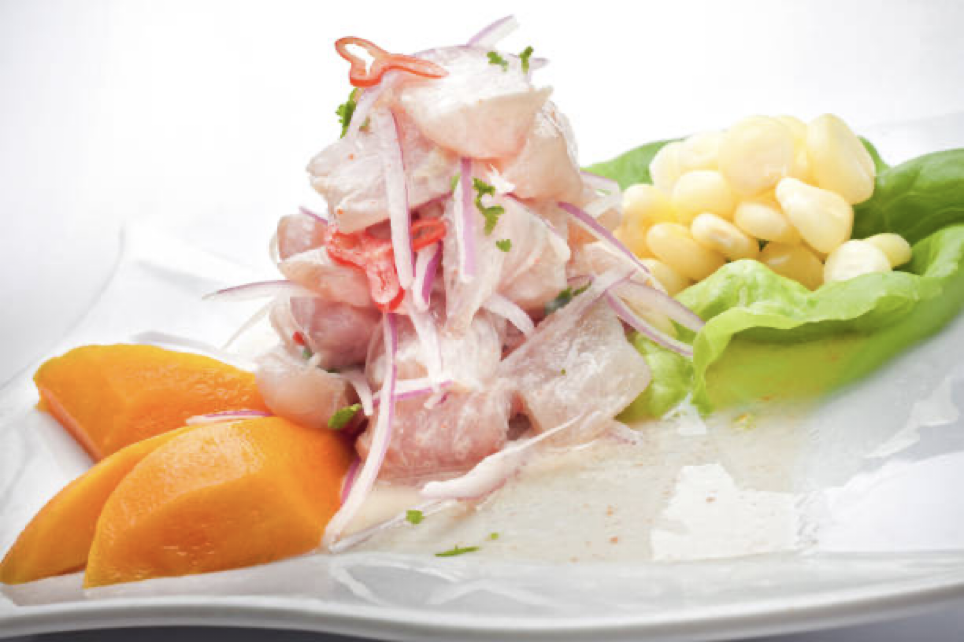
Ceviche
Guinea pig- A Delicacy?
Guinea pig may be a pet in many countries but for the Peruvians, it is no different than pork or beef. Seasoned with spices and grilled on open fire, guinea pig (or cuy) has been a delicacy for the Andes people for a long time.
Salchipapas – Their Fast Food
A South American cuisine isn’t complete without street food, and salchipapas is the dish you’ll find at every turn in the city. It is self-explanatory, consisting of sausage and potato fries, served with tomato sauce and mayonnaise on the side. Forget about your calories counter and just dig in.
The Mother Earth
Ever so respectful to the natural surrounding they live in, the highland people are adept in making the most of the conditions. Pachamanca is the perfect example of this mentality. According to the native language, “pacha” means earth while “manca” can be translated as pot. An earth oven is created to cook spice-marinated meat and potatoes. The food is covered with hot stones on the ground. It’s one of those dishes that make you wonder how simple good food can actually be.
The Peruvian genius of Fusion
Peruvian cuisine has been constantly shaped by the external influences, from Spanish Conquistador to Asian immigrants arriving from the 19th century. There is a large community of Cantonese there, which gave rise to Chifa cuisine, a Chinese-Peruvian hybrid food featured prominently in cities like Lima. Dishes like lomo saltado, a beef steak stir-fry with onion, tomato and French fries, demonstrate such cross-cultural mingling.

Lomo saltado
A dining experience in an authentic Peruvian restaurant could be both experimental and exciting. Ours turned out to a very gratifying and delectable one. But more about it in the next part.
(To Be Continued….)
 scribo ad LX