A Fine Dining Experience at ‘ILILI’, New York
Part I
‘Ilili’ in Lebanese language means ‘Tell Me’. The fact that I am tempted to tell you about this remarkable restaurant, amply justifies its name. It claims, and proudly lives up to its claim, of serving creative gastronomic delights that tingle and titillate your palate; and excite and gratify your senses.
Lebanese cuisine is, in many ways, a microcosm of Lebanese history. Lebanese dishes are heavily influenced by the multiple civilizations that have existed within the region. For a country with an area just over 10,000 square kilometers and a population of a little over 5 million, Lebanese cuisine is amazingly both diverse and synthetic offering a richness far greater in proportion to its area and antiquity.
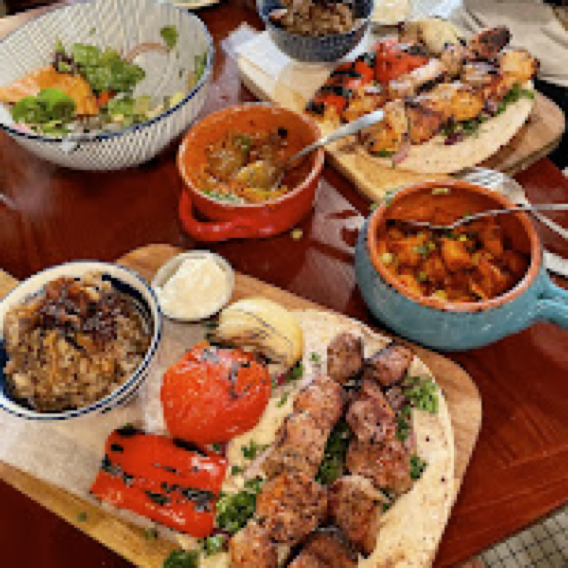
Mezze
Lebanon-The melting pot
Lebanon is at the crossroads of the Mediterranean basin and the Arabian hinterlands of Western Asia.
That brings to it a diversity inspired by the races and people who visited this land. It has ancient roots , influenced by the culinary tradition of the Eastern Mediterranean, Turkish, Arab, and French cooking styles. And some of the dishes can be traced back thousands of years to eras when Phoenicians, Persians, Egyptians, Neo-Babylonians, Greeks and Romans ruled.
In the last 500 years, Lebanese cuisine has been influenced by the different foreign civilizations that held power. From 1516 to 1918, the Ottoman Turks controlled Lebanon and introduced a variety of foods
that have become staples in the Lebanese diet, in particular introducing lamb. After the Ottomans were defeated in World War I (1914–1918), France took control of Lebanon until 1943, when the country achieved its independence. The French introduced foods such as flan, caramel custard, eclairs, french fries and croissants.
The Lebanese diaspora who live worldwide have introduced new ingredients, spices and culinary practices into Lebanese cuisine, making the cuisine innovative and evolved meriting an international recognition.
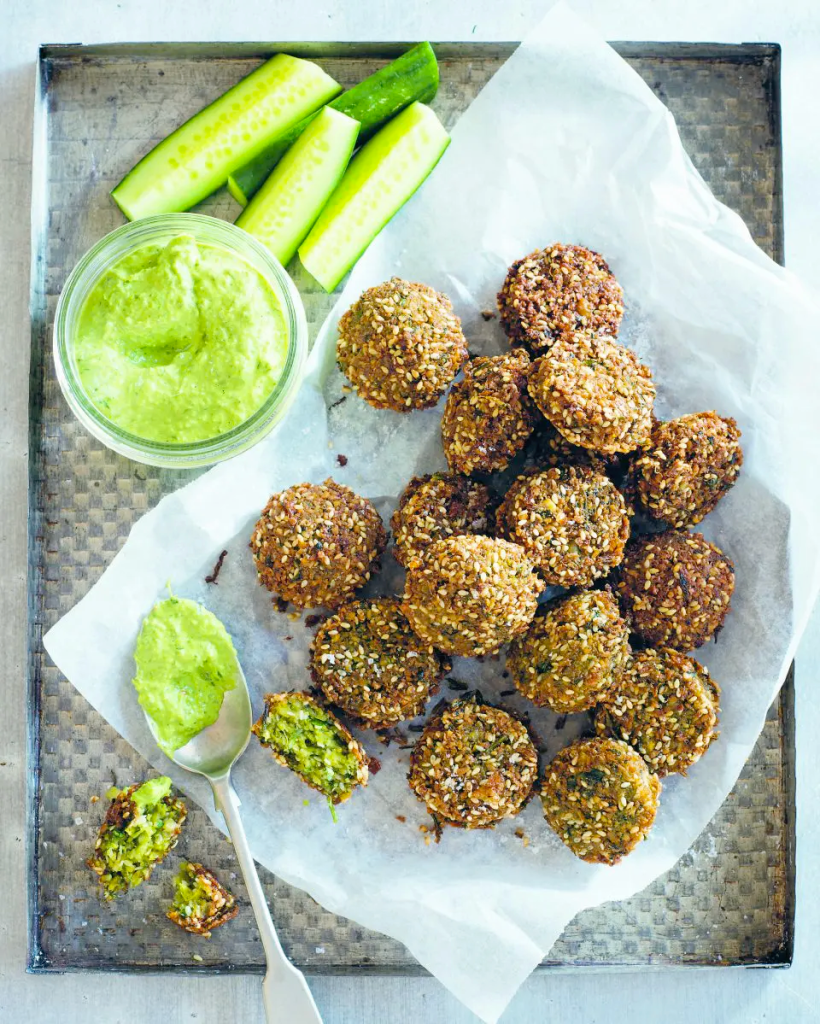
Falafel
Lebanese Cuisine
Whether it is a salad like Fattoush or Tabbouleh, or dips like Hummus or Baba Ghannouj, whether its Mezza or Kaftas and Kababs, whether it is Shawarma or Falafel, and whether it is desserts like Baklava or Mouhalabiyeh, the dishes are characterized by an abundance of whole grains, fruits, vegetables, fresh poultry, fish and seafood. Using fresh, flavourful ingredients and spices, predominant use of lamb meat (introduced by the Ottomans); the abundant consumption of nuts (especially almonds and pine nuts), and dressings made specially from lemon juice define a sumptuous Lebanese meal. Dishes include copious amounts of garlic and olive oil, and dishes are often seasoned with lemon juice. Chickpeas and parsley are also staples of the Lebanese diet Most often, foods are grilled, baked or lightly cooked in olive oil; butter or cream is rarely used other than in a few desserts. Vegetables are often eaten raw, pickled, or cooked. Like most Mediterranean countries, much of what the Lebanese eat is dictated by the seasons and what is available. Lebanese cuisine also varies by region. South Lebanon is famous for its kibbe, the Beqaa Valley for its meat pastries (such as sfiha), and north Lebanon and Saida (Sidon) for its sweets.

Hummus
Most Lebanese dishes stem from simple, quality base ingredients cooked in straightforward ways, like grilling, frying, or baking. The combination of spices, condiments like tahini, and aromatic sweeteners like rose water lift those ingredients into a fascinating range of flavours.
Traditional ingredients
Lebanese food comprise of Legumes and grains like bulgur wheat, and chickpeas. Chickpeas are liberally used in falafel, salads and hummus, while Bulgur, a nutty whole grain, consisting of precooked, dried, and ground kernels (groats) of wheat is found in meat dishes like kibbeh and salads like tabbouleh. Lentils are a crucial, protein-packed part of the Lebanese diet and a key component of mujadara.
Sumac and Za’atar are the main spices to liven the dishes. Sumac is a tangy spice with a sour, acidic flavor reminiscent of lemon juice. This fragrant spice is used to brighten up dry rubs, spice blends and dressings. It is also commonly used as a garnish, to add a pop of bold color or slight acidity to a dish before serving. Za’atar is a Middle Eastern spice blend that traditionally consists of ground za’atar—a wild thyme native to the eastern Mediterranean—sesame seeds, dried sumac, and salt.. Za’atar is used as a seasoning for meats, roasted veggies, and dips, or as a garnish on breads and soft cheeses like labneh.
Sauces and Pomegranate molasses are the other popular ingredients. Two of the most common sauces are toum, a garlic sauce with the consistency of creamy aioli, and tarator, the garlicky cucumber yogurt also known as tzatziki.
Pomegranate molasses is a thick reduction of fresh pomegranate juice. This sweet and sour condiment is used to add brightness and acidity to any number of dishes—it can be stirred into whole-grain stews, drizzled over kebabs and roasted vegetables like eggplant, or used in marinades.
Tahini is present in almost all Lebanese meals.Tahini paste is made from ground sesame seeds. It can be mixed with other ingredients like garlic and olive oil to make a savory, silky tahini sauce, or even added to sweet dishes to balance flavor and add nutrients.
The other significant ingredients include Parsley, a mildly bitter, grassy herb and a native of eastern Mediterranean; Orange blossom water and Rose water. Orange blossom water is also the main ingredient of Lebanese café blanc—hot water with orange blossom water, and a drizzle of honey. This ingredient is most commonly associated with Lebanese desserts, namely baklava.

Labneh
Labneh is the thick, strained yogurt sometimes referred to as Lebanese-style cream cheese. It’s commonly eaten as a dip with an assortment of breads, drizzled with olive oil and garnished with za’atar or mint, or in sandwiches.
(To Be Continued)
 scribo ad LX