
Hell on earth is more a metaphorical expression than a real place. Dante Alighieri wrote this epic poem ‘Inferno’ in his magnum opus-Divine Comedy giving a graphic account of the nine circles of hell. But they were not on earth though they are decidedly a place for punishment and suffering.
But what if there indeed were a destination known as ‘Hell’ located at a place widely perceived to be a paradise on earth. And here people don’t go to undergo a penance or punishment, they go there to enjoy and refresh.
Few places on earth can match Cayman Islands in beauty and elegance. Salubrious climate, shining silver beaches, a placid sea, the mesmerizing display of brilliant colours of the surrounding waters and the ensorcelling vegetation offer a visual treat and infuses a serenity unmatched and unfelt anywhere else.
It’s a small island, actually a group of three tiny islands, the biggest of them is known as Grand Cayman. With less than 77 square miles in area and just over 20 miles long, it is smaller than most major towns of the world.
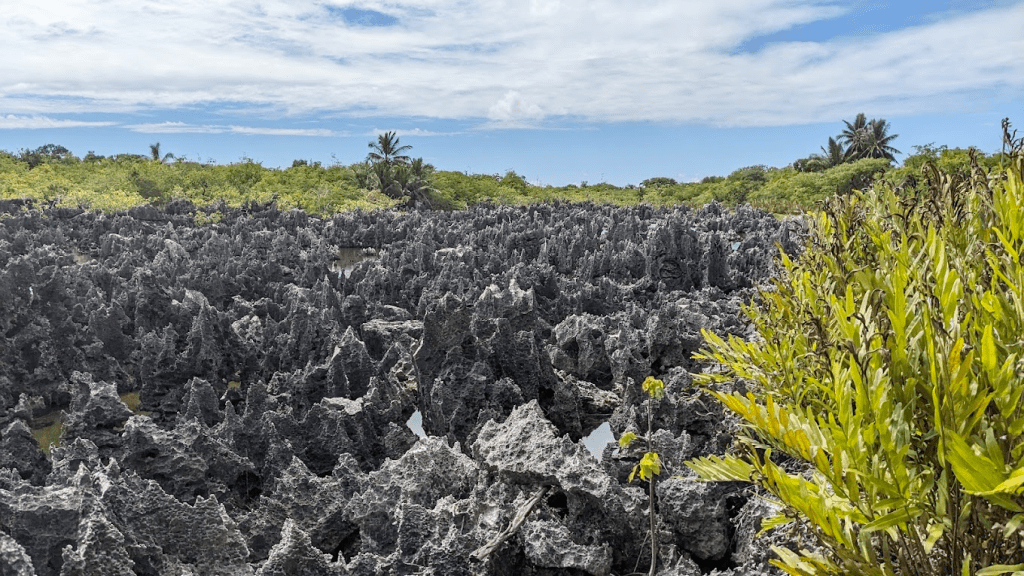
Poking out from its lush surroundings on Grand Cayman is a small patch no bigger than a soccer field of rough, black limestone formation.It is eerie and has a dark sinister look.
This is the Hell on earth. And Hell indeed could be very hot, especially in the summer. It may not be an inferno, with red hot leaping flames emanating from its bottom and caressing your body but it is dark and dank and dreadful.
You are forbidden to enter this hell but you can have a glimpse of it from the side of heaven that surrounds it. And it is guarded by an artful but stern Satan.

How ironic that the hell should be nestling in the heart of heaven.
How did It get Created?
This hell was created by salt and lime deposits over 24 million years. Hell is a unique formation which is characterized by jagged, spongy pinnacles of black-covered limestone. The black limestone formations are a product of phytokarst, a distinctive landform resulting from a curious type of biologic erosion. Filamentous algae interact with the Ironshore limestone present at this location, creating a phytokarst that is both eerie and beautiful.
Filamentous algae bore their way into limestone to produce black-coated, jagged pinnacles marked by delicate, lacy dissection that lacks any gravitational orientation. Ordinary rainfall-produced karst and littoral karst are characterized by flat-bottomed pans and vertically oriented flutes, thus differing from phytokarst. Algae attack by dissolving calcite preferentially to dolomite.”
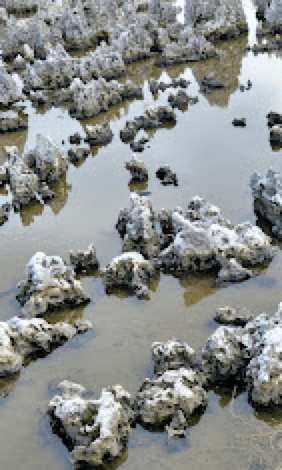
The ironshore karst is a special type, both in terms of its texture and origin. First, texture – it is a black, random spongework of pits, jagged ridges and pointed pinnacles. It is developed in a narrow strip just above the tide line on ancient limestone rocks.
If you break off a piece, you will see that the black color present near the surface and it grades to gray inside. The algal infiltration is most dense within a centimeter or so at the surface, causing the black color.
Why this results in the characteristic macro-texture is not fully understood, but you always see the two elements together so they must be linked somehow. It is clear that proximity to the marine environment is key. Maybe the splash, spray and mist from the breaking waves provide just enough moisture to sustain the algae and their subsequent artwork.
And Who discovered It?
The origins of the name Hell are controversial. Some say that locals believed the place to be similar to Hell’s landscape, while others assert that a British General hunting in the area exclaimed “Oh hell,” when he missed a shot near the area. Regardless of its origins, the name has stuck, and the area has become a popular tourist attraction.
It is also claimed that the name “Hell” is derived from the fact that if a pebble is thrown out into the formation, it echoes among the limestone peaks and valleys and sounds as if the pebble is falling all the way down to “Hell.”
Kitsch or Cool?
Whatever the history behind the name, the area has attracted huge numbers of visitors and fostered a blooming tourism industry. Some may even resent its excessive kitsch. Men dressed as the devil roam the gift shop and Club Inferno serves as the location’s top watering hole. There is even a post office, a fire-engine red hell-themed post office, where you can send friends and relatives postcards from Hell and a gift shop with “Satan” Ivan Farrington passing out souvenirs while greeting people with phrases like “How the hell are you?” and “Where the hell are you from?”
Men dressed as the devil roam the gift shop and Club Inferno serves as the location’s top watering hole.
The Jury may be out whether this ‘Hell’ evokes fear, horror or even trepidation, but it does attract thousands of tourists, who are at best awed and at worst amused by this ugly ungainly marvel of nature.
 scribo ad LX