The Butterfly
Men and women of exquisite beauty, the nature in all its splendour, the events of monumental moment-all these have fascinated and engaged the attention, genius and endeavour of great painters. But dogs as a subject?
There is one breed of dog, however, that merited the adoration and adulation of many painters of substance. Rubens, Rembrandt, Goya, and Toulouse-Lautrec are just a few of the artists who have immortalised this breed – the tiny Papillon or the butterfly.
But then it has also equally been a favourite of the royalty. Their small size and refined, elegant appearance made them their favourite. The most famous example, of course, being Thisbe, the papillon owned by Marie Antoinette, who sat outside her cell while she awaited her fate (or so the story goes). In another version of the story, likely apocryphal, she insisted on Thisbe, accompanying her as she mounted the guillotine.
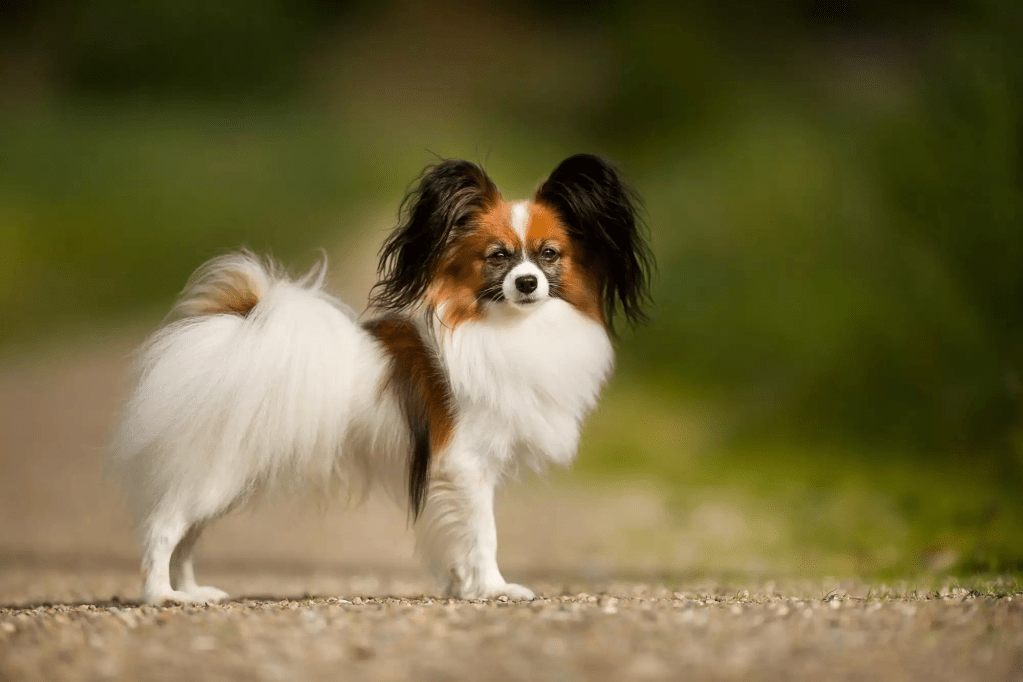
The Papillon (French for ‘butterfly), also called the Continental Toy Spaniel, is a breed of dog, of the spaniel type. One of the oldest of the toy spaniels, it derives its name from its characteristic butterfly-like look of the long and fringed hair on the ears. A Papillon with dropped ears is called a Phalène. One of the most obedient and responsive of the toy breeds, the vivacious Papillon is gentle, amiable, playful and above all friendly towards strangers and acquaintances alike.
History
Papillons are essentially spaniels. For the first several hundred years of their existence, the breed was referred to as the epagneul nain Continental, or “continental toy spaniel”. Those days the breed featured drop ears almost exclusively.
It wasn’t until the 19th century that pups with the raised ears began being more selectively bred. The massive popularity of this new, raised-ear dog resulted in the butterfly-inspired name change to papillon(though the dog is still referred to as the epagneul nain Continental in most non-English speaking countries). The ones with the drooping ears are called Phalène.
At one time the Papillon was known as the Squirrel Spaniel because the plumed tail was carried over the back in the same way a squirrel does.
The history of the Papillon, interestingly could be conveniently traced through works of art. The earliest toy spaniels resembling the papillon are found in Italy. Titian painted these small dogs in many famous paintings beginning around 1500, including the Venus of Urbino (1542). Other well-known artists who took it as their subject included Watteau,Gonzales Coques, Fragonard, Paolo Veronese, and Mignard. In a painting after Largillierre in the Wallace Collection in London, a Papillon is clearly shown in a family portrait of Louis XIV. Papillons are also in paintings of royal families around Europe and paintings of merchant-class families. The breed was popular in England, France, and Belgium, which are considered countries of its origin.
The “Titian spaniels” and those portrayed by later artists through Mignard and his contemporaries had the drooping ears characteristic of today’s Phalène.
The erect-eared appearance became fashionable only by the end the 19th century. The Titian spaniels were also exclusively red-and-white in coloration, in contrast to the many recognised colourations of today’s Papillon.
The Papillon’s history and long association with royalty have led to many stories about the breed. It was an important adornment of Louise XIV’s court but its association with the French queen Marie Antoinette is the most discussed. She is said to have walked to the guillotine clutching her small dog under her arm, likely an apocryphal tale. According to the story, her pup was spared and cared for in a building in Paris still called the Papillon House.

Queen Sophie Dorothea of Prussia with a Phalène in 1737
Papillons made their way to the United States in the late 19th century and were recognized by the American Kennel Club in 1935. And the number of awards won by it in prestigious dog shows across the globe makes it as one of the most sought after canine companion.
Appearance
There are few dogs whose appearance says “I’m fancy” quite like the Papillon. With their teensy-tiny size, silky soft coat, and distinctive large ears that give the breed its name (papillon is French for “butterfly”), the papillon has been one of the favoured dogs of royalty and artists for nearly 600 years.
The Papillon is a small, dainty, elegant dog of fine-boned structure, slightly longer than tall. The gait is quick, easy, and graceful. The abundant coat is long, silky, straight, and flowing. The dog’s hallmark characteristic, besides the friendly temperament and alert expression, are the breed’s beautiful butterfly ears.
The papillon’s ears frame a small, intelligent face with large, dark-coloured eyes. Naturally large in size and standing upright, they are covered in long, feathered hair that frames her face in big fans that look like butterfly wings. The papillon gets her name from the long, feathered hair that falls from her ears.
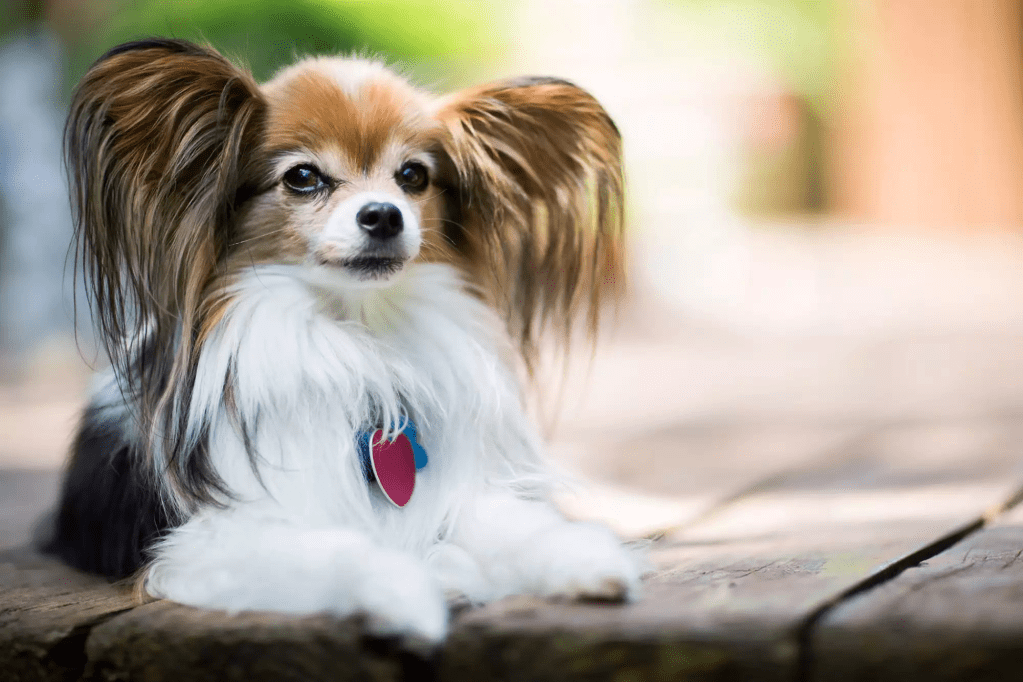
A Study in Patience
A less-common version is born with pendant ears (also called “drop ears”) and commonly referred to as Phaléne (French for “moth”). But the dogs are otherwise identical, often come from the same litter, and are considered the same breed.
Their tiny bodies (8–11 inches tall, usually less than 10 pounds) are covered in a single coat of long fur that comes in a variety of colors, usually including white with some combination of fawn, chocolate, or black.
On an average they live for 14-16 years.
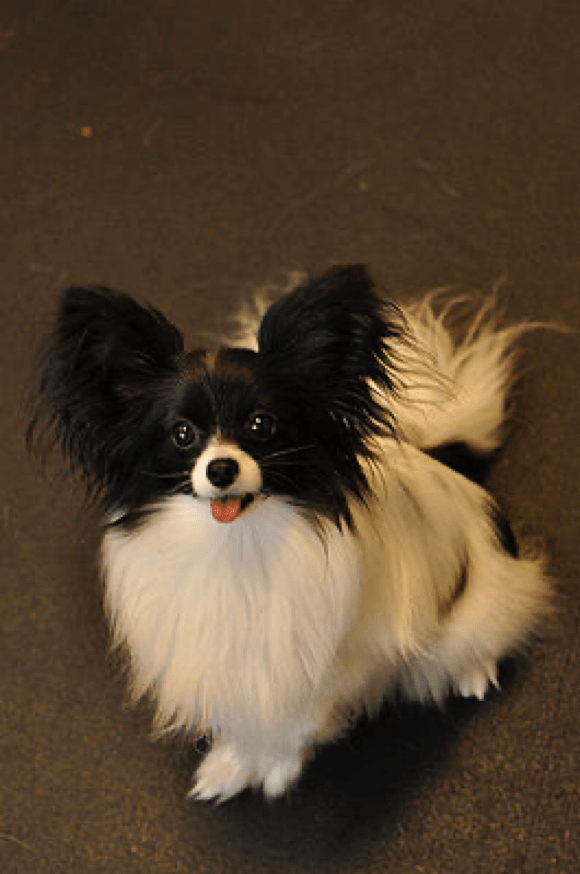
Curiously Cute
Intelligent and Intrepid
The papillon is the Christy Turlington of the dog world; its stunning good looks and the elegant demeanour are unmissable. And just as Ms. Turlington carries degrees in Comparative Religion and Eastern Philosophy, the papillon’s head houses a keen mind, consistently ranking her among the smartest dog breeds in the world.Papillons are incredibly smart dogs and can learn basic commands and tricks quickly. Their keen minds, coupled with their athletic desires, also make them excellent choices for agility or rally coursework and competitions.
The temperament of Papillons is that of a happy, friendly, adventurous dog. They are generally neither shy nor aggressive. Papillons can make excellent family dogs, but should be watched around little children. Given the intelligence of Papillons, they require rigorous training and mental stimulation to prevent behavioral issues arising from boredom. According to Dr Stanley Coren, an expert on animal intelligence, Papillons are among the top ten brightest dogs, ranking 8th out of 138 breeds tested.
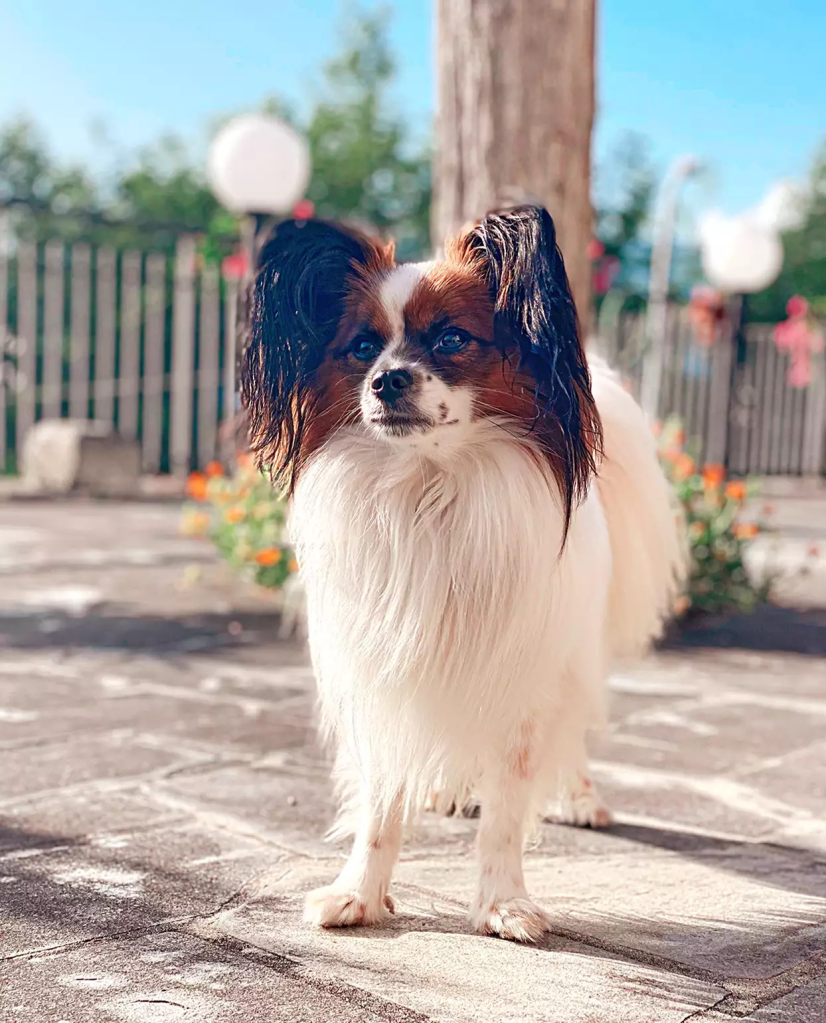
Beauty and Elegance
And they are fearless though not overly foolish. They deem their diminutive size as of no disadvantage. Daring by nature, they don’t hesitate in the least, to take upon dogs three times their size, and often get the better of them. But where they fail, they suffer miserably. Their proud and possessed owners, therefore, rarely leave then alone.
Their active minds can get bored if they’re not exercised daily—and that boredom can result in an overly vocal dog or one who will begin faltering on its daily chores. Like most intelligent humans, their minds must be kept busy and stimulated.
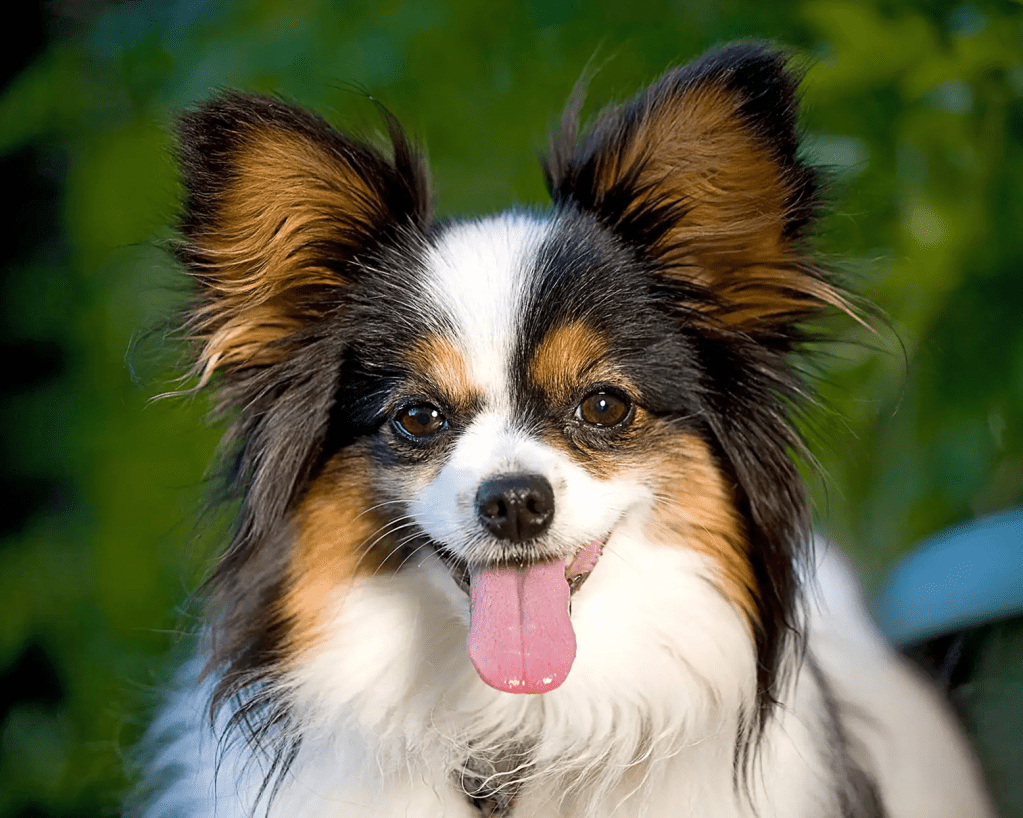
A Close-up
Health,Care and Training
Much like the Energizer Bunny, these little dogs just keep going and going. Papillons have a long life, typically living to 15 years of age (or more), and are healthy pups. But certain health issues, though minor, can be a concern, and patellar luxation, seizures, and dental problems can be issues. Additionally, they can be at risk for progressive retinal atrophy, intervertebral disk disease, and allergies.
One common condition among papillons is paroxysmal respiration or pharyngeal gag reflex, commonly referred to as “reverse sneezing.” Not actually a sneeze, the condition is caused by a number of factors, ranging from adverse reactions to perfumes or strong odors, to pollen allergies, to overexertion. In all cases, reverse sneezing is nothing to worry about.
Despite all that long, flowing hair, papillons are surprisingly low-maintenance when it comes to grooming. Regular brushing(2-3 times a week), twice a week bath and usual dental care is about all threy’ll require.
They are smart, do quickly pick up new cues and tricks, but respond best to positive reinforcement. Lots of treats, head pats, and “bravo” work wonderfully for them.
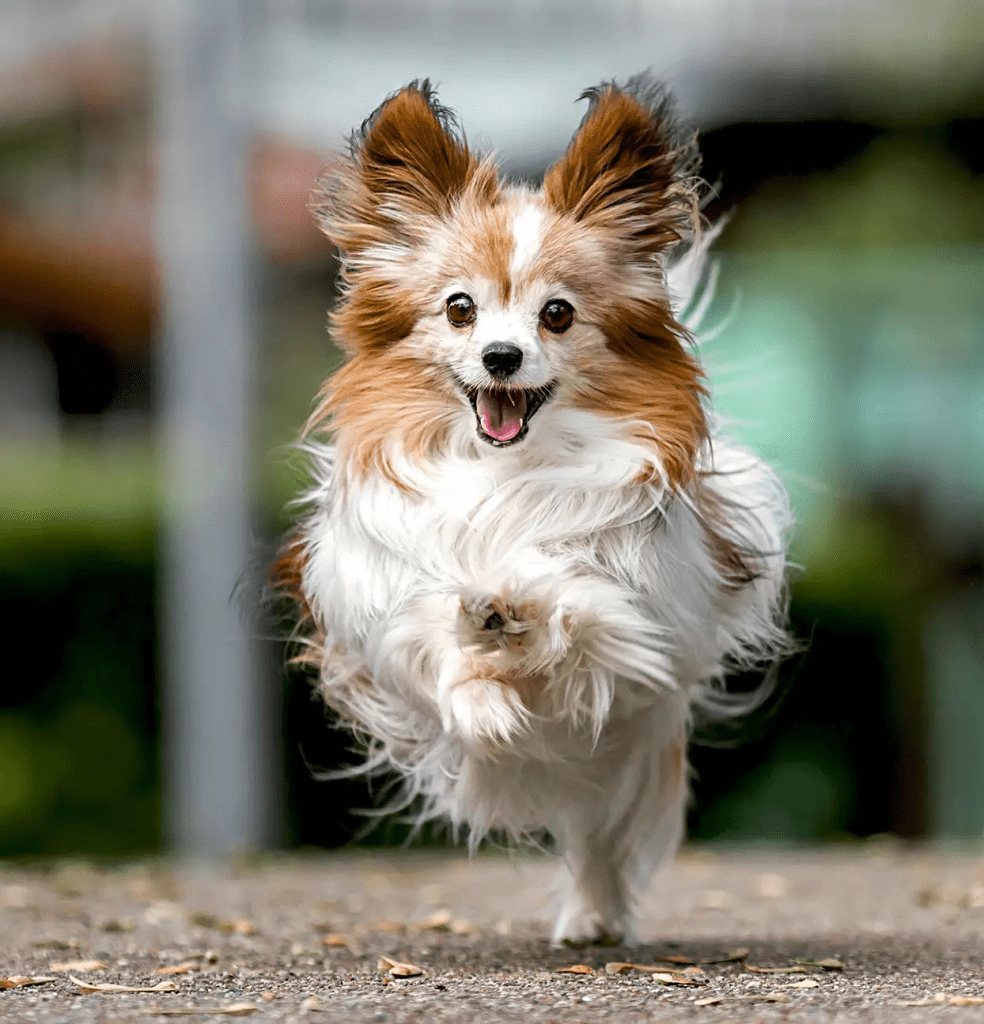
Vivacity Personified
Ideal Companion
The unique visage of this brilliant, energetic little dog may have been a royal favorite for centuries but today it is happy in just about any family.
One of the most obedient and responsive of the toy breeds, the vivacious Papillon is also gentle, amiable, and playful. The breed is friendly toward strangers, other dogs, and pets alike.
Ideal companion dogs, Papillons are more than happy to spend time as a lapdog or couch potato alongside their human companions. Compact, bright, and highly adaptable, the papillon is a great companion for just about any setting. They are gentle and friendly enough to be good companions for seniors, they are small enough to make apartment living a breeze, and they are smart and affable enough to get along with everyone around.
A true royal among their ilk, only less Imperious and arrogant!
 scribo ad LX