One of the sights that unfailingly arrests the attention of a visitor to New York City, is the incredible variety of dogs that accompany their masters or mistresses. Large number of them don’t walk with them, instead they ride on them. Finding a child in a woman’s lap may be a rare sight here but not a pup in the arms. Whether this represents a climax of love for the canine company or sublimation of parenthood, could become an interesting issue for discussion, even a discourse, but it is certainly a display of sincere affection and care for supposedly humanity’s oldest and arguably the most loyal companion.
Decades ago, this canine companion leashed to a chain and walking along side was the usual spectacle. So, we had Great Danes and Bullmastiffs, Anatolian Shepherds and Russian Black Terriers, Kangals and Dogues de Bordeaux, Huskies and Labradors, Tosas and St. Bernards- great display of might and beauty, of strength and utility. They added to the stature of the owner and also revealed his affluence and standing. After all, they are a very high maintenance commodities.
Over years though, smaller dogs, most as they came and many the toy variations of their bigger brethren and sisters, caught the fancy of the rich and fashionable. Apartment living in the bigger cities gave a big impetus to this preferences and soon the lap warmers, as dog lovers like to call them became the existential statement of those who really loved dogs and for those who loved the pretences.
The Creature
The dog is a domesticated descendant of the wolf. It is derived from the extinct Pleistocene wolf, the modern wolf being its nearest living relative.
The dog was the first species to be domesticated, by hunter-gatherers over 15,000 years ago, before the development of agriculture and has warmed its way to human heart and home ever since. Tomes have been written on the saga of its faithfulness and loyalty and any views to contrary may elicit strong reaction and censure. So, whether you are a dog lover or otherwise, prudence lies in always admiring it.
Though understood to be a sentinel, it likes to sleep on an average 12-14 hours a day. Although close to humans, they prefer independent abodes which they call a kennel and they call their young a puppy or whelp. If not in human company, they spend time with their ilk who they call a mute or pack.
The three breeds that I have chosen to describe first are the Chihuahua, Bichon Frise and Affenpinscher, the smallest and the cutest among them.
Chihuahua-The Smallest Breed of Dogs
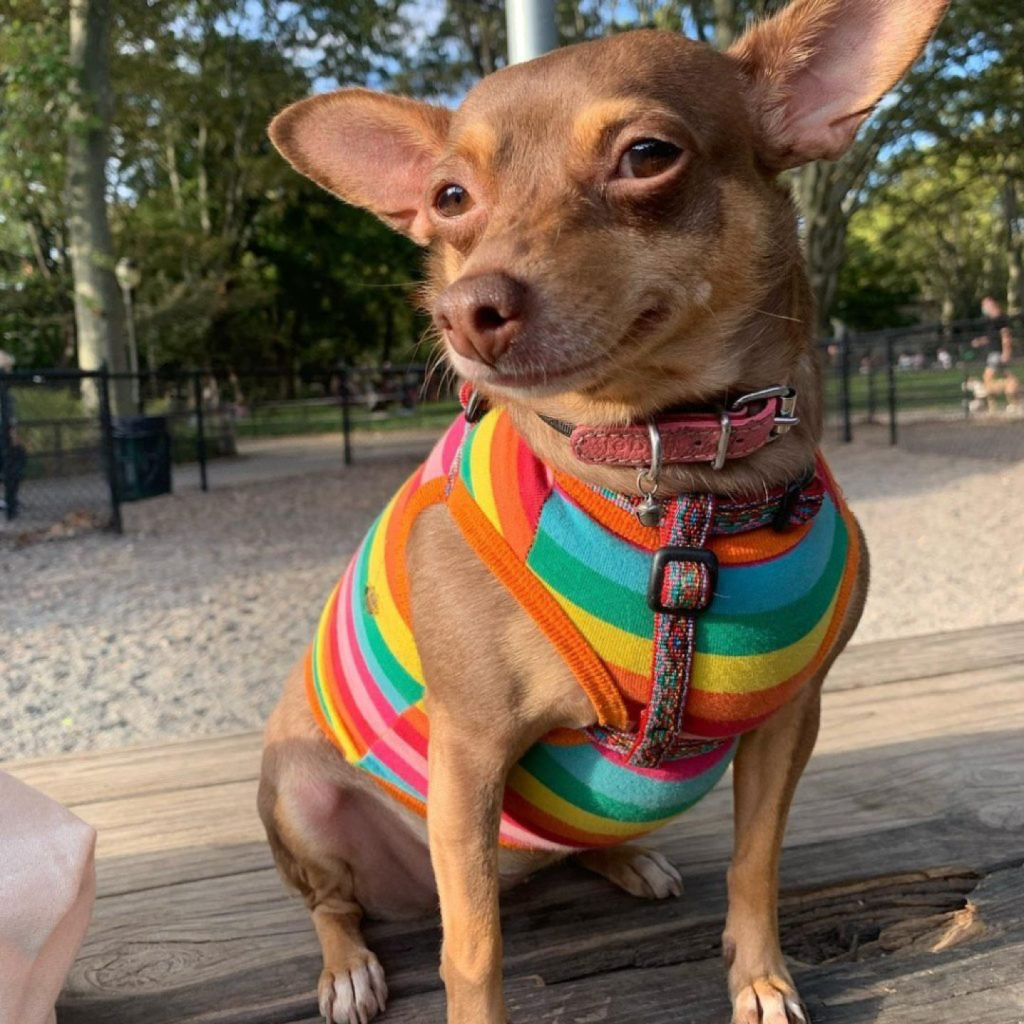
A Sorcelling Innocence
Commonly regarded as the smallest dog breed in the world and famously adorable, Chihuahuas have a charm that remains unmatched among the most attractive of its canine brethren. It is difficult to find a Chihuahua who doesn’t know how to play on their cuteness to get what they want. And as regards their visibility, even the keenest passer-by may miss locating it even as it peeps through the pretty arms of its proud possessor.
It is graceful, compact and small, slightly longer than it is tall, but full of personality, playful but loyal, has a saucy expression and the attitude of an alert terrier. Its eyes light up with the innocence of a baby, if it knows you. But don’t mistake its geniality all the time, it is quite capable of displaying above average aggression toward other people and dogs.
It weighs between 1 and 3 kilos and its height at its shoulders range between 15 and 23 cm. It can live up to 16 years, invariably above 12 years.
The smallest dog in history was a Chihuahua named Miracle Milly. She was 3.8 inches tall, weighing approximately one pound.
The Origin
Chihuahua, in Spanish ‘Chihuahueño’ is a province in Mexico, and the dog is named after this Mexican state.
But the ancestry of Chihuahua runs deeper. Records reveal that the sixteenth century conquistadoras found in the region, now known as Chihuahua, small, hairless dogs. A Spanish Conquistador Hernan Cortes, in a letter written in 1520 discussed how the Aztec raised and sold little dogs as food. The Chihuahua remained a rarity until the early twentieth century, when they became commonplace throughout Mexico.
The American Kennel Club first registered a Chihuahua in 1904, Midget, owned by H. Raynor of Texas.
This dog is believed to have descended from the Techichi, an ancient companion dog from the Toltec civilization (as early as the 9th century), but dog toys from as early as 100 AD have been found depicting Chihuahua-like features.
An alternative history ascribes its origin to China, where from it was brought to the new world by Spanish tradesmen.
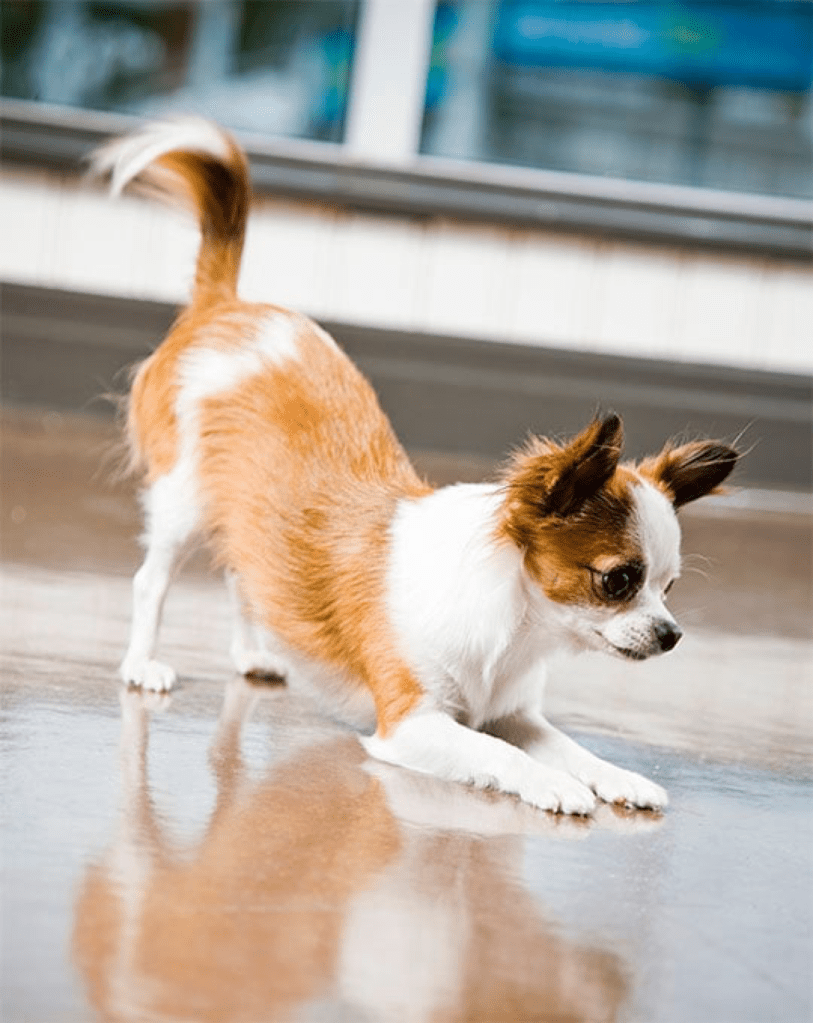
Playful but focussed
Appearance
Chihuahuas have a distinctive look: small body, pointed ears, big expressive eyes. Most people are familiar with the short-haired Chihuahua, with a smooth coat that looks like it can’t possibly keep the dog warm. However, there are also long-haired Chihuahuas. Still, all Chihuahua dogs need a little extra warmth in cold weather, that’s why all those cute sweaters were invented.
Among long-haired and short-haired Chihuahuas, there are two distinct Chihuahua body types: apple head and deer head. The apple head variety of Chihuahua is shorter, with a round head and eyes set close. The deer head Chihuahua is taller, with a flat-topped head and eyes set wide.
And what about a hairless Chihuahua? Though similar to a Chihuahua, it is a different breed, known as the Xoloitzcuintli.
Have you heard of the ’Toy’ and “Teacup’ varieties of Chihuahua? These are not officially recognized breeds, but rather smaller dogs of the same breed. Weighing in at under five pounds, teacup Chihuahuas are the tiniest ever.
Chihuahuas have an extremely wide range of colourings, including white, black, brown, chocolate, brown, fawn, red, cream, and mixed. They can also have a special form of colouring called merle, which is a mottling of the base colouring with lighter splotches. Curiously the International Association of Kennel Clubs does not recognise Merle.
As far as grooming goes, Chihuahuas are relatively easy to maintain. Weekly brushing for short-haired Chihuahuas (more for long-haired varieties), and a once a month bath should be enough. Nails should be trimmed every few months.
Parenting
The ideal Chihuahua owner will have plenty of time for their pet, on many levels. Pet parents will have to spend extra time on training and socialization. Chihuahuas also don’t like to be left alone—being left alone, combined with lack of exercise and play, will exacerbate any underlying aggressive or anxious behaviour.
The ideal Chihuahua parent will probably work part-time, or from home, so that they can spend maximum time caring for and bonding with their pet. And of course you must have nearly 200$ every month to spare just to look after them. It may not be expensive as compared to many other breeds but the maintenance is not directly co-related to its size.
Keeping Fit
The dog lovers nightmare, of course, is keeping their pets in robust health. Like other small dogs, Chihuahuas are more prone to specific health problems related to their size. They need more dental care than other dogs and are also predisposed to tracheal collapse, hypoglycaemia (low blood sugar), eye infection, luxating patella (when the kneecap tends to move out of its normal position), and (more rarely) hydrocephalus and heart conditions.
Daily brushing, dental chews, regular exercises and the right dog food will help.
Chihuahuas also need a calm home environment, preferably without small children, who are more likely to make the dog anxious or hurt the dog on accident.
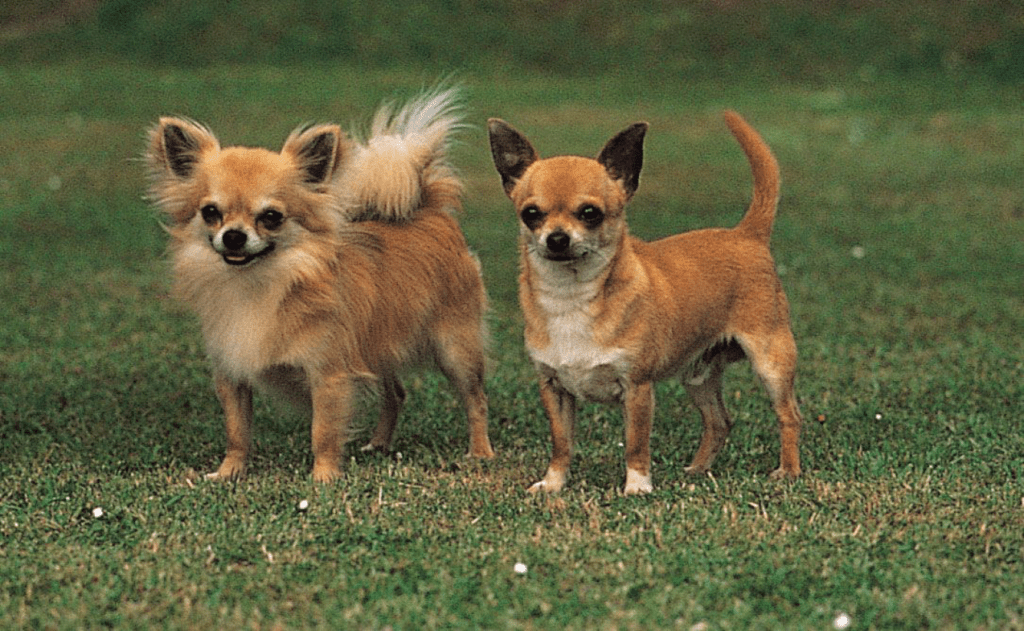
Waiting for A Hug
Yet a cuddly Bundle of Joy
Its extra ordinary size and lively manners make it an ideal toy companion who could even sit in your pocket. Chihuahuas are very adaptable despite their specific needs, and make particularly good pets in even small city apartments. Bundle them up for the cold weather, and they’ll be happy almost anywhere. And don’t for God’s sake ever scold it. A spunky, intelligent dog, as it is, positive reinforcement is the best.
 scribo ad LX